Why Night Sweats Make the Bed Feel Unbearable
You know the moment. You've finally drifted off, and then you're wide awake, heart going a little fast, damp through your shirt, and the sheets feel like they're working against you instead of for you. Maybe you kick off the comforter. Maybe you flip your pillow to the cool side, hoping it helps. Maybe you just lie there, too hot to sleep and too tired to get up and do anything about it.
If this is a nightly thing for you right now, you're not overreacting to something small. Night sweats during perimenopause and menopause are a real, physical event — a sudden surge of heat that your body needs to release, often followed by sweating heavy enough to soak through your pajamas or sheets. And bedtime makes it worse in a specific way: comforters trap heat right where you don't want it, sleepwear can cling once it's damp, and waking up repeatedly makes it hard to fall back into anything close to deep sleep.
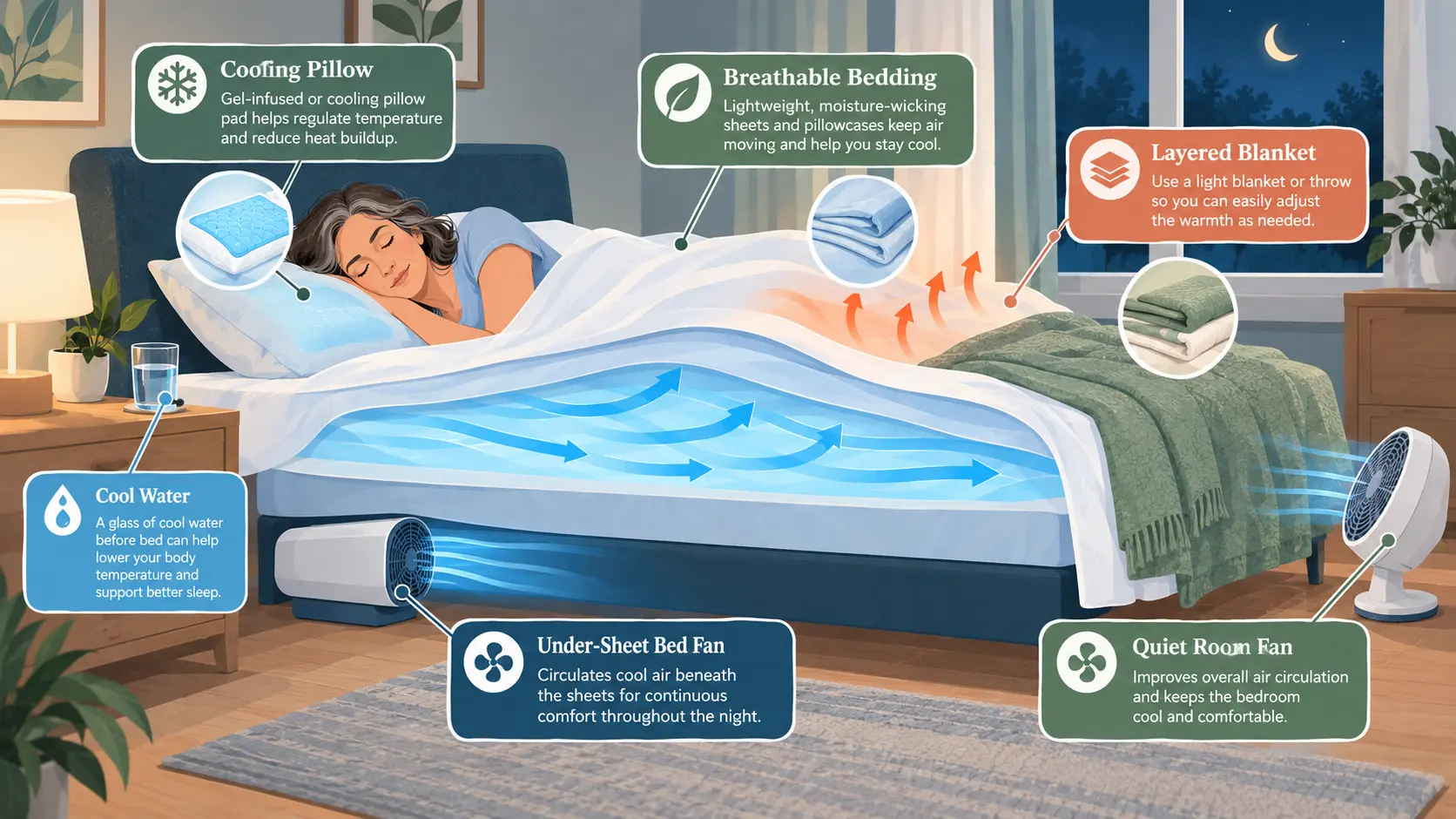
A cooler room, a fan, lighter sleepwear, breathable bedding, and a glass of cold water within reach are the usual starting points people reach for. A bed fan — a small device that pushes air specifically under your top sheet rather than just around the room — is a newer twist on that same idea. This guide walks through how it actually works, who it tends to help most, and what else is worth considering if airflow alone isn't enough.
One honest thing up front: a bed fan can make your sleep environment more comfortable. It does not treat the hormonal shifts causing the hot flash or night sweat in the first place. Think of it as managing the aftermath, not the cause.
Trying to decide between a bed fan, a cooling mattress pad, or something simpler? Use the comparison checklist near the end of this guide to weigh your options side by side.
Jump to the Comparison Checklist →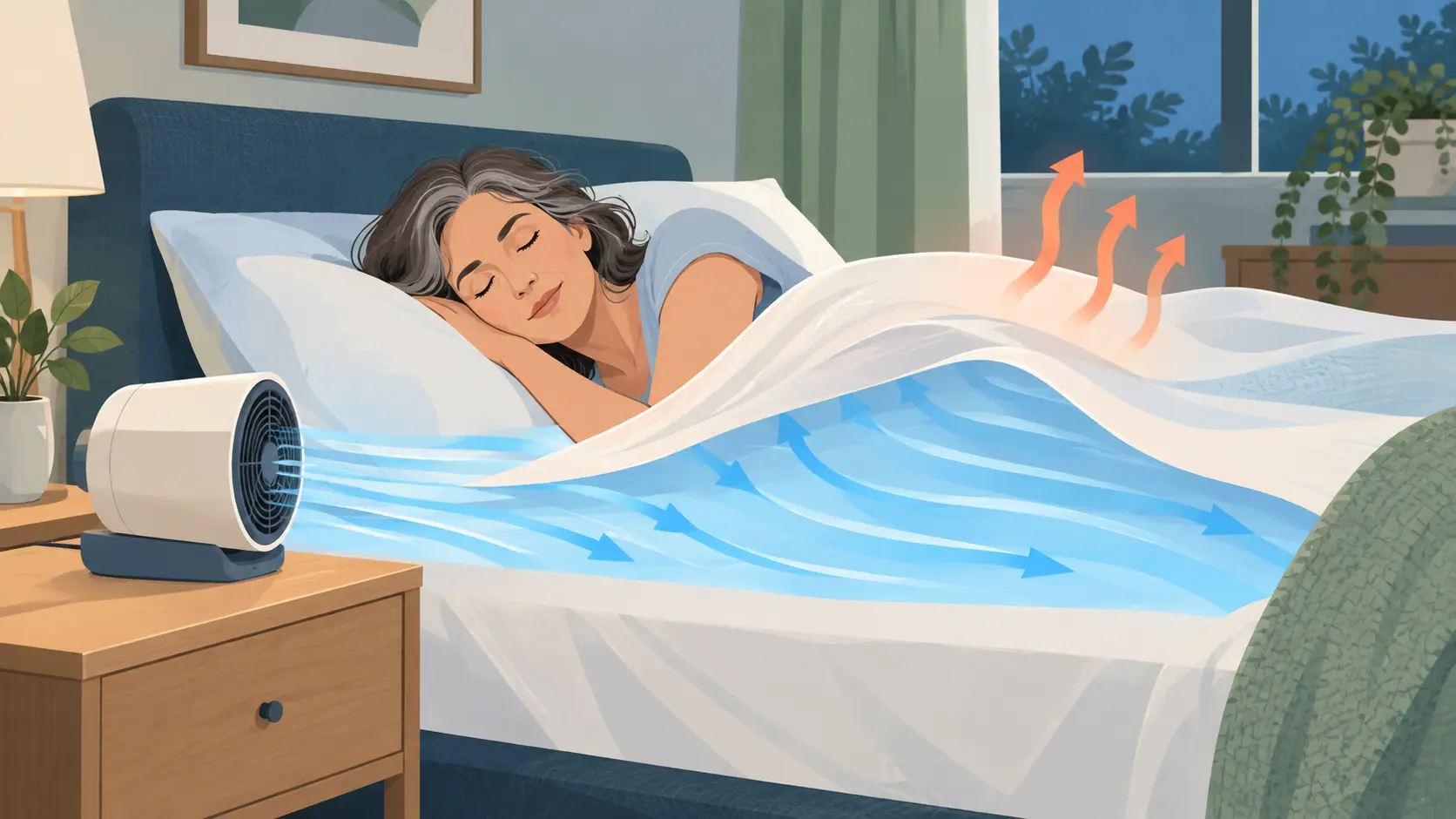
Quick Answer: Can a Bed Fan Under Sheets Help Menopause Night Sweats?
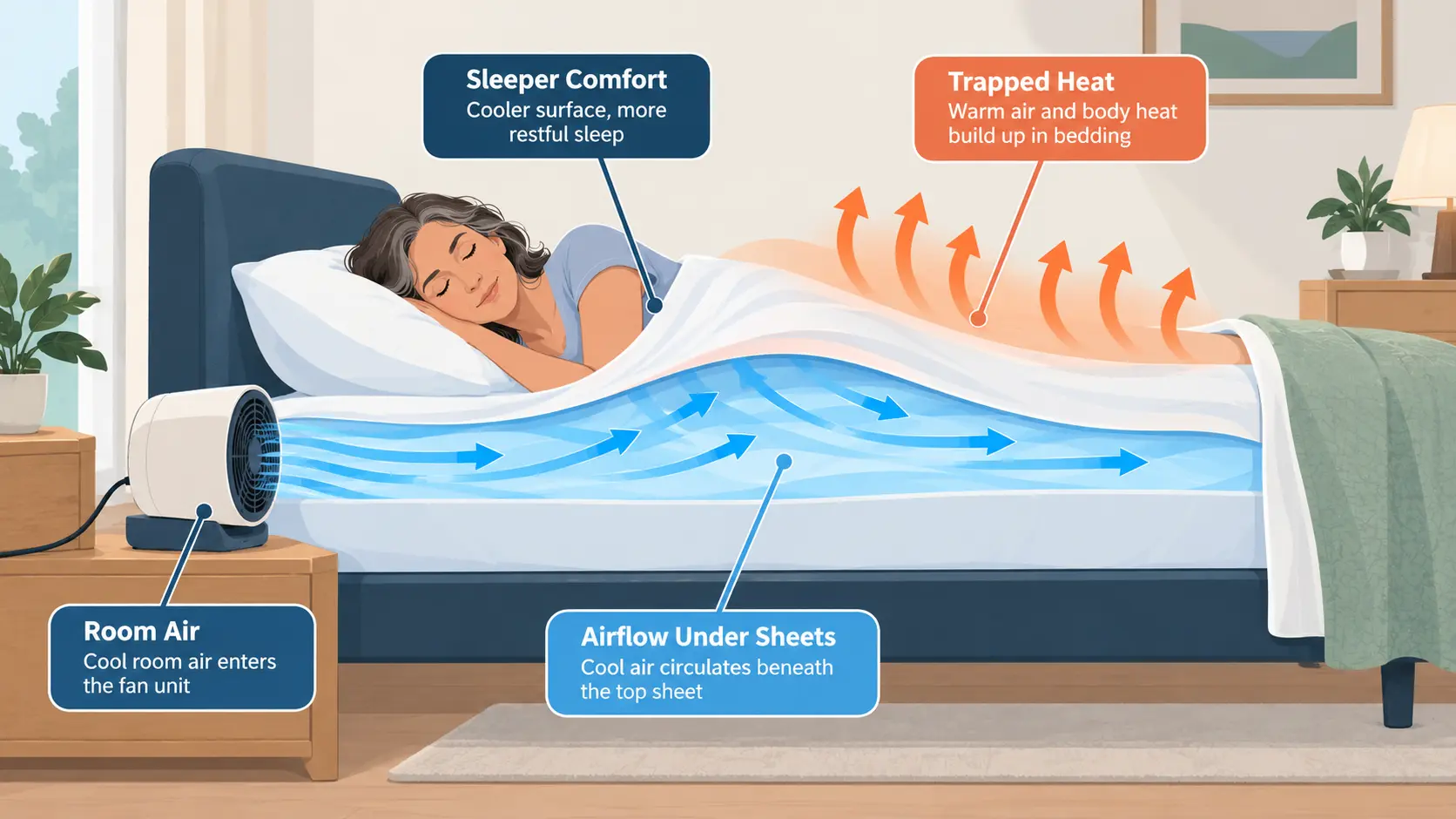
In most cases, yes — with real caveats. A bed fan moves the air already in your room underneath your top sheet, which helps carry away the heat and humidity that build up around your body overnight. For someone whose main complaint is waking up because the bed itself feels stifling, that airflow can genuinely make a difference.
It's a better fit for some situations than others:
- It tends to help most if you feel heat trapped under the covers, wake up hot and sweaty, or want a dry (no water, no gel) cooling option.
- It may not be the right tool if you dislike the sensation of moving air, are a light sleeper sensitive to any motor noise, share a bed with someone who runs cold, or you need stronger, more precise temperature control than airflow alone provides.
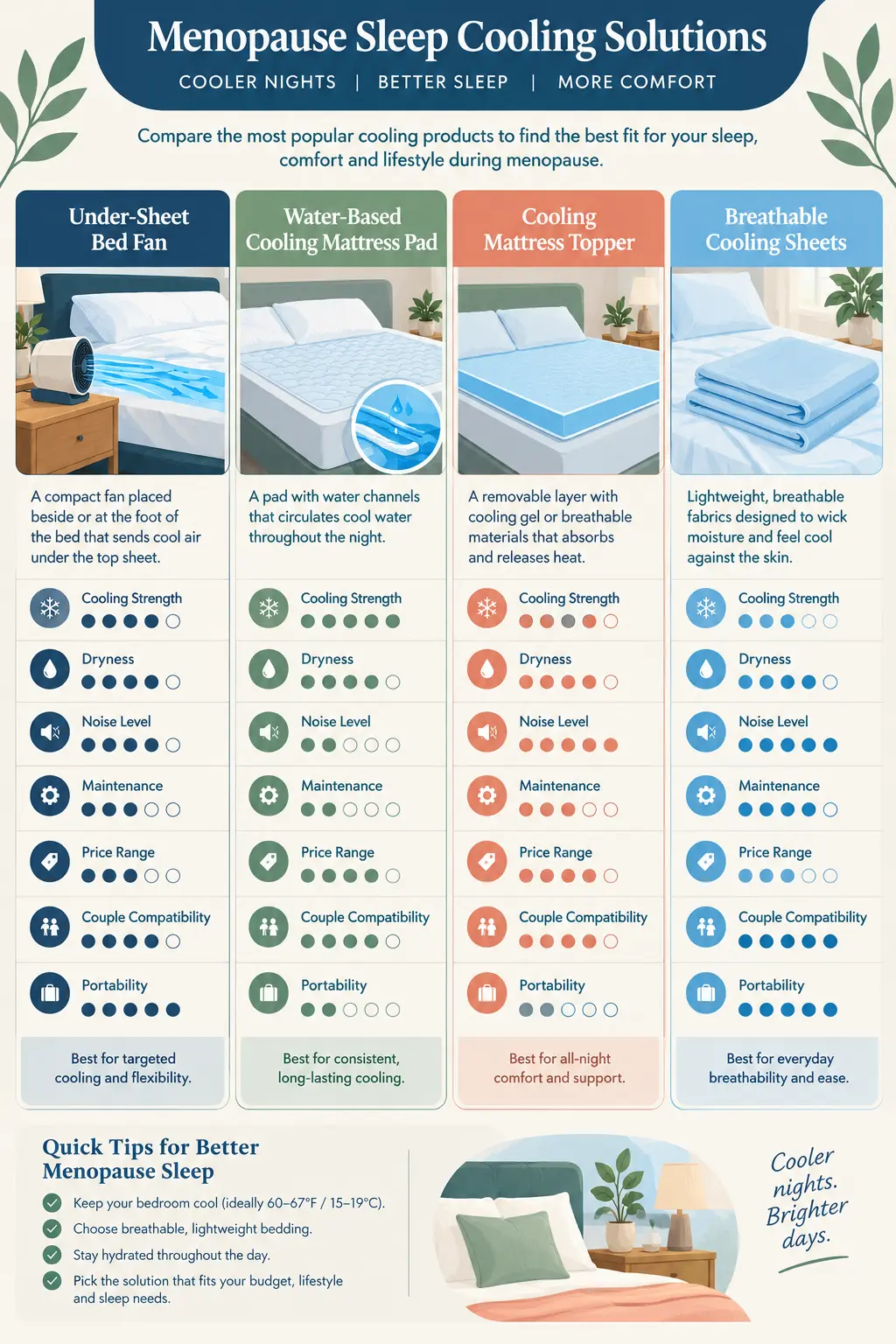
| Option | How It Cools | Best For | Main Limitation |
|---|---|---|---|
| Bed fan under sheets | Moves room air under bedding | Trapped heat, sweaty bedding | May create airflow sensation or noise |
| Water-based mattress pad | Circulates temperature-controlled water | Stronger, targeted cooling | Higher cost, more maintenance |
| Cooling mattress topper | Cooling foam, gel, or fabric | Pressure relief plus mild cooling | Can retain heat depending on material |
| Bedroom fan | Cools room air around the bed | Low-cost, whole-room airflow | Doesn't target heat trapped under covers |
| Cooling sheets | Wicks moisture, feels breathable | Better bedding comfort overall | Doesn't actively move air |
How a Bed Fan Under the Sheets Actually Works
The mechanics are simpler than they sound. A small fan unit, usually about the size of a shoebox, sits beside or at the foot of the bed. A flexible hose runs from the unit to a vent positioned under your top sheet. Flip the fan on, and it pulls in the air already circulating in your bedroom and pushes it through that hose, so it flows along the surface of the mattress, under the sheet, right where your body heat and moisture are building up.
It Moves Room Air Into the Bed
This is worth repeating because it shapes everything else: a bed fan doesn't manufacture cold air. It's not a miniature air conditioner. It takes the air in your room, at whatever temperature that room happens to be, and routes it into the bed. If your bedroom is already comfortably cool, that air arriving under the sheets will feel noticeably refreshing. If your bedroom is warm and stuffy, the same fan will move warm air around your body instead — better than stagnant, trapped heat, but not the dramatic cooling effect some people expect.
It Helps Release Trapped Heat and Humidity
Under a comforter, especially with a body that's already running warm from a hot flash, heat and moisture have nowhere to go. That's the stuffy, clammy feeling that makes you want to throw the covers off entirely. Continuous airflow interrupts that buildup, carrying the warm, humid air out from under the sheet instead of letting it pool there. It's a similar principle to why a stuffy room feels instantly better once you open a window, just applied to the much smaller, much more personal space of your own bed.
It Works Best With Breathable Bedding
A bed fan pushing air against a thick, tightly-tucked comforter isn't going to do much. The system depends on air actually being able to move through your bedding, which means lightweight sheets, breathable duvet covers, and moisture-wicking sleepwear all matter more than they might with a standard fan. Keep the airflow outlet itself uncovered by heavy padding, and consider layering rather than piling on one heavy blanket, so you have something easy to peel back if you're still too warm.
It Does Not Create Cold Air
Worth saying plainly one more time, since it's the single most common misunderstanding: bed-fan brands describe these systems as moving cool room air beneath the bedding to reduce trapped heat and moisture, not as mechanically chilling the air itself. Your room's actual temperature, whether you run air conditioning, and whether a window is open all still matter. A bed fan is an airflow tool layered on top of your existing room temperature, not a replacement for it.
Who May Benefit Most From a Bed Fan
Not every night-sweat sleeper has the same problem, which is exactly why "does this work" doesn't have a single answer. Here's how it tends to break down.
People Who Wake Hot Under the Covers
If your main issue is that heat builds up under a comforter until you're forced to throw it off, wake fully, and then feel too exposed or too cold five minutes later, a bed fan directly targets that specific cycle. Continuous airflow prevents the heat from accumulating to that breaking point in the first place.
People With Night Sweats and Damp Bedding
Ongoing airflow helps manage the clammy, humid feeling that lingers after a sweat episode by supporting evaporation. It won't replace changing genuinely soaked sheets — nothing short of dry bedding fixes that — but for the lower-grade dampness that builds up gradually through the night, it can meaningfully improve comfort.
Couples With Different Sleep Temperatures
This is where dual-zone systems earn their keep. If you run hot and your partner runs cold, a single fan cooling the whole bed evenly just moves the argument from "it's too hot" to "it's too cold, turn it off." A dual-zone setup gives each side its own airflow and its own control, so you're not negotiating over the thermostat of your own mattress.
People Who Want a Dry Cooling Option
Some people simply don't want water reservoirs, gel pads, or anything that can leak or condense. An airflow-based system stays entirely dry, which appeals to anyone who's dealt with a water-based cooling pad's maintenance routine and would rather not.
Who May Prefer Another Cooling Method
If you dislike the physical sensation of moving air against your skin, are a light sleeper who wakes at the faintest motor hum, need precise, dial-in temperature control rather than general airflow, or you're really looking for pressure relief alongside cooling, a bed fan probably isn't your best first purchase. The alternatives further down this guide are worth a look instead.
Bed Fan vs Cooling Mattress Pad vs Cooling Topper
This is usually where the real decision happens, so let's look at each option honestly, including where each one falls short.
Bed Fan Systems
The appeal is simplicity: no water, no gel, relatively easy setup, and often portable enough to take with you if you travel or move. The tradeoff is that performance depends on room temperature, and the sensation of moving air isn't for everyone.
Water-Based Mattress Pads
These actively circulate temperature-controlled water through a pad on your mattress, giving you much more precise, adjustable cooling (and often heating) than airflow alone can offer. That control comes at a real cost — both in price and in upkeep, since you're maintaining a water reservoir and checking for leaks or hose kinks over time.
Cooling Mattress Toppers
A more passive option: the topper's material itself (certain foams, gels, or specially woven fabrics) is designed to feel cooler to the touch and disperse heat rather than trap it. Toppers also add a layer of pressure relief that neither a fan nor a water pad provides, which matters if joint pain or pressure points are part of your sleep struggle too. The downside is that passive cooling is generally milder, and some materials can still trap heat over the course of a full night depending on the specific foam or gel used.
Cooling Sheets and Bedding
The lowest-cost, lowest-commitment option. Moisture-wicking, breathable fabrics won't actively move air the way a fan does, but they change how bedding feels against your skin and pair well with any of the active systems above.
Best Choice by Budget and Symptom
- Budget option: a bedroom fan paired with cooling sheets
- Mid-range: a bed fan paired with breathable bedding
- Premium: a dual-zone water-based cooling system
- Pressure relief needed too: a cooling topper paired with an airflow system
What to Look for When Buying a Bed Fan for Menopause
Airflow Settings and Speed Control
Adjustable speeds matter more than they sound like they would at 2am. A gentle setting for most of the night, with a stronger option ready for an actual hot flash, gives you flexibility a single fixed speed doesn't. Timers are worth having too, especially if you don't want airflow running all night once you've cooled down enough to fall back asleep.
Noise Level
Some sleepers genuinely like the low hum — it functions like white noise and can mask other sounds that would otherwise wake them. Others find any motor sound intrusive, especially at 3am when everything feels louder than it is. If you're noise-sensitive, look specifically for reviews that mention nighttime performance, not just how the fan sounds during a daytime demo.
Single-Zone vs Dual-Zone Setup
One sleeper, or two people who run at similar temperatures, can generally get by with a single-zone system. Two people with genuinely different temperature preferences are usually better served by dual-zone, even though it costs more — the alternative is one of you compromising every single night.
Sheet Compatibility
Check whether the system requires a specific fitted sheet setup, works with any standard sheet and comforter combination, or needs a dedicated airflow channel built into the bedding itself. This affects both setup difficulty and whether you can keep using your existing sheets.
Remote, App, and Timer Features
A bedside remote or app control matters more than it might seem when you're trying to adjust airflow without fully waking up (or waking a partner) at 3am. Automatic shutoff timers and scheduled cooling are worth having if you don't want to remember to turn the system off yourself.
Return Policy and Warranty
Sleep products are notoriously personal — what works for one person's night sweats may not work for yours. A reasonable trial or return period, plus a real warranty on the motor and parts, protects you if the airflow sensation or noise level just isn't a fit once you've actually tried sleeping with it.
How to Set Up a Bed Fan Under Sheets
Setup specifics vary by manufacturer, so always follow the instructions that come with your particular system — but a few general principles apply almost universally.
Choose the Airflow Direction
Most systems are designed to vent from the foot of the bed or one side, following the manufacturer's recommended placement. Where it feels most comfortable can also be a matter of personal preference once you've tried it a few nights.
Keep Airflow Channels Open
Tightly tucked sheets, heavy blankets piled directly over the vent, or bedding compressed under a mattress topper can all block the very airflow you're trying to create. A quick check before bed — is the vent actually clear? — avoids a lot of "this isn't working" frustration that's really just a blocked airflow path.
Pair With Layered Bedding
A top sheet, a light blanket, and a breathable comforter you can fold back separately give you more control than one heavy all-in-one duvet. Temperature swings through the night are normal during menopause, and layers let you adjust without fully waking up to solve the problem.
Pre-Cool the Bed
If your system supports it, running the fan for a few minutes before you actually get into bed can make the first part of the night more comfortable, especially if your bedroom runs warm in the evening before it's had time to cool down.
Check Electrical Safety
Basic precautions apply here just like any electrical device near where you sleep: keep cords undamaged and untangled, follow the manufacturer's clearance instructions, avoid plugging into a damaged outlet, and never place the unit somewhere it could be covered or have its intake blocked.
How to Use a Bed Fan as Part of a Bigger Night-Sweat Routine
A bed fan works best as one piece of a broader setup, not a single fix expected to solve everything on its own.
Use Breathable Sleepwear
Lightweight, loose, moisture-wicking fabrics work with the airflow instead of trapping heat against your skin the way heavier or tighter fabrics can. Keeping a spare sleep top within reach means a heavy sweat episode doesn't mean fully waking up to dig through a drawer.
Keep Layers Easy to Remove
The same layering principle from setup applies to your whole routine: it's much easier to fold back a light blanket than to wrestle out from under one heavy comforter mid-hot-flash.
Keep Hydration Nearby
A glass of water on the nightstand solves two problems at once — the dry mouth that often comes with a hot flash, and giving you something to do besides lying there fuming about being awake again.
Track Triggers and Sleep Patterns
Caffeine, alcohol, spicy food, room temperature, stress, and even what you wore to bed can all influence how bad a given night is. Patterns are much easier to spot with a few weeks of notes than from memory alone — our Hot Flash Tracker is built specifically for this.
Combine Comfort Tools With Medical Support When Needed
If night sweats are severe, new, or disrupting your sleep most nights despite trying comfort measures, that's worth a conversation with your doctor rather than something to keep managing alone with bedding adjustments.
Bed Fan Safety and Practical Limitations
It Is a Comfort Tool, Not a Menopause Treatment
Worth stating clearly one more time: a bed fan can make your sleep environment more bearable. It does nothing to address the hormonal changes actually causing hot flashes and night sweats. If your symptoms are significantly affecting your life, that's a conversation for your doctor, not something a cooling gadget is meant to solve on its own.
Electrical and Cord Safety
Follow the manufacturer's instructions, inspect cords periodically, keep clearance around the unit for proper airflow intake, and avoid outlets that show any sign of damage.
Noise and Dry-Air Sensitivity
Some sleepers find moving air drying to the skin or throat, or simply find any airflow sensation uncomfortable rather than soothing. If that's you, start on the lowest setting and give it a genuine trial before assuming it isn't for you — or before assuming it is.
Keep Expectations Realistic
Cooling tools can genuinely improve comfort and help some people fall back asleep faster after waking hot. Results vary person to person, and it's worth saying honestly: the research evidence specifically supporting cooling interventions as a direct treatment for hot flashes and night sweats is limited, even though cooler environments and fans are commonly and reasonably recommended as comfort strategies.
Bed Fan Alternatives if You Don't Like Airflow
Cooling Mattress Pads
Water-based or other active cooling pads give you more direct, adjustable temperature control if airflow alone isn't cutting it or isn't your preference.
Cooling Mattress Toppers
A solid option if you want cooling plus pressure relief, particularly useful for side sleepers or anyone dealing with joint discomfort alongside night sweats.
Cooling Pillows and Pillow Pads
Since a lot of heat sensation concentrates around the head and neck, a cooling pillow or gel pillow pad can meaningfully help on its own, or work alongside a bed fan for whole-body coverage.
Bedroom Cooling Tools
Sometimes the simplest fix is upstream of the bed entirely: a portable air conditioner, a standard bedroom fan, blackout blinds or breathable curtains that keep afternoon heat from building up in the room, and just knowing your room's actual overnight temperature.
Choose the Least Complicated Tool That Solves Your Main Problem
Heat trapped under covers, bedding that stays damp, a hot head and neck, a partner who runs cold, a bedroom that's simply too warm, or pressure discomfort alongside the heat — naming your actual main problem first makes it much easier to pick the right tool instead of buying everything at once.
Frequently Asked Questions
Final Takeaway
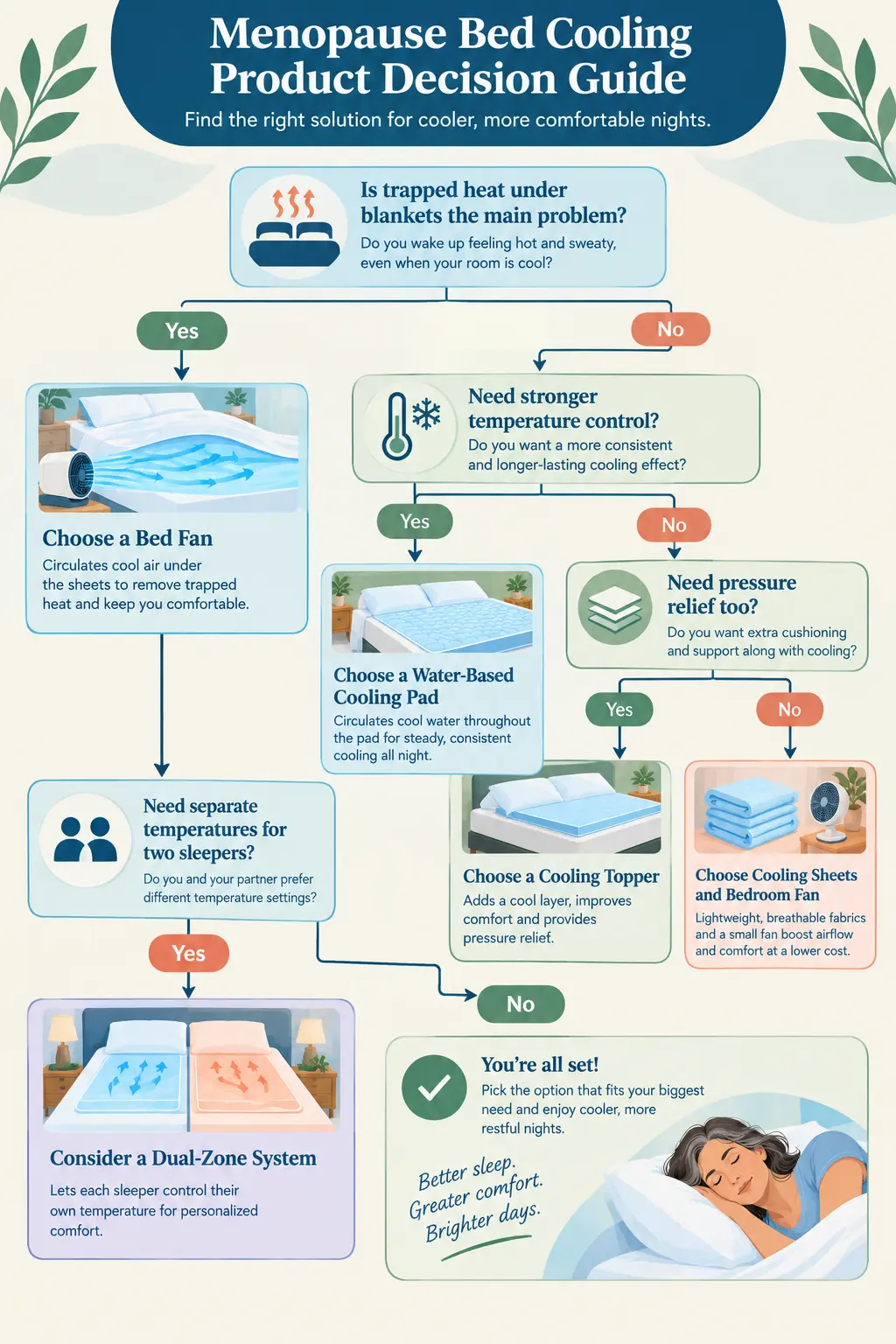
A bed fan under the sheets is most worth trying if your specific problem is heat trapped under the covers and you'd rather solve it with moving air than water or gel. It's not a cure, and it won't touch the hormonal cause of your night sweats — but comfort matters too, especially at 3am when you just want to get back to sleep. Use the checklist above, be honest with yourself about whether airflow or precise temperature control matters more, and pick the system that matches your budget, your bedding, your noise tolerance, and, if it applies, your partner's idea of a comfortable night's sleep.