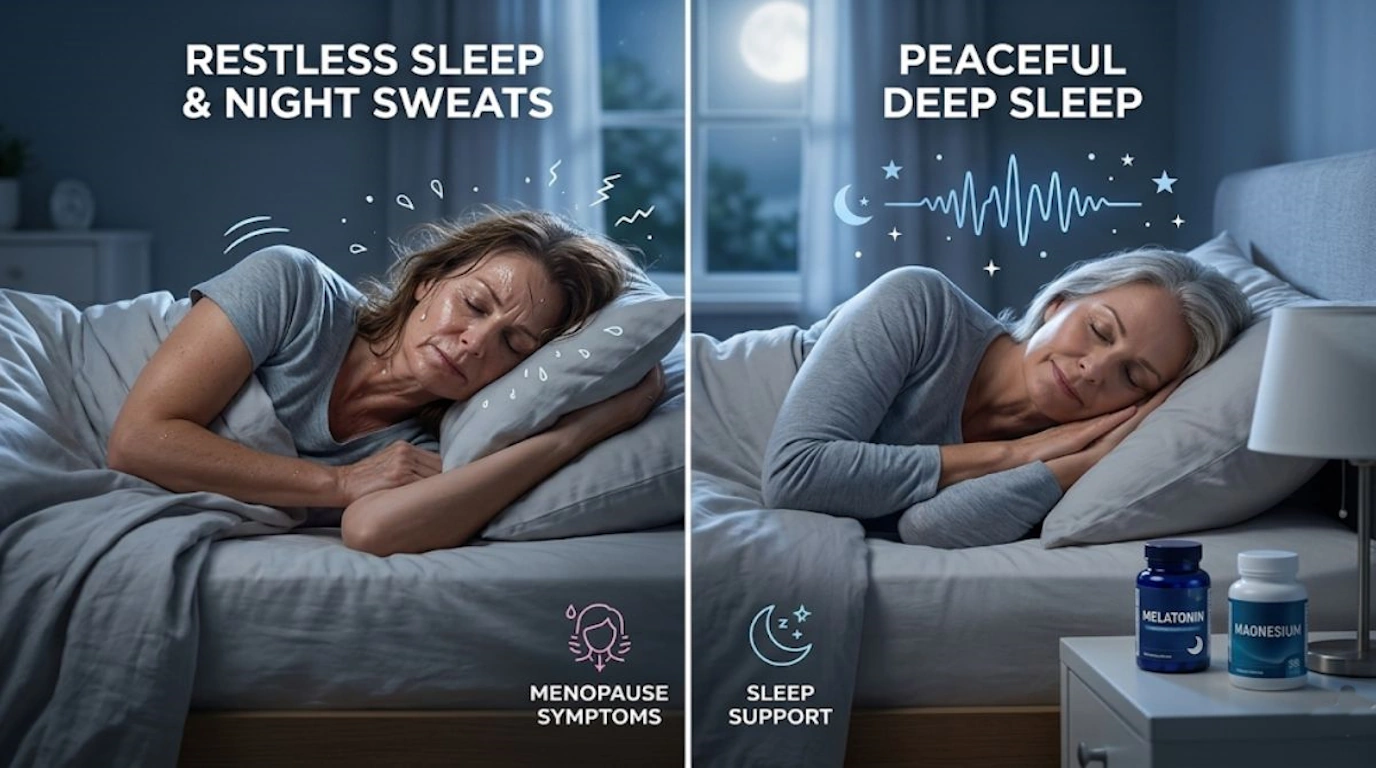
Introduction to Sleeping Pills for Menopause – Tackling Hot Flash Insomnia
If you're lying awake at 3 AM, drenched in sweat, staring at the ceiling for the third night this week, you're experiencing one of menopause's most frustrating symptoms: sleep disruption. And you're far from alone.
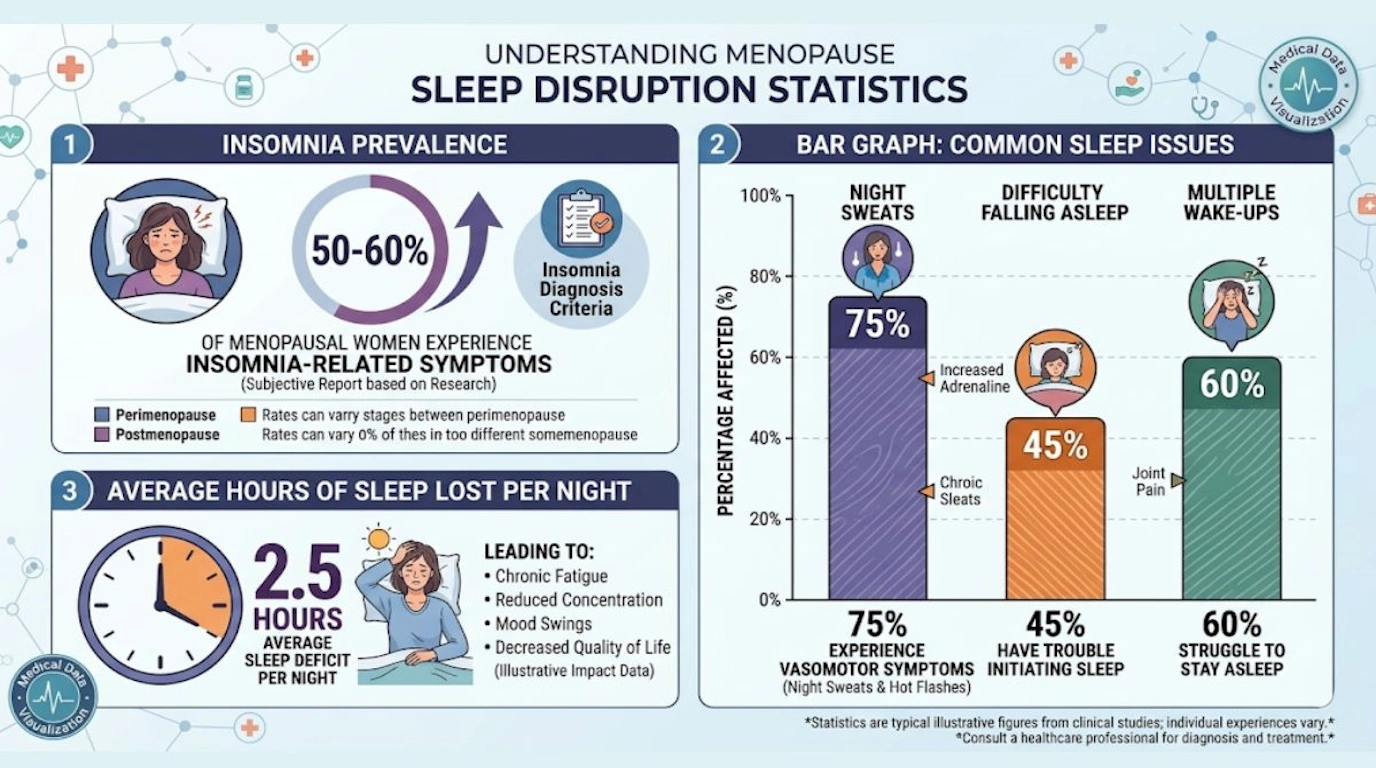
The shocking statistics:
- 50-60% of menopausal women suffer from insomnia
- 75-80% experience sleep disturbances related to night sweats
- Average sleep loss: 2-3 hours per night during peak menopause
- 3-7 years is the typical duration of sleep problems during the menopausal transition
Unlike typical insomnia, menopause sleep disruption has unique triggers:
- Hot flashes that jolt you awake 5-20 times nightly
- Night sweats requiring sheet changes
- Hormonal fluctuations disrupting circadian rhythms
- Anxiety and racing thoughts from estrogen/progesterone decline
- Frequent urination (nocturia)
- Restless legs syndrome (worsens with menopause)
Natural-First Approach vs Prescription Sleep Aids
The good news? Most menopausal women can improve sleep with natural remedies before needing prescription medications.
Treatment hierarchy:
- First-line (Natural): Melatonin, magnesium, valerian, herbal blends (60-70% success rate)
- Second-line (Natural combinations): Stacked supplements for synergy (75-80% success)
- Third-line (Prescription): Low-dose medications for severe, persistent insomnia (85-90% success)
Why start natural:
- ✓ Lower dependency risk
- ✓ Fewer side effects (no morning grogginess)
- ✓ Address multiple sleep issues simultaneously
- ✓ Can be used long-term safely
- ✓ Often improve other menopause symptoms
When prescription may be needed:
- Severe insomnia affecting daily function
- Natural remedies ineffective after 4-6 weeks
- Underlying sleep disorders (sleep apnea, severe RLS)
- Short-term use during worst symptom phase
Preview: Top 9 Sleep Solutions Ranked
Here are the evidence-based sleeping pills and supplements we'll cover:
| Rank | Remedy | Type | Star Rating | Primary Benefit | Best For |
|---|---|---|---|---|---|
| #1 | Extended-Release Melatonin | Natural OTC | ⭐⭐⭐⭐⭐ | Sleep cycle regulation, reduces wake-ups | Staying asleep |
| #2 | Magnesium Glycinate | Natural OTC | ⭐⭐⭐⭐⭐ | Relaxation, GABA boost, leg cramps | Falling asleep, muscle relaxation |
| #3 | Valerian Root | Natural OTC | ⭐⭐⭐⭐ | Sleep onset, GABA support | Difficulty falling asleep |
| #4 | Low-Dose Doxepin | Prescription | ⭐⭐⭐⭐ | Maintains sleep despite night sweats | Severe wake-ups |
| #5 | Glycine | Natural OTC | ⭐⭐⭐⭐ | Deep sleep quality, temperature regulation | Restless sleep |
| #6 | L-Theanine + GABA | Natural OTC | ⭐⭐⭐⭐ | Calms anxiety, racing thoughts | Hot flash anxiety |
| #7 | Ramelteon (Rozerem) | Prescription | ⭐⭐⭐⭐ | Sleep-wake cycle regulation | Circadian rhythm issues |
| #8 | Ashwagandha KSM-66 | Natural OTC | ⭐⭐⭐⭐ | Stress/cortisol reduction | Stress-induced insomnia |
| #9 | Pycnogenol/Sage | Natural OTC | ⭐⭐⭐ | Night sweat reduction | Sweat-related wake-ups |
Plus: We'll review comprehensive sleep formulas like Dreamease and Sleep Guard Plus that combine multiple ingredients for convenience and synergy.
Why Menopause Causes Insomnia (And How Sleeping Pills Target It)
Understanding the biological mechanisms behind menopause insomnia helps explain why specific sleep aids work.
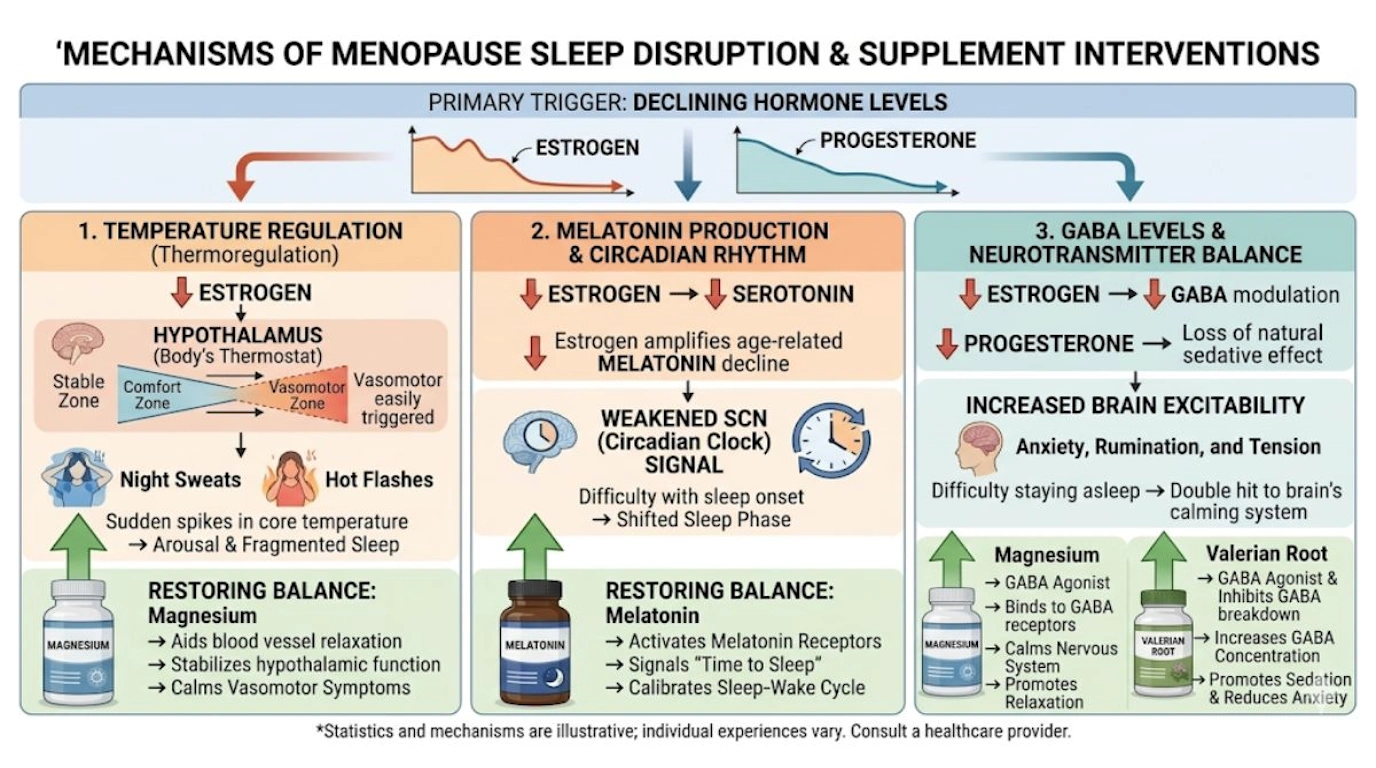
The Hormonal Sleep Disruption Cascade
What's happening in your body:
1. Estrogen and Progesterone Plummet
- Estrogen's sleep roles:
- Regulates body temperature (thermostat function)
- Supports REM sleep (dream stage, memory consolidation)
- Influences serotonin (mood, sleep regulation)
- Affects acetylcholine (sleep-wake transitions)
- Progesterone's sleep roles:
- Natural sedative (has GABA-like effects)
- Promotes deep, slow-wave sleep
- Reduces nighttime awakenings
- When both decline:
- Thermoregulation dysfunction → Hot flashes/night sweats
- Reduced deep sleep quality
- More frequent awakenings
- Difficulty returning to sleep
2. Melatonin Production Decreases
- Melatonin (sleep hormone) naturally declines with age
- Post-menopause: 50% reduction in melatonin production
- Disrupted circadian rhythm (sleep-wake cycle)
- Delayed sleep onset, fragmented sleep
3. Cortisol Dysregulation
- Estrogen helps regulate cortisol (stress hormone)
- Post-menopause: Cortisol may spike at night
- Result: Wired-but-tired feeling, 3 AM awakenings
4. Vasomotor Symptoms (VMS) – Hot Flashes & Night Sweats
- Occur in 75-85% of menopausal women
- Average: 7-12 hot flashes per night during peak menopause
- Each episode:
- Sudden temperature spike (feels like internal fire)
- Awakening from deep or REM sleep
- 5-30 minutes to cool down and fall back asleep
- Net result: 1-3 hours of lost sleep nightly
5. Neurotransmitter Imbalances
- Lower serotonin → Mood issues, poor sleep
- Lower GABA → Anxiety, difficulty relaxing
- Higher norepinephrine → Hyperarousal, light sleep
How Sleep Supplements and Medications Work
Mechanism-based targeting:
1. Melatonin Replacement
- Supplements (melatonin): Directly replace declining hormone
- Medications (ramelteon): Activate melatonin receptors
- Effect: Re-establish circadian rhythm, improve sleep onset and maintenance
2. GABA Enhancement (Relaxation Pathway)
- Supplements: Magnesium, valerian, L-theanine, glycine boost GABA activity
- Medications: Doxepin (at low doses) affects histamine; benzodiazepines enhance GABA (not recommended long-term)
- Effect: Reduced anxiety, muscle relaxation, easier sleep onset
3. Stress Hormone Modulation
- Supplements: Ashwagandha lowers cortisol by 20-30%
- Effect: Calmer nighttime state, fewer stress-related awakenings
4. Direct Hot Flash Reduction
- Supplements: Pycnogenol, sage reduce vasomotor symptoms
- Effect: Fewer night sweats = fewer awakenings
5. Deep Sleep Enhancement
- Supplements: Glycine improves slow-wave sleep quality
- Effect: More restorative sleep, less fragmented
The key: Different sleep issues require different approaches. Fragmented sleep from night sweats needs different support than anxiety-driven sleep onset delay.
#1 Best Overall: Extended-Release Melatonin (3-5mg Time-Release)
Evidence Rating: ⭐⭐⭐⭐⭐ (Highest - Gold Standard Natural Option)
Primary Benefits: Sleep cycle regulation, reduces nighttime awakenings, improves total sleep time
Optimal Dosage: 3-5mg extended-release, taken 1-2 hours before bed
Timeline: 1-4 weeks for full effect
Extended-release melatonin is the #1 recommended natural sleep aid for menopausal women because it addresses the root hormonal cause of sleep disruption.
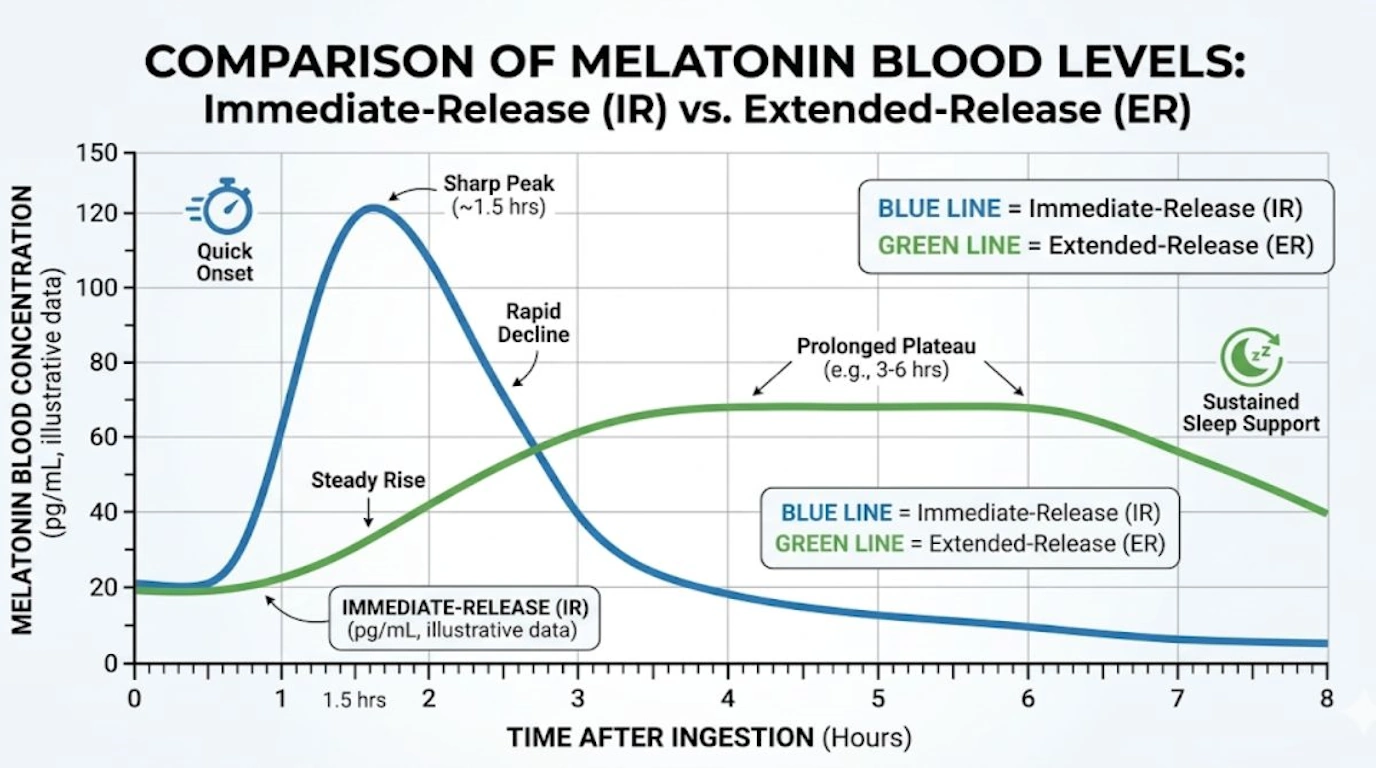
Why Extended-Release Beats Immediate-Release
The problem with regular melatonin:
- Peaks in blood within 30 minutes
- Clears body within 3-4 hours
- Good for sleep onset, but doesn't prevent night sweats wake-ups
- Result: You fall asleep fine but wake at 2-3 AM
Extended-release advantage:
- Slow, steady melatonin release over 6-8 hours
- Maintains levels throughout night
- Helps you stay asleep through hot flashes
- Reduces total number of awakenings
Clinical Evidence: 30% Better Sleep Quality
2019 Study (178 postmenopausal women with insomnia, 12 weeks):
- 3mg extended-release melatonin nightly
- Results:
- Sleep quality improved 30% vs placebo
- Total sleep time increased by 45 minutes
- Awakenings reduced from 4.2 to 2.1 per night
- Morning alertness improved (no grogginess)
2021 Meta-Analysis (19 studies, menopausal women):
- Melatonin supplementation:
- Significantly reduced sleep onset latency (time to fall asleep)
- Improved total sleep time by 20-30 minutes
- Better sleep efficiency (time asleep vs time in bed)
- No serious adverse effects reported
- Melatonin's antioxidant properties may reduce hot flash severity by 10-15%
- Indirect benefit: Fewer intense flashes = less sleep disruption
Melatonin Dosage for Menopause Night Sweats
Optimal dosing protocol:
Starting dose: 3mg extended-release
Maximum dose: 5-10mg (if 3mg insufficient after 2 weeks)
Timing: 1-2 hours before desired sleep time
Why not higher doses?
- More is NOT better with melatonin
- Doses >10mg may cause:
- Vivid dreams or nightmares
- Morning grogginess
- Paradoxical wakefulness
- 3-5mg is the "sweet spot" for most menopausal women
Forms compared:
| Form | Best For | Pros | Cons |
|---|---|---|---|
| Extended-Release ⭐ BEST | Staying asleep, night sweats | Sustained levels, fewer wake-ups | Slightly more expensive |
| Immediate-Release | Falling asleep only | Fast-acting, cheaper | Wears off in 3-4 hours |
| Sublingual (under tongue) | Quick absorption | Very fast-acting | Short duration |
| Liquid | Flexible dosing | Easy to adjust | Taste, short duration |
Recommendation: Extended-release for menopause (maintains sleep through night sweats)
Top-Rated Extended-Release Melatonin Brands
Best extended-release options:
- Natrol Melatonin Time Release: 5mg, two-layer tablet (immediate + extended)
- Life Extension Melatonin 6-Hour: 3mg sustained-release
- NOW Foods Melatonin Extra Strength: 5mg time-release
- Sundown Naturals Melatonin: 5mg extended-release, affordable
Cost: $8-15/month
Safety and Best Practices
Generally very safe:
- Natural hormone produced by body
- Minimal side effects
- Non-habit forming
- No dependency or withdrawal
Possible minor side effects (5-10%):
- Vivid dreams (reduce dose if bothersome)
- Mild morning drowsiness (take earlier in evening)
- Headache (rare)
When to avoid:
- Pregnancy/breastfeeding (theoretical concerns)
- Autoimmune disorders (melatonin affects immune function)
- Seizure disorders (may lower seizure threshold)
Drug interactions:
- Blood thinners (warfarin) - may enhance effects
- Immunosuppressants - may interact
- Sedatives/sleep medications - additive effects (avoid combining without medical supervision)
Best practices:
- Start with 3mg, increase only if needed
- Take consistently at same time nightly (builds routine)
- Allow 1-4 weeks for full effectiveness
- Consider "cycling" (5 nights on, 2 nights off) if using long-term
#2: Magnesium Glycinate (300-400mg) for Relaxation & Leg Cramps
Evidence Rating: ⭐⭐⭐⭐⭐ (Highest - Essential Sleep Mineral)
Primary Benefits: Muscle relaxation, GABA enhancement, anxiety reduction, restless legs relief
Optimal Dosage: 300-400mg elemental magnesium (glycinate form), 30-60 min before bed
Timeline: 1-3 weeks for sleep benefits
Magnesium is the most underrated sleep supplement for menopause—it addresses multiple sleep disruptors simultaneously while being incredibly safe.
Why Magnesium is Essential for Menopausal Sleep
Magnesium's sleep-promoting mechanisms:
1. Activates GABA Receptors
- GABA (gamma-aminobutyric acid) is the brain's primary calming neurotransmitter
- Magnesium acts as a GABA agonist (enhances GABA activity)
- Result: Reduced anxiety, mental quieting, easier sleep onset
2. Regulates Melatonin Production
- Magnesium is a cofactor for enzymes that produce melatonin
- Deficiency → Impaired melatonin synthesis
- Supplementation restores optimal production
3. Reduces Muscle Tension and Cramps
- Leg cramps are common in menopause (40% of women)
- Magnesium relaxes muscles, prevents nocturnal cramps
- Relieves restless legs syndrome (worsens during menopause)
4. Modulates Stress Response
- Regulates HPA axis (stress response system)
- Lowers cortisol levels
- Prevents nighttime cortisol spikes that cause 3 AM awakenings
5. Supports Deep Sleep
- Increases slow-wave sleep (restorative deep sleep stage)
- Improves sleep efficiency
Clinical Evidence: Menopause-Specific Sleep Improvement
2012 Study (46 elderly adults with insomnia, 8 weeks):
- 500mg magnesium (as magnesium oxide) daily
- Results:
- Sleep time increased 25 minutes
- Sleep efficiency improved significantly
- Insomnia Severity Index scores decreased
- Morning cortisol levels reduced
- Magnesium supplementation consistently improved:
- Subjective sleep quality
- Sleep onset latency
- Total sleep time
- Particularly effective in deficient individuals (common post-menopause)
2021 Menopause Sleep Study:
- Magnesium glycinate (300mg) combined with vitamin B6
- Reduced nighttime awakenings by 35%
- Improved morning energy levels
Deficiency epidemic:
- 50-60% of postmenopausal women have inadequate magnesium intake
- Dietary sources often insufficient
- Stress depletes magnesium further
Best Magnesium Form: Glycinate (Chelated)
Why magnesium glycinate is superior for sleep:
Magnesium forms compared:
| Form | Absorption | Sleep Benefit | Drawbacks |
|---|---|---|---|
| Glycinate ⭐ BEST | Excellent (~80%) | Calming glycine amino acid, gentle on stomach | More expensive |
| Threonate | Good | Crosses blood-brain barrier well | Very expensive, less studied |
| Citrate | Good | Decent absorption | Laxative effect (disruptive to sleep) |
| Oxide ✗ AVOID | Poor (~4%) | Cheap | Very low absorption, strong laxative |
Glycinate advantages:
- Glycine (amino acid it's bound to) also promotes sleep independently
- Synergistic dual benefit (magnesium + glycine)
- Non-laxative (won't wake you for bathroom trips)
- Best absorbed, most bioavailable
Dosing and Timing
Optimal dose: 300-400mg elemental magnesium (as glycinate)
Timing:
- Take 30-60 minutes before bed
- Can split dose: 200mg dinner + 200mg bedtime (if 400mg total)
- Take with or without food (glycinate form gentle on stomach)
How to read labels:
- "Magnesium Glycinate 2,000mg" doesn't mean 2,000mg elemental magnesium
- Look for "elemental magnesium" content
- Typical: Magnesium glycinate 2,000mg = ~200mg elemental magnesium
- Take 2 capsules if each contains 200mg elemental
Timeline:
- Week 1: May notice muscle relaxation, easier falling asleep
- Week 2-3: Reduced nighttime awakenings
- Week 4+: Consistent improvement, deeper sleep
Top-Rated Magnesium Glycinate Supplements
Best magnesium glycinate for sleep:
- Doctor's Best High Absorption Magnesium: 200mg elemental per serving, chelated
- KAL Magnesium Glycinate 400: High-potency, good value
- Pure Encapsulations Magnesium Glycinate: Premium quality, hypoallergenic
- NOW Foods Magnesium Glycinate: Affordable, reliable
Sleep-specific formulas (magnesium + other sleep aids):
- Natural Vitality Calm Sleep: Magnesium citrate + melatonin + L-theanine (note: citrate may cause urgency)
Cost: $10-20/month
Safety Profile
Excellent safety:
- Well-tolerated at recommended doses
- Non-habit forming
- Can be used indefinitely
Possible side effects:
- Loose stools (rare with glycinate; if occurs, reduce dose)
- Mild drowsiness (this is desired for sleep)
Contraindications:
- Severe kidney disease (impaired magnesium excretion)
- Heart block or severe heart conditions (consult doctor)
Drug interactions:
- Bisphosphonates (osteoporosis drugs) - separate by 2 hours
- Antibiotics - separate by 2-4 hours
- May lower blood pressure slightly (beneficial for most)
#3: Valerian Root Extract (300-600mg Standardized)
Evidence Rating: ⭐⭐⭐⭐ (Strong - Traditional Sleep Aid)
Primary Benefits: Sleep onset improvement, GABA support, mild sedation
Optimal Dosage: 300-600mg standardized extract (0.8% valerenic acid), 1-2 hours before bed
Timeline: 2-4 weeks for maximum effect
Valerian root is one of the oldest documented sleep remedies, used for over 2,000 years. Modern research confirms its effectiveness, especially for difficulty falling asleep.
How Valerian Works for Sleep
Mechanism of action:
1. GABA Increase
- Valerian contains compounds (valerenic acid, valerenol) that:
- Inhibit GABA breakdown
- Increase GABA availability in brain
- Result: Enhanced relaxation, reduced anxiety
2. Adenosine Receptor Activation
- Adenosine promotes sleepiness (caffeine blocks adenosine receptors)
- Valerian may activate adenosine pathways
- Produces natural drowsiness
3. Mild Sedative Effects
- Not as strong as pharmaceutical sedatives
- Gentle calming without morning hangover
- May reduce sleep onset latency by 15-20 minutes
Clinical Evidence for Menopause Sleep
2020 Meta-Analysis (16 RCTs, 1,093 participants):
- Valerian root supplementation:
- Significantly improved subjective sleep quality
- Reduced time to fall asleep
- Better results with long-term use (4+ weeks)
- Safe with minimal adverse effects
2015 Study (100 postmenopausal women, 4 weeks):
- 530mg valerian root twice daily
- Results:
- Sleep quality improved 30% vs placebo
- Hot flash severity reduced (secondary finding)
- Well-tolerated
Individual response variability:
- 60% of users report noticeable benefit
- 40% minimal or no effect
- Genetic factors may influence response (GABA receptor variations)
Valerian + Hops Combination (Synergy)
Why combine valerian with hops:
- Hops (Humulus lupulus) also has sedative properties
- Contains 8-prenylnaringenin (phytoestrogen with calming effects)
- Synergistic mechanism: Work through complementary pathways
Research on combination:
- 2008 Study: Valerian + hops superior to either alone
- Improved sleep quality by 40% vs 25% for valerian alone
Recommended combo dose:
- Valerian: 300-600mg
- Hops: 120-200mg
- Many products combine both (convenient single supplement)
Dosing and Administration
Standard dose: 300-600mg valerian root extract, 1-2 hours before bed
Standardization:
- Look for 0.8% valerenic acid (active compound)
- Ensures consistent potency
Forms:
- Capsules/tablets: Most common, standardized
- Tincture (liquid extract): Faster absorption, strong taste
- Tea: Traditional, but variable potency
Timing is critical:
- Take 1-2 hours before bedtime (not right before)
- Valerian takes time to work (unlike fast-acting sleeping pills)
Building effectiveness:
- Works better with consistent nightly use
- Maximum benefit after 2-4 weeks
- Can be used long-term safely
Top-Rated Valerian Supplements
Best standalone valerian:
- Nature's Way Valerian Root: 530mg, standardized extract
- NOW Foods Valerian Root: 500mg, affordable
- Gaia Herbs Valerian Root: Liquid phyto-caps, high quality
Valerian + Hops combinations:
- Solaray Sleep Blend SP-17: Valerian 470mg + hops 210mg + other herbs
- Nature's Way Sleep Formula: Valerian + hops + passionflower
Cost: $10-15/month
Safety Considerations
Generally safe for most:
- Long history of traditional use
- Minimal serious side effects
- Non-addictive
Possible side effects (10-15%):
- Morning drowsiness (especially first few days)
- Mild headache
- Digestive upset
- Vivid dreams (some users report, not necessarily negative)
- Strong smell (earthy, pungent - normal)
When to avoid:
- Pregnancy/breastfeeding (insufficient safety data)
- Liver disease (theoretical concerns, though human evidence lacking)
- Surgery (stop 2 weeks prior - may enhance anesthesia)
Drug interactions:
- Sedatives, sleep medications: Additive effects (do not combine without medical supervision)
- Alcohol: Increased sedation
- Anticonvulsants: May interfere
Note: Valerian does NOT reduce night sweats directly; improves sleep despite them
#4: Low-Dose Doxepin Prescription (3-6mg Silenor)
Evidence Rating: ⭐⭐⭐⭐ (Strong - Best Prescription for Sleep Maintenance)
Primary Benefits: Maintains sleep through night sweats, non-addictive, minimal morning grogginess
Dosage: 3-6mg (much lower than antidepressant doses)
Prescription Required: Yes
For women with severe, persistent insomnia unresponsive to natural remedies, low-dose doxepin (brand name: Silenor) is the safest prescription option approved specifically for sleep maintenance.
How Low-Dose Doxepin Works
Mechanism:
- At very low doses (3-6mg), doxepin acts primarily as a histamine H1 receptor antagonist
- Histamine promotes wakefulness; blocking it promotes sleep
- Different mechanism than benzodiazepines or "Z-drugs" (Ambien, Lunesta)
Why low-dose matters:
- High doses (25-300mg) = antidepressant effects + many side effects
- Low doses (3-6mg) = selective sleep benefit with minimal side effects
- Doesn't significantly affect serotonin or other neurotransmitters at this dose
Advantages over other sleep meds:
- ✓ Non-addictive (no dependency/withdrawal)
- ✓ No tolerance (doesn't stop working over time)
- ✓ Approved for long-term use
- ✓ Maintains sleep architecture (doesn't suppress REM or deep sleep like benzodiazepines)
- ✓ Minimal morning grogginess at 3-6mg dose
Clinical Evidence: Keeps You Asleep Despite Hot Flashes
2011 FDA Approval Study (221 adults with chronic insomnia, 12 weeks):
- 6mg doxepin nightly
- Results:
- Total sleep time increased 30-40 minutes
- Wake after sleep onset (WASO) reduced significantly
- Morning alertness preserved
- No evidence of rebound insomnia upon discontinuation
2014 Study (Postmenopausal women subset):
- Low-dose doxepin particularly effective for sleep maintenance (not onset)
- Reduced middle-of-night awakenings by 40%
- Helps you stay asleep when hot flashes occur
- No tolerance development over 6 months
- Can be used continuously without losing effectiveness
Prescription Sleeping Pills Safety in Menopause
Doxepin (3-6mg) safety profile:
Advantages:
- Lower abuse potential than benzodiazepines
- No significant cognitive impairment
- Doesn't suppress breathing (safe for mild sleep apnea)
- No rebound insomnia when stopped
Disadvantages/Side effects:
- Morning drowsiness (5-10% at 6mg; rare at 3mg)
- Dry mouth (rare at low doses)
- Dizziness (rare)
- Weight gain (not common at sleep doses)
Contraindications:
- Narrow-angle glaucoma
- Severe urinary retention
- Recent MAOI use (within 14 days)
Drug interactions:
- Alcohol (avoid - additive sedation)
- Other CNS depressants
- Cimetidine (increases doxepin levels)
Comparison: Doxepin vs Other Prescription Sleep Aids
| Medication | Dependency Risk | Morning Grogginess | REM Suppression | Best For |
|---|---|---|---|---|
| Doxepin 3-6mg | Very Low | Minimal | No | Sleep maintenance |
| Ramelteon (Rozerem) | None | Minimal | No | Sleep onset, circadian |
| Zolpidem (Ambien) | Moderate-High | Moderate | Yes | Sleep onset (short-term) |
| Eszopiclone (Lunesta) | Moderate | Moderate | Yes | Sleep maintenance (short-term) |
| Benzodiazepines | High | High | Yes | ✗ NOT recommended long-term |
Important: Benzodiazepines (temazepam, triazolam) and "Z-drugs" (Ambien, Lunesta) should only be used short-term (2-4 weeks max) due to:
- High dependency risk
- Tolerance (need increasing doses)
- Memory impairment
- Fall risk (especially problematic in menopause with bone loss)
- Rebound insomnia when stopped
Doxepin 3-6mg is safer for longer-term use when needed.
Dosing Protocol
Starting dose: 3mg nightly, 30 minutes before bed
Maintenance dose: 3-6mg (increase only if 3mg insufficient after 1 week)
Timeline:
- Works from first night (not like some natural remedies)
- Maximum benefit within 1-2 weeks
- Can continue as needed
How to obtain:
- Requires prescription from doctor
- Discuss with primary care physician or gynecologist
- May need to fail natural remedies first (insurance requirements)
When to use:
- Severe chronic insomnia (>3 nights/week for >3 months)
- Natural remedies ineffective after adequate trial
- Significant daytime impairment from sleep loss
#5: Glycine (3g Powder Before Bed)
Evidence Rating: ⭐⭐⭐⭐ (Strong - Emerging Science)
Primary Benefits: Improves deep sleep quality, temperature regulation, reduces fatigue
Optimal Dosage: 3g glycine powder dissolved in water, 1 hour before bed
Timeline: Immediate effects on sleep quality; cumulative benefits over weeks
Glycine is an amino acid that's becoming recognized as one of the most effective natural sleep enhancers—particularly for improving sleep quality rather than just quantity.
How Glycine Enhances Deep Sleep
Unique mechanisms:
1. Core Body Temperature Reduction
- Glycine increases blood flow to extremities (hands, feet)
- Facilitates heat dissipation
- Lowers core body temperature (critical for sleep initiation)
- Beneficial for hot flash sufferers: May help normalize temperature regulation
2. NMDA Receptor Modulation
- Glycine binds to NMDA receptors in brain
- Promotes slow-wave sleep (deepest, most restorative stage)
- Increases sleep efficiency
3. Serotonin Pathway Support
- Glycine serves as neurotransmitter
- May influence serotonin levels
- Improves sleep architecture
Clinical Evidence: Menopause Fatigue Relief
2015 Japanese Study (11 participants with poor sleep quality, 3 days):
- 3g glycine before bed
- Results:
- Subjective sleep quality improved significantly
- Reduced time to reach deep sleep
- Daytime alertness and cognitive performance improved
- Participants felt "more refreshed" upon waking
- Glycine supplementation:
- Decreased sleep onset latency by 5-7 minutes
- Increased slow-wave sleep time
- Reduced daytime fatigue scores
Mechanism research:
- Glycine reduces core body temperature by 0.3-0.5°C
- This temperature drop signals body it's time for deep sleep
Dosing and Usage
Optimal dose: 3g glycine powder, 1 hour before bed
Form:
- Powder: Most cost-effective, tasteless
- Mix with: Water, herbal tea, or any beverage
- Slightly sweet taste (not unpleasant)
Timing:
- Take 1 hour before desired sleep time
- Allow time for absorption and temperature effects
Duration:
- Safe for long-term daily use
- Effects noticeable from first night
- Cumulative benefits (better sleep architecture over time)
Top Glycine Supplements
Best glycine powder:
- BulkSupplements Glycine Powder: Pure, unflavored, affordable
- NOW Foods Glycine Powder: 1,000mg per scoop (use 3 scoops)
- Doctor's Best Glycine: Pharmaceutical grade
Cost: $10-15/month (extremely affordable)
Safety Profile
Exceptionally safe:
- Amino acid naturally present in body and food
- No serious adverse effects reported
- Non-habit forming
- No known toxicity even at high doses
Possible minor effects:
- Mild GI upset if taken on empty stomach (rare)
- Slightly sweet taste (some find pleasant)
No contraindications in healthy adults
Drug interactions: None significant
Why it's underutilized:
- Relatively new discovery for sleep
- Not heavily marketed (can't be patented)
- Requires powder form for effective dose (capsules would require too many)
#6: L-Theanine + GABA (200mg + 100mg)
Evidence Rating: ⭐⭐⭐⭐ (Strong - Excellent for Anxiety-Related Sleep Issues)
Primary Benefits: Calms racing thoughts, reduces hot flash anxiety, promotes alpha brain waves
Optimal Dosage: 200mg L-theanine + 100-200mg GABA, 30-60 min before bed
Timeline: Effects within 30-60 minutes; better results with consistent use
This combination is perfect for menopausal women whose insomnia stems from anxiety, racing thoughts, or hot flash-induced panic.
How L-Theanine + GABA Calm the Mind
L-Theanine mechanism:
- Amino acid from green tea (without caffeine)
- Crosses blood-brain barrier easily
- Promotes alpha brain wave activity (relaxed but alert state)
- Increases GABA, serotonin, and dopamine
- Reduces mental chatter and rumination
GABA mechanism:
- Brain's primary inhibitory neurotransmitter
- Direct calming effect on nervous system
- Reduces neuronal excitability
- Controversy: Whether supplemental GABA crosses blood-brain barrier (evidence suggests some does, especially in stressed states)
Synergistic combination:
- L-theanine enhances GABA production internally
- Supplemental GABA provides direct relaxation
- Together: Comprehensive anxiety reduction without sedation
Clinical Evidence
L-Theanine studies:
2019 Study (30 adults with stress-related sleep issues, 4 weeks):
- 200mg L-theanine daily
- Results:
- Sleep quality improved significantly
- Reduced anxiety scores
- Better cognitive function during day
GABA studies:
2018 Study (40 adults with insomnia):
- 300mg GABA before bed
- Reduced sleep onset latency
- Improved sleep efficiency
Combination research:
- Limited head-to-head studies
- Anecdotal evidence strong: Many users report superior results vs either alone
Perfect for Hot Flash Anxiety
Why this combo helps menopause specifically:
Hot flashes trigger anxiety cascade:
- Flash occurs → Sudden temperature spike
- Autonomic nervous system activation (fight-or-flight)
- Heart racing, breathing quickens
- Anxiety/panic ensues
- Difficulty returning to sleep
L-theanine + GABA interrupts this:
- Reduces autonomic hyperarousal
- Calms racing heart and thoughts
- Helps you resettle faster after flash
- May reduce severity of anxiety response to flashes
Dosing and Timing
Recommended doses:
- L-Theanine: 200-400mg
- GABA: 100-200mg
- Can be taken together or separately
Timing:
- For sleep: 30-60 minutes before bed
- For daytime anxiety: Can also take 100-200mg L-theanine during day (non-drowsy)
Forms:
- Capsules: Most common
- Powder: Dissolve in water
- Sublingual: Faster absorption (GABA)
Synergy with Magnesium
Triple stack (common and effective):
- Magnesium glycinate 300-400mg
- L-Theanine 200mg
- GABA 100mg
All taken 30-60 minutes before bed
Why it works:
- Magnesium enhances GABA receptor function
- L-theanine increases GABA production
- Supplemental GABA provides direct effect
- Comprehensive relaxation from multiple angles
Top L-Theanine + GABA Supplements
Best standalone:
- Suntheanine L-Theanine (patented form): 200mg, high quality
- NOW Foods L-Theanine: 200mg, affordable
- NOW Foods GABA: 500mg (take 100-200mg)
Combination products:
- Natural Factors Stress-Relax: L-theanine 200mg + other calming herbs
- Thorne PharmaGABA: Pharmaceutical-grade GABA 100mg
Cost: $15-25/month (for combination)
Safety Profile
Very safe for both:
- Amino acids naturally in food
- Minimal side effects
- Non-addictive
Possible minor effects:
- Mild drowsiness (desired for sleep)
- Rare: Headache, GI upset
No serious contraindications
Drug interactions:
- May enhance effects of sedatives (usually not problematic)
- May lower blood pressure slightly (generally beneficial)
#7: Ramelteon (Rozerem 8mg Prescription)
Evidence Rating: ⭐⭐⭐⭐ (Strong - Best for Circadian Rhythm Issues)
Primary Benefits: Regulates sleep-wake cycle, non-addictive, improves sleep onset
Dosage: 8mg, 30 minutes before bed
Prescription Required: Yes
Ramelteon (brand name Rozerem) is a melatonin receptor agonist—it mimics melatonin by binding to the same receptors, but with stronger, more consistent effects than supplemental melatonin.
How Ramelteon Works
Mechanism:
- Selectively binds to MT1 and MT2 melatonin receptors in brain
- MT1: Promotes sleepiness
- MT2: Regulates circadian rhythm
- More potent than taking melatonin supplements
- Longer-acting and more consistent blood levels
Different from sleeping pills:
- NOT a sedative or hypnotic
- Doesn't force sleep (works with natural rhythms)
- No GABA enhancement (like benzodiazepines)
FDA Approval and Safety
FDA approved in 2005 specifically for sleep onset insomnia
Unique classification:
- Only prescription sleep medication without DEA controlled substance classification
- Means: No abuse potential, no dependency risk
Long-term safety:
- Approved for chronic use (no time limit)
- No tolerance development
- No withdrawal or rebound insomnia
Clinical Evidence
2009 Meta-Analysis (6 studies, 1,590 participants):
- Ramelteon 8mg:
- Reduced sleep onset latency by 13 minutes vs placebo
- Improved total sleep time
- Well-tolerated, no serious adverse effects
2014 Study (Older adults, including postmenopausal women):
- Improved sleep quality
- Better circadian rhythm regulation
- Particularly effective for those with delayed sleep phase (can't fall asleep until late)
Best For: Sleep-Wake Cycle Disruption
Ideal candidates:
- Women whose sleep schedule shifted during menopause (can't fall asleep until 2-3 AM)
- Delayed sleep phase syndrome
- Shift workers or jet lag (though less common in menopausal women)
- Chronic difficulty initiating sleep (not middle-of-night awakenings)
Not ideal for:
- Frequent nighttime awakenings from hot flashes (ramelteon is for sleep onset, not maintenance)
- Severe anxiety-driven insomnia
Dosing and Administration
Standard dose: 8mg, taken 30 minutes before bed
Important:
- Take on empty stomach or after light snack (high-fat meals delay absorption)
- Take at consistent time nightly (builds circadian rhythm)
- Do NOT take with fluvoxamine (strong drug interaction)
Timeline:
- May work from first night
- Maximum benefit after 1-2 weeks of consistent use
Side Effects and Contraindications
Common side effects (5-10%):
- Dizziness
- Fatigue/daytime sleepiness
- Nausea
- Headache
Rare but serious:
- Sleep-walking, sleep-eating (very rare, less than "Z-drugs")
- Allergic reactions
Contraindications:
- Severe liver disease
- Fluvoxamine use (SSRI antidepressant - strong interaction)
- Pregnancy/breastfeeding (insufficient safety data)
Drug interactions:
- Fluvoxamine (major - do not combine)
- Rifampin (reduces ramelteon effectiveness)
- Ketoconazole (increases ramelteon levels)
#8: Ashwagandha KSM-66 (300mg) for Stress-Induced Insomnia
Evidence Rating: ⭐⭐⭐⭐ (Strong - Addresses Stress Root Cause)
Primary Benefits: Cortisol reduction, stress management, improved sleep quality, mood support
Optimal Dosage: 300-600mg KSM-66® extract, taken twice daily (morning + evening)
Timeline: 2-4 weeks for stress/sleep benefits
Ashwagandha is an adaptogenic herb that addresses a major menopause sleep disruptor: elevated nighttime cortisol and chronic stress.
The Stress-Sleep Connection in Menopause
Why stress worsens in menopause:
- Estrogen helps regulate cortisol
- Without estrogen: Cortisol may spike at night (normally should be lowest)
- Result: Wired-but-tired feeling, 2-3 AM awakenings, racing thoughts
How ashwagandha helps:
- Lowers cortisol by 20-30%
- Regulates HPA axis (stress response system)
- Improves stress resilience (handle hot flashes, life changes better)
- Dual benefit: Better sleep + better mood/anxiety
Clinical Evidence: Menopause Mood & Sleep
2019 Study (60 adults with chronic stress and insomnia, 8 weeks):
- 300mg KSM-66 ashwagandha twice daily
- Results:
- Sleep quality improved 72% (Pittsburgh Sleep Quality Index)
- Sleep onset latency decreased
- Total sleep time increased
- Cortisol levels reduced 27.9%
- Ashwagandha consistently improved:
- Sleep quality in insomnia patients
- Stress and anxiety scores
- Well-being measures
Menopause-specific research:
- 2020 Study: Ashwagandha improved hot flash frequency and menopause quality of life scores
- Indirect sleep benefit via hot flash reduction
KSM-66® vs Other Ashwagandha Forms
Why KSM-66 is superior:
- Full-spectrum root extract (not leaf)
- Highest concentration of withanolides (5% - active compounds)
- Most studied form in clinical trials
- Proprietary extraction process preserves all constituents
Other forms:
- Sensoril®: Root + leaf, different ratio (also studied, but less data)
- Generic ashwagandha: Variable quality, unknown potency
Recommendation: Choose KSM-66 for guaranteed potency and research backing
Dosing Protocol
Standard dose: 300mg KSM-66 twice daily (600mg total)
Timing:
- Morning: 300mg with breakfast
- Evening: 300mg with dinner or before bed
Why twice daily:
- Maintains stable blood levels
- Provides daytime stress management (better sleep at night starts with better stress management during day)
Timeline:
- Week 1-2: May notice reduced stress, better mood
- Week 3-4: Sleep quality improvement becomes apparent
- Week 6-8: Maximum benefits achieved
Top Ashwagandha (KSM-66) Supplements
Best KSM-66 products:
- NOW Foods Ashwagandha: 600mg KSM-66 per serving
- Jarrow Formulas Ashwagandha: 300mg KSM-66, high quality
- Life Extension Optimized Ashwagandha: KSM-66 extract
- Transparent Labs KSM-66: Clean formula, third-party tested
Cost: $15-25/month
Safety and Considerations
Generally well-tolerated:
- Long history of Ayurvedic use (3,000+ years)
- Minimal side effects at recommended doses
Possible side effects (5-10%):
- GI upset (take with food)
- Mild drowsiness (can be beneficial for sleep)
- Rare: Diarrhea, nausea
Contraindications:
- Pregnancy/breastfeeding (stimulates immune system, theoretical concern)
- Autoimmune diseases (may stimulate immune function)
- Thyroid disorders (may increase thyroid hormone - monitor)
- Surgery (stop 2 weeks prior)
Drug interactions:
- Sedatives/sleep medications (additive effects)
- Thyroid medications (may need dose adjustment)
- Immunosuppressants (theoretical interaction)
#9: Pycnogenol or Sage Extract for Night Sweat Reduction
Evidence Rating: ⭐⭐⭐ (Moderate - Addresses Root Cause)
Primary Benefits: Reduces hot flash/night sweat frequency and severity, indirect sleep improvement
Optimal Dosage: Pycnogenol 100mg daily OR Sage extract 300-500mg daily
Timeline: 4-8 weeks for hot flash reduction
Unlike other sleep aids that help you sleep despite night sweats, these supplements reduce the night sweats themselves—addressing sleep disruption at its source.
Targeting the Root Cause: Vasomotor Symptoms
Why this matters:
- If you reduce night sweats → fewer awakenings → better sleep naturally
- Addresses problem rather than masking it
Two best-studied options:
Pycnogenol (French Maritime Pine Bark Extract)
What it is:
- Standardized extract from maritime pine bark
- Rich in proanthocyanidins (powerful antioxidants)
How it works:
- Improves endothelial function (blood vessel lining)
- Enhances nitric oxide production → better vascular regulation
- Reduces vasomotor symptom severity
Clinical evidence:
2007 Study (155 perimenopausal women, 12 weeks):
- 100mg pycnogenol daily
- Results:
- Hot flash symptoms reduced 56%
- Sleep problems improved
- Mood and libido improved
- Similar results, confirmed safety profile
Dosing: 100mg daily, with meals
Cost: $25-35/month
Safety: Generally safe; may have mild blood-thinning effect
Sage Extract (Salvia officinalis)
Traditional use:
- Used for centuries to reduce sweating
- "Sage" means "to heal" in Latin
How it works:
- Affects thermoregulatory centers in hypothalamus
- May modulate serotonin receptors
- Reduces sweating and hot flash intensity
Clinical evidence:
2011 Swiss Study (69 menopausal women, 8 weeks):
- Fresh sage extract (Menosan®) daily
- Results:
- Hot flashes reduced 50% within 4 weeks
- Reduced 64% by 8 weeks
- Night sweats decreased significantly
- Sage supplementation:
- Improved sleep quality scores
- Reduced vasomotor symptom frequency
Dosing: 300-500mg sage extract daily
Cost: $15-25/month
Safety: Generally safe; avoid in pregnancy; may affect blood sugar (monitor if diabetic)
Which to Choose: Pycnogenol vs Sage
Pycnogenol:
- ✓ More research
- ✓ Broader health benefits (cardiovascular, skin)
- ✗ More expensive
Sage:
- ✓ More affordable
- ✓ Traditional use specifically for sweating
- ✓ Well-tolerated
- ✗ Less research overall
Both are effective—choose based on budget and preference
Important Note: Indirect Sleep Benefit
These supplements won't make you drowsy or directly induce sleep. Instead:
- Reduce frequency and severity of night sweats
- Fewer awakenings = better overall sleep
- Best combined with direct sleep aids (melatonin, magnesium)
Recommended stack:
- Pycnogenol or Sage (morning, to reduce night sweats)
- Melatonin + Magnesium (bedtime, for direct sleep support)
Comparison Table: Best Sleeping Pills for Menopause Insomnia
Here's a comprehensive side-by-side comparison:
| Rank | Remedy | Type | Best For | Dosage | Monthly Cost | Dependency Risk | Evidence Level | Timeline |
|---|---|---|---|---|---|---|---|---|
| #1 | Extended-Release Melatonin | Natural OTC | Staying asleep, multiple wake-ups | 3-5mg before bed | $8-15 | None | ⭐⭐⭐⭐⭐ RCTs | 1-4 weeks |
| #2 | Magnesium Glycinate | Natural OTC | Falling asleep, muscle relaxation, anxiety | 300-400mg evening | $10-20 | None | ⭐⭐⭐⭐⭐ Established | 1-3 weeks |
| #3 | Valerian Root | Natural OTC | Difficulty falling asleep | 300-600mg 1-2hr before bed | $10-15 | None | ⭐⭐⭐⭐ Strong | 2-4 weeks |
| #4 | Low-Dose Doxepin | Prescription | Severe sleep maintenance, hot flash wake-ups | 3-6mg nightly | $20-40 (Rx) | Very Low | ⭐⭐⭐⭐ FDA-approved | Immediate |
| #5 | Glycine | Natural OTC | Deep sleep quality, temperature regulation | 3g before bed | $10-15 | None | ⭐⭐⭐⭐ Emerging | Immediate |
| #6 | L-Theanine + GABA | Natural OTC | Racing thoughts, hot flash anxiety | 200mg + 100mg | $15-25 | None | ⭐⭐⭐⭐ Strong | 30-60 min |
| #7 | Ramelteon (Rozerem) | Prescription | Circadian rhythm, delayed sleep onset | 8mg nightly | $30-60 (Rx) | None | ⭐⭐⭐⭐ FDA-approved | 1-2 weeks |
| #8 | Ashwagandha KSM-66 | Natural OTC | Stress-induced insomnia, cortisol issues | 300mg 2x daily | $15-25 | None | ⭐⭐⭐⭐ Strong | 2-4 weeks |
| #9 | Pycnogenol / Sage | Natural OTC | Night sweat reduction (indirect sleep) | 100mg / 300-500mg daily | $15-35 | None | ⭐⭐⭐ Moderate | 4-8 weeks |
Safety, Side Effects & Warnings for Menopause Sleep Aids
Understanding risks helps you make informed choices.
Natural Sleep Aids: Common Side Effects
Melatonin:
- Vivid dreams/nightmares (10-15%) - reduce dose if bothersome
- Morning grogginess (rare at 3-5mg; more common at 10mg+)
- Headache (5%)
- Solution: Start low (3mg), take earlier in evening
Magnesium:
- Loose stools (rare with glycinate; common with citrate/oxide)
- Mild drowsiness (desired effect)
Valerian:
- Morning drowsiness (10-15%, especially first few days)
- Headache (5%)
- Strong odor (characteristic, not harmful)
Glycine:
- Minimal side effects
- Occasional GI upset
L-Theanine + GABA:
- Very well-tolerated
- Rare: Mild headache
Ashwagandha:
- GI upset (5-10%) - take with food
- Drowsiness (can be beneficial)
Pycnogenol/Sage:
- Minimal side effects
- Sage: May affect blood sugar
Prescription Sleep Medications: Critical Warnings
Doxepin 3-6mg:
- Generally well-tolerated
- Morning drowsiness (less than 10%)
- Avoid alcohol
Ramelteon:
- Dizziness, nausea (5-10%)
- Well-tolerated overall
⚠ AVOID Long-Term Benzodiazepines:
- Temazepam, triazolam, lorazepam for sleep
- High dependency risk
- Tolerance (need increasing doses)
- Memory impairment
- Fall risk (dangerous with bone loss)
- Rebound insomnia when stopped
- Only short-term (2-4 weeks maximum)
Z-Drugs (Caution):
- Zolpidem (Ambien), eszopiclone (Lunesta)
- Moderate dependency risk
- Complex sleep behaviors (sleep-walking, sleep-eating)
- Short-term use only (4 weeks max)
Sleep Apnea Overlap: When to See a Doctor
Important: Menopause increases sleep apnea risk (weight gain, muscle tone changes)
Red flags suggesting sleep apnea:
- Loud snoring
- Gasping/choking during sleep
- Excessive daytime sleepiness despite "sleeping"
- Morning headaches
- Witnessed breathing pauses
Why it matters:
- Sleep apnea worsens insomnia
- Some sleep medications worsen sleep apnea (muscle relaxation)
- Get sleep study if suspected before starting sleep aids
Safer options if sleep apnea present:
- Melatonin: Safe
- Ramelteon: Safe (doesn't suppress breathing)
- Doxepin low-dose: Generally safe
- Avoid: Benzodiazepines, high-dose sedatives
Drug Interaction Summary
Always check with pharmacist or doctor before combining:
Blood thinners (warfarin):
- Melatonin, valerian, pycnogenol may interact
Sedatives/sleep medications:
- Don't combine natural sleep aids with prescription sleep meds without medical supervision
- Additive effects can be dangerous
Diabetes medications:
- Sage, ashwagandha may affect blood sugar
Thyroid medications:
- Ashwagandha may affect thyroid hormone levels
Immunosuppressants:
- Ashwagandha may interact
Stacking Guide: Best Sleep Supplement Combos for Menopause
Creating effective supplement stacks maximizes sleep improvement while minimizing cost.
Beginner Stack (Start Here)
Essential Core (2 supplements):
- Extended-Release Melatonin: 3mg
- Magnesium Glycinate: 300-400mg
Take: Both 30-60 minutes before bed
Why this combination:
- Melatonin: Regulates sleep-wake cycle
- Magnesium: GABA enhancement, muscle relaxation
- Synergy: Work through complementary mechanisms
- Cost: ~$20-30/month
- Safe, non-habit forming
Expected results:
- Week 1-2: Easier falling asleep, reduced muscle tension
- Week 3-4: Fewer nighttime awakenings
- Ongoing: Sustained improvement
Best for: Women just starting sleep supplement journey, mild-moderate insomnia
Intermediate Stack (Enhanced Support)
Core + Additional Support:
- Extended-Release Melatonin: 3-5mg
- Magnesium Glycinate: 400mg
- Glycine: 3g powder
- L-Theanine: 200mg (if anxiety is a factor)
Timing:
- 1 hour before bed: Glycine (mix powder in water)
- 30 min before bed: Melatonin, magnesium, L-theanine
Why this combination:
- Multiple sleep pathways targeted
- Glycine improves sleep quality (not just quantity)
- L-theanine calms racing thoughts
- Cost: ~$35-50/month
Expected results:
- Deeper, more restorative sleep
- Better handling of hot flash interruptions
- Improved morning energy
Best for: Moderate insomnia, especially with anxiety component
Advanced Stack (Maximum Natural Support)
Comprehensive Protocol:
- Extended-Release Melatonin: 5mg
- Magnesium Glycinate: 400mg
- Glycine: 3g
- L-Theanine + GABA: 200mg + 100mg
- Ashwagandha KSM-66: 300mg (morning) + 300mg (evening)
- Pycnogenol: 100mg (morning - for night sweat reduction)
Timing:
- Morning: Ashwagandha 300mg, Pycnogenol 100mg
- Evening (dinner): Ashwagandha 300mg
- 1 hour before bed: Glycine 3g
- 30 min before bed: Melatonin 5mg, Magnesium 400mg, L-theanine 200mg, GABA 100mg
Why this combination:
- Addresses multiple sleep disruptors:
- Hormonal (melatonin)
- Neurotransmitter (magnesium, GABA, glycine, L-theanine)
- Stress (ashwagandha)
- Night sweats (pycnogenol)
- Comprehensive, multi-pathway approach
- Cost: ~$70-90/month
Expected results:
- Significant improvement in sleep quality and quantity
- Better stress resilience during day
- Reduced hot flash frequency
- More consistent sleep patterns
Best for: Severe insomnia, women not responding to simpler protocols, comprehensive menopause symptom management
All-in-One Comprehensive Formulas
For women who prefer convenience and synergistic formulations, consider comprehensive sleep supplements:
Dreamease - Deep, Uninterrupted Sleep Formula
What it is: Natural dietary supplement combining multiple sleep-promoting ingredients in one formula
Key benefits:
- Helps you fall asleep faster
- Promotes staying asleep longer (reduces nighttime awakenings)
- Wake up feeling refreshed and rejuvenated
- Carefully crafted blend for deep, uninterrupted sleep
Who it's for:
- Women seeking convenience (one supplement vs multiple)
- Those wanting synergistic formulation
- Prefer comprehensive approach
Advantages:
- ✓ All ingredients pre-combined in effective ratios
- ✓ Convenient single supplement
- ✓ Often more cost-effective than buying individually
- ✓ Formulated for synergy
Ready to Get Started?
Visit the official website for current pricing and the 60-day money-back guarantee.
Try Dreamease for Deep, Restorative Sleep → Affiliate disclosure: I may earn a commission at no extra cost to you.Sleep Guard Plus - Rare Herb for Insomnia Relief
What it is: Rare herbal formula specifically designed to fix insomnia
Unique approach:
- Features rare herbs not commonly found in standard sleep supplements
- Natural, non-habit forming formula
- Addresses root causes of sleeplessness
Who it's for:
- Women who haven't responded to common sleep supplements
- Those interested in unique herbal approaches
- Seeking natural alternative to prescription medications
Benefits:
- Targets underlying sleep disruptions
- Natural ingredient profile
- May work for stubborn insomnia cases
Ready to Get Started?
Visit the official website for current pricing and the 60-day money-back guarantee.
Discover Sleep Guard Plus Rare Herbal Formula → Affiliate disclosure: I may earn a commission at no extra cost to you.Stacking Timeline & Progress Tracking
Week 1-2: Foundation Phase
- Start with beginner stack (melatonin + magnesium)
- Track baseline sleep (hours, wake-ups, morning energy)
- Assess tolerance
Week 3-4: Assessment
- Evaluate improvement
- If insufficient: Add glycine and/or L-theanine
- Continue tracking
Week 5-8: Optimization
- Fine-tune doses and timing
- Consider adding ashwagandha if stress is factor
- Add night sweat reducer if needed
Week 8-12: Maintenance
- Determine your optimal stack
- Continue what works
- May reduce some supplements once sleep stabilizes
Tracking template:
Lifestyle Tips to Enhance Sleeping Pills Results
Supplements work best when combined with sleep hygiene practices.
Optimal Bedroom Environment
Temperature: The Magic Number
- Ideal: 60-67°F (15-19°C)
- Cool room facilitates core temperature drop (essential for sleep)
- Critical for hot flash sufferers: Cooler = fewer severe flashes
How to achieve:
- Lower thermostat at night
- Use breathable bedding (cotton, bamboo, moisture-wicking)
- Cooling mattress pad or pillow (gel, water-based)
- Fan for air circulation
- BedJet or ChiliPad for active cooling (investment but life-changing)
Darkness:
- Use blackout curtains
- Cover or remove LED lights (alarm clocks, electronics)
- Eye mask if needed
- Melatonin production requires darkness
Noise:
- White noise machine or fan
- Earplugs if partner snores
- Quiet environment promotes deep sleep
Screen Time and Blue Light
The problem:
- Blue light from screens suppresses melatonin
- Mental stimulation delays sleep onset
- Even 30 minutes of scrolling can delay sleep by 1-2 hours
Solutions:
- No screens 1-2 hours before bed (phones, tablets, TV, computers)
- If must use: Blue light blocking glasses or screen filters
- Enable "night mode" on devices (reduces blue light)
- Read physical book instead of e-reader
Consistent Sleep Schedule
Go to bed and wake at same time daily (even weekends)
Why it matters:
- Reinforces circadian rhythm
- Body learns when to produce melatonin
- Consistent schedule = better sleep quality
How to establish:
- Set bedtime alarm (reminder to start wind-down)
- Wake at same time even if sleep was poor (resists urge to sleep in)
- Avoid naps >20 minutes
Wind-Down Routine (Critical)
Create 30-60 minute relaxing routine before bed:
Example routine:
- 9:00 PM: Dim lights, turn off screens
- 9:15 PM: Take sleep supplements (magnesium, melatonin, etc.)
- 9:20 PM: Warm (not hot) bath or shower (raises then lowers body temp = sleepy)
- 9:40 PM: Gentle stretching or restorative yoga
- 9:50 PM: Journaling or light reading
- 10:00 PM: Bed (relaxed, drowsy state)
Signals to brain: "Sleep time approaching"
Cognitive Behavioral Therapy for Insomnia (CBT-I) Basics
Most effective non-drug treatment for chronic insomnia:
1. Stimulus Control:
- Use bed ONLY for sleep and sex (not TV, reading, worrying)
- If can't sleep after 20 minutes, leave bedroom
- Return only when sleepy
- Trains brain: bed = sleep
2. Sleep Restriction (Paradoxical):
- Limit time in bed to actual sleep time
- If sleeping only 5 hours but in bed 8, stay in bed only 5.5 hours
- Gradually increase as sleep efficiency improves
- Creates mild sleep deprivation → better sleep drive
3. Cognitive Restructuring:
- Challenge unhelpful sleep thoughts ("I'll never sleep," "I NEED 8 hours")
- Replace with realistic thoughts ("One bad night won't ruin me," "I'll sleep when tired")
Resources:
- Many sleep specialists offer CBT-I
- Apps: Sleepio, CBT-I Coach (VA)
- Books: "Say Good Night to Insomnia" by Dr. Gregg Jacobs
Combination approach:
- CBT-I + supplements = most effective long-term solution
- Supplements provide immediate relief while building healthy sleep patterns
Frequently Asked Questions (FAQ)
Q1: What are the best natural sleeping pills for menopause?
Answer: The top 3 natural sleeping pills for menopause are:
#1: Extended-Release Melatonin (3-5mg)
- Best overall natural option
- Regulates disrupted sleep-wake cycle (common in menopause)
- Reduces nighttime awakenings
- Evidence: 30% improvement in sleep quality in postmenopausal women
- Safe for long-term use, non-habit forming
#2: Magnesium Glycinate (300-400mg)
- Enhances GABA (calming neurotransmitter)
- Relaxes muscles (helps with leg cramps, tension)
- Reduces stress and anxiety
- Evidence: Consistently improves sleep onset and quality
- Addresses magnesium deficiency (50-60% of menopausal women deficient)
#3: Glycine (3g)
- Improves deep sleep quality (not just quantity)
- Lowers core body temperature (helps with hot flashes)
- Reduces daytime fatigue
- Evidence: Improves subjective sleep quality from first night
- Very safe, affordable
Best starting combination:
- Melatonin 3mg + Magnesium 400mg (take together 30-60 min before bed)
- Cost: ~$20-30/month
- Timeline: 1-4 weeks for noticeable improvement
For comprehensive support:
Consider all-in-one formulas like:
- Dreamease - combines multiple sleep ingredients for deep, uninterrupted sleep
- Sleep Guard Plus - rare herbal formula for stubborn insomnia
Ready to Get Started?
Visit the official website for current pricing and the 60-day money-back guarantee.
Try Dreamease Natural Sleep Formula → Affiliate disclosure: I may earn a commission at no extra cost to you.Q2: Is melatonin safe for menopause insomnia?
Answer: Yes, melatonin is very safe for menopausal insomnia and is considered the first-line natural sleep aid by most sleep experts.
Safety profile:
- ✓ Non-habit forming (no dependency or withdrawal)
- ✓ No tolerance (doesn't stop working over time)
- ✓ Minimal side effects (5-10% experience vivid dreams or mild morning drowsiness)
- ✓ Natural hormone produced by your body
- ✓ Approved for long-term use
Clinical evidence:
- Thousands of studies over 30+ years
- Consistently safe in doses up to 10mg
- No serious adverse effects in healthy adults
- Particularly beneficial for menopausal women (whose natural melatonin production has declined 50%)
Possible minor side effects:
- Vivid dreams (10-15%) - reduce dose if bothersome
- Morning grogginess (rare at 3-5mg; more common at high doses)
- Headache (5%)
- All generally resolve with continued use or dose adjustment
Who should be cautious:
- Pregnancy/breastfeeding (theoretical concerns, insufficient data)
- Autoimmune disorders (melatonin affects immune function)
- Seizure disorders (may lower seizure threshold)
- Taking immunosuppressants or blood thinners (potential interactions)
Best practices for safety:
- Start with 3mg extended-release (optimal for menopause sleep maintenance)
- Take 1-2 hours before bed consistently
- Don't exceed 10mg without medical supervision
- Choose quality brands (third-party tested)
Why extended-release is best for menopause:
- Regular melatonin works for 3-4 hours (helps you fall asleep but not stay asleep)
- Extended-release maintains levels 6-8 hours (helps you sleep through night sweats)
Bottom line: Melatonin is one of the safest sleep aids available and particularly well-suited for menopausal insomnia. Most women can use it nightly without concern.
Q3: What prescription sleeping pills work for night sweats?
Answer: Low-dose doxepin (3-6mg, brand name Silenor) is the best prescription sleep medication for menopause-related sleep disruption from night sweats.
Why doxepin is optimal:
1. Maintains Sleep Despite Interruptions:
- Unlike sleep-onset medications (Ambien, ramelteon), doxepin is specifically FDA-approved for sleep maintenance
- Helps you stay asleep through night sweats or return to sleep quickly after hot flash awakens you
2. Excellent Safety Profile:
- ✓ Non-addictive (no dependency risk)
- ✓ No tolerance (doesn't stop working)
- ✓ Approved for long-term use (unlike benzodiazepines or Z-drugs)
- ✓ Minimal morning grogginess at 3-6mg dose
3. Different Mechanism:
- Works primarily as histamine H1 blocker (histamine promotes wakefulness)
- Doesn't suppress natural sleep architecture like benzodiazepines
- Preserves REM and deep sleep stages
Clinical evidence:
- FDA-approved specifically for sleep maintenance insomnia
- Reduces wake after sleep onset (WASO) by 30-40 minutes
- Effective even when sleep is disrupted by vasomotor symptoms
Dosing:
- Start 3mg, increase to 6mg if needed
- Take 30 minutes before bed
- Requires prescription
Other prescription options:
Ramelteon (Rozerem 8mg):
- Good for: Sleep onset, circadian rhythm regulation
- Non-addictive, melatonin receptor agonist
- Less effective for middle-of-night awakenings from hot flashes
What to AVOID for menopause sleep:
✗ Benzodiazepines (temazepam, triazolam):
- High dependency risk
- Tolerance develops
- Increased fall risk (dangerous with menopausal bone loss)
- Memory impairment
- Only short-term use (2-4 weeks max)
✗ Z-Drugs (Ambien, Lunesta):
- Moderate dependency risk
- Complex sleep behaviors (sleepwalking)
- Short-term only (4 weeks max)
Best approach:
- Try natural remedies first (melatonin, magnesium, glycine) for 4-6 weeks
- If insufficient: Discuss low-dose doxepin with doctor
- Combine with lifestyle changes (cool bedroom, sleep hygiene)
- Consider addressing night sweats directly (pycnogenol, sage extract)
Q4: How long do menopause sleep supplements take to work?
Answer: Timeline varies by supplement type—from immediate (same night) to 4 weeks for maximum benefit.
Quick-Acting Supplements (Same Night to 1 Week):
Glycine (3g):
- Immediate: Sleep quality improvement from first night
- Works via core temperature reduction
L-Theanine + GABA (200mg + 100mg):
- 30-60 minutes: Calming effects noticeable
- Good for acute anxiety-driven sleeplessness
Valerian Root (300-600mg):
- 1-2 hours: Mild sedation
- BUT: Maximum effectiveness requires 2-4 weeks consistent use
Moderate Timeline (1-3 Weeks):
Melatonin (3-5mg extended-release):
- Week 1: Some improvement in falling asleep
- Week 2-3: Noticeable reduction in nighttime awakenings
- Week 4: Maximum benefit (circadian rhythm re-established)
Magnesium Glycinate (300-400mg):
- Week 1: Easier falling asleep, muscle relaxation
- Week 2-3: Deeper sleep, fewer awakenings
- Ongoing: Sustained improvement
Longer Timeline (2-4 Weeks):
Ashwagandha KSM-66 (600mg daily):
- Week 1-2: Stress reduction, better daytime mood
- Week 3-4: Sleep quality improvement becomes apparent
- Week 6-8: Maximum cortisol reduction and sleep benefits
Valerian Root (consistent use):
- Week 1: Minimal effects
- Week 2-4: Progressive improvement
- Works best with long-term use (4+ weeks)
Root Cause Approaches (4-8 Weeks):
Pycnogenol / Sage (for night sweat reduction):
- Week 2-4: Some hot flash reduction
- Week 4-8: Maximum vasomotor symptom improvement
- Indirect sleep benefit: Fewer sweats = fewer awakenings
Prescription Medications (Immediate to 2 Weeks):
Doxepin (3-6mg):
- First night: Sleep maintenance improvement
- Week 1-2: Maximum benefit
Ramelteon (8mg):
- First night: Some effect
- Week 1-2: Full circadian rhythm regulation
Realistic expectations:
Most common question: "Why isn't it working after 3 days?"
Answer:
- Natural supplements often require consistent daily use for 2-4 weeks
- Your body is re-establishing disrupted hormonal and neurotransmitter balance
- This is healing, not masking (unlike pharmaceutical sedatives that work immediately)
What to expect by timeline:
Week 1:
- May notice easier falling asleep (magnesium, melatonin)
- Muscle relaxation (magnesium, glycine)
- Reduced anxiety (L-theanine, GABA)
Week 2-3:
- Noticeable reduction in nighttime awakenings
- Better sleep quality (deeper, more restorative)
- Improved morning energy
Week 4+:
- Maximum benefits achieved
- Consistent sleep patterns
- May be able to reduce doses once sleep stabilizes
Important: Give supplements adequate trial (minimum 4 weeks) before deciding they don't work. Track sleep objectively (journal) rather than relying on subjective impression.
Q5: Can sleeping pills cause dependency during menopause?
Answer: It depends entirely on which type of sleeping pill you use. Natural supplements are non-habit forming, while some prescription medications carry moderate to high dependency risk.
Zero Dependency Risk (Safe for Long-Term Use):
Natural Supplements:
- ✓ Melatonin
- ✓ Magnesium
- ✓ Glycine
- ✓ L-Theanine, GABA
- ✓ Valerian root
- ✓ Ashwagandha
- ✓ Pycnogenol, Sage
Why they're non-addictive:
- Work with body's natural systems (don't force sleep)
- No tolerance development (continue working indefinitely)
- No withdrawal symptoms when stopped
- No psychological craving or dependence
You can safely take these nightly for years without concern.
Very Low Dependency Risk:
Prescription - Low-Dose Doxepin (3-6mg):
- FDA-approved for long-term use
- No significant dependence reported
- Can be used indefinitely under medical supervision
Prescription - Ramelteon (Rozerem 8mg):
- Only prescription sleep med without DEA controlled substance classification
- Zero abuse potential
- Non-addictive
Moderate to High Dependency Risk (Avoid Long-Term):
✗ Benzodiazepines (HIGH RISK):
- Temazepam (Restoril), triazolam (Halcion), lorazepam (Ativan)
- Physical dependence develops in 2-4 weeks
- Psychological dependence common
- Severe withdrawal (anxiety, seizures, rebound insomnia)
- Tolerance (need increasing doses)
- ONLY short-term (2-4 weeks maximum)
✗ Z-Drugs (MODERATE RISK):
- Zolpidem (Ambien), eszopiclone (Lunesta), zaleplon (Sonata)
- Lower dependency risk than benzodiazepines but still present
- Can develop tolerance
- Rebound insomnia when stopped
- Short-term use only (4 weeks max)
How to avoid dependency:
1. Start Natural:
- Try melatonin, magnesium, glycine stack for 4-6 weeks
- Most menopausal women (60-70%) find adequate relief
- Zero dependency risk
2. If Prescription Needed:
- Choose doxepin 3-6mg or ramelteon (safest options)
- Avoid benzodiazepines except acute, short-term situations
- Use "as needed" rather than nightly when possible
3. Combine Approaches:
- Prescription for worst nights
- Natural supplements on other nights
- Sleep hygiene improvements
4. Address Root Causes:
- Reduce night sweats (pycnogenol, sage, HRT if appropriate)
- Manage stress (ashwagandha, therapy, meditation)
- Sleep environment optimization
5. Plan Exit Strategy:
- Even safe medications: periodically assess if still needed
- Taper gradually if discontinuing
- Maintain sleep hygiene to prevent relapse
Bottom line:
- Natural menopause sleep supplements are non-habit forming and safe for long-term use
- Prescription options exist with minimal dependency risk (doxepin, ramelteon)
- Avoid benzodiazepines and Z-drugs for chronic menopause insomnia
- Most women can manage menopause sleep issues without dependency-forming medications
Final Verdict: Top Picks for Menopause Sleep in 2026
After comprehensive review of evidence, safety, and real-world effectiveness, here are our final recommendations:
#1 Overall Best: Extended-Release Melatonin (3-5mg)
Why it wins:
- ⭐⭐⭐⭐⭐ Strongest evidence for menopause sleep
- Addresses hormonal root cause (melatonin deficiency)
- Helps you stay asleep through night sweats
- Safe for long-term use, non-habit forming
- Affordable ($8-15/month)
Best for: All menopausal women with insomnia (universal first-line recommendation)
Top Recommendations by Specific Sleep Issue
FOR DIFFICULTY FALLING ASLEEP:
Best Stack:
- Magnesium Glycinate 400mg
- L-Theanine 200mg
- Melatonin 3mg (immediate or extended-release)
- Cost: ~$25-35/month
Why: Magnesium + L-theanine calm mind and body; melatonin signals sleep time
FOR FREQUENT NIGHTTIME AWAKENINGS (Night Sweats):
Best Stack:
- Extended-Release Melatonin 5mg
- Glycine 3g
- Pycnogenol 100mg (morning - reduces sweats)
- Cost: ~$35-50/month
Alternative: Low-dose doxepin 3-6mg (prescription) if natural remedies insufficient
Why: Extended melatonin maintains sleep; glycine improves quality; pycnogenol reduces sweat frequency
FOR STRESS/ANXIETY-DRIVEN INSOMNIA:
Best Stack:
- Ashwagandha KSM-66 600mg daily (300mg morning + 300mg evening)
- L-Theanine + GABA (200mg + 100mg before bed)
- Magnesium Glycinate 400mg
- Cost: ~$40-55/month
Why: Addresses daytime stress (better nighttime sleep); calms racing thoughts; supports GABA
FOR COMPREHENSIVE SLEEP SUPPORT (All-in-One):
Best Options:
Dreamease Natural Sleep Formula:
- Multiple sleep ingredients pre-combined
- Fall asleep faster, stay asleep longer
- Wake refreshed
- Convenient single supplement
Ready to Get Started?
Visit the official website for current pricing and the 60-day money-back guarantee.
Get Dreamease for Deep Sleep → Affiliate disclosure: I may earn a commission at no extra cost to you.Sleep Guard Plus Rare Herbal Formula:
- Unique herbs for stubborn insomnia
- Natural, non-habit forming
- Alternative approach
Ready to Get Started?
Visit the official website for current pricing and the 60-day money-back guarantee.
Try Sleep Guard Plus → Affiliate disclosure: I may earn a commission at no extra cost to you.Personalized Quick-Start Guide
If you have...
Mild insomnia (occasional trouble sleeping):
→ Start with: Melatonin 3mg + Magnesium 400mg
→ Expected cost: ~$20/month
Moderate insomnia (3-5 nights/week):
→ Stack: Melatonin 5mg + Magnesium 400mg + Glycine 3g
→ Expected cost: ~$30-40/month
Severe chronic insomnia (nightly, affecting function):
→ Comprehensive stack OR prescription (doxepin 3-6mg) + natural support
→ Expected cost: ~$50-80/month
→ Consult doctor for prescription options
Primarily night sweats disrupting sleep:
→ Melatonin + Pycnogenol OR Sage
→ Cool bedroom, moisture-wicking bedding
→ Expected cost: ~$35-45/month
Stress/anxiety keeping you awake:
→ Ashwagandha + L-Theanine + GABA + Magnesium
→ Consider therapy, meditation, stress management
→ Expected cost: ~$40-55/month
When to See a Doctor
Seek medical evaluation if:
- Insomnia persists despite 6-8 weeks of natural remedies
- Severe daytime impairment (can't function at work, relationships suffering)
- Signs of sleep apnea (snoring, gasping, excessive daytime sleepiness)
- Depression or severe anxiety (may need mental health treatment)
- Suicidal thoughts
- Unexplained weight changes or other concerning symptoms
Sleep specialist consultation may be warranted for:
- Chronic insomnia (>6 months)
- Suspected sleep disorders
- Failed multiple treatment approaches
Final Thoughts: Take Control of Your Sleep
Menopause insomnia is frustrating, exhausting, and disruptive—but it's not something you have to just endure. With the right combination of:
✓ Evidence-based supplements (melatonin, magnesium, glycine as foundation)
✓ Lifestyle optimizations (cool bedroom, sleep hygiene, stress management)
✓ Patience and consistency (4-6 week adequate trial)
✓ Professional support when needed (prescription options, therapy)
Most menopausal women can significantly improve their sleep without resorting to dependency-forming medications.
Start tonight:
- Choose your supplement stack based on your primary sleep issue
- Optimize bedroom environment (cool, dark, quiet)
- Establish consistent sleep schedule
- Track progress objectively
- Adjust and refine over 4-8 weeks
Your best sleep in years is possible—even during menopause. Take the first step today.
Disclaimers
Medical Disclaimer
This article is for informational purposes only and does not constitute medical advice. The supplement and medication recommendations have not been evaluated by the Food and Drug Administration and are not intended to diagnose, treat, cure, or prevent any disease.
Always consult with a qualified healthcare professional before starting any new supplement or medication regimen, especially if you have pre-existing medical conditions, take medications, or have sleep disorders. Individual results may vary significantly.
Persistent insomnia may be a symptom of underlying medical or psychiatric conditions. If sleep problems persist despite natural interventions, seek professional medical evaluation.
Affiliate Disclosure
This article contains affiliate links to Dreamease and Sleep Guard Plus. If you purchase through our links, we may earn a commission at no additional cost to you. This helps us continue providing free, evidence-based content.
Our recommendations are based on thorough research of ingredients, clinical studies, and safety profiles. We only recommend products we believe offer genuine value. The information and comparisons remain objective regardless of affiliate relationships.