Why Menopause Night Sweats Make Pillow Choice Important
It's 3 a.m. You wake up damp, hot, and wide awake. You flip the pillow to the cool side. For about ninety seconds, it's heaven. Then that side warms up too, and you're lying there negotiating with a piece of bedding.
If that's your night, you're in good company. Hot flashes during sleep are one of the most common reasons women in perimenopause and menopause feel exhausted, foggy, and short-tempered the next day. It's real, and it wears you down.
Here's why the pillow matters so much. Your head and neck sit on it for hours, and the skin there is very sensitive to temperature. A pillow that traps heat or stays damp can make a hot flash feel longer and more intense. A better one can make the same episode easier to ride out. That's why a cooling pillow for menopause night sweats is worth understanding before you buy one.
Shopping for a menopause cooling pillow?
Take the guesswork out of it with our side-by-side comparison table.
Check the Cooling Pillow Comparison Table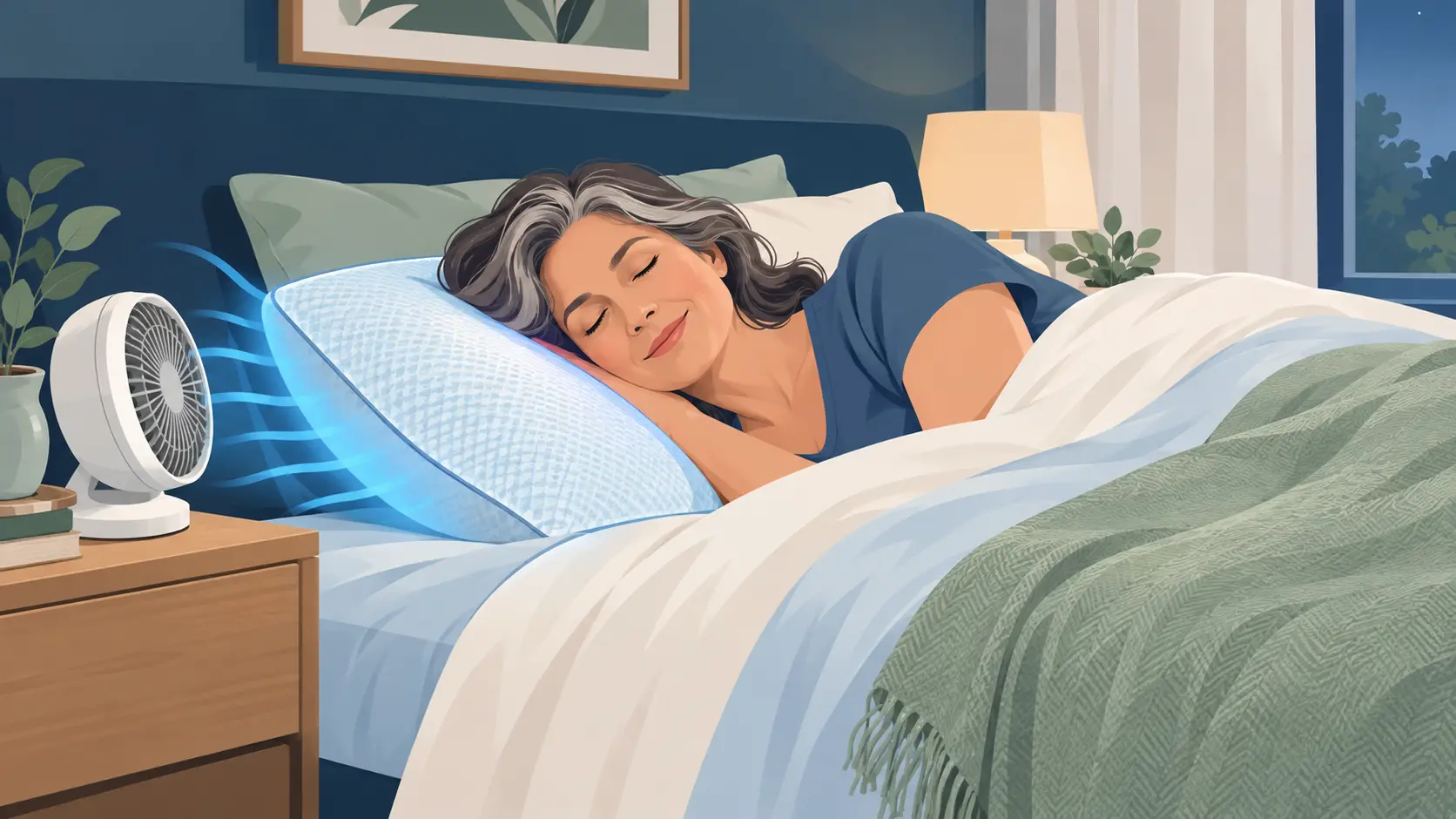
Quick Answer: What Is the Best Cooling Pillow for Menopause Night Sweats?
The honest answer is that it depends on you. The best cooling pillow for menopause night sweats is the one that fits your sleep position, doesn't hold onto heat, and handles moisture in a way that works for your body. Ask yourself four questions:
- How do you sleep? Side, back, stomach, or all of the above.
- Where does the heat hit hardest? Head and neck, or your whole body?
- How much do you sweat? A little warmth, or damp-cover-at-2-a.m. sweat?
- What matters most? Cooling, staying dry, or pressure relief.
So, which cooling pillow is best? Start with the category, then the model. Here's how the main types stack up.
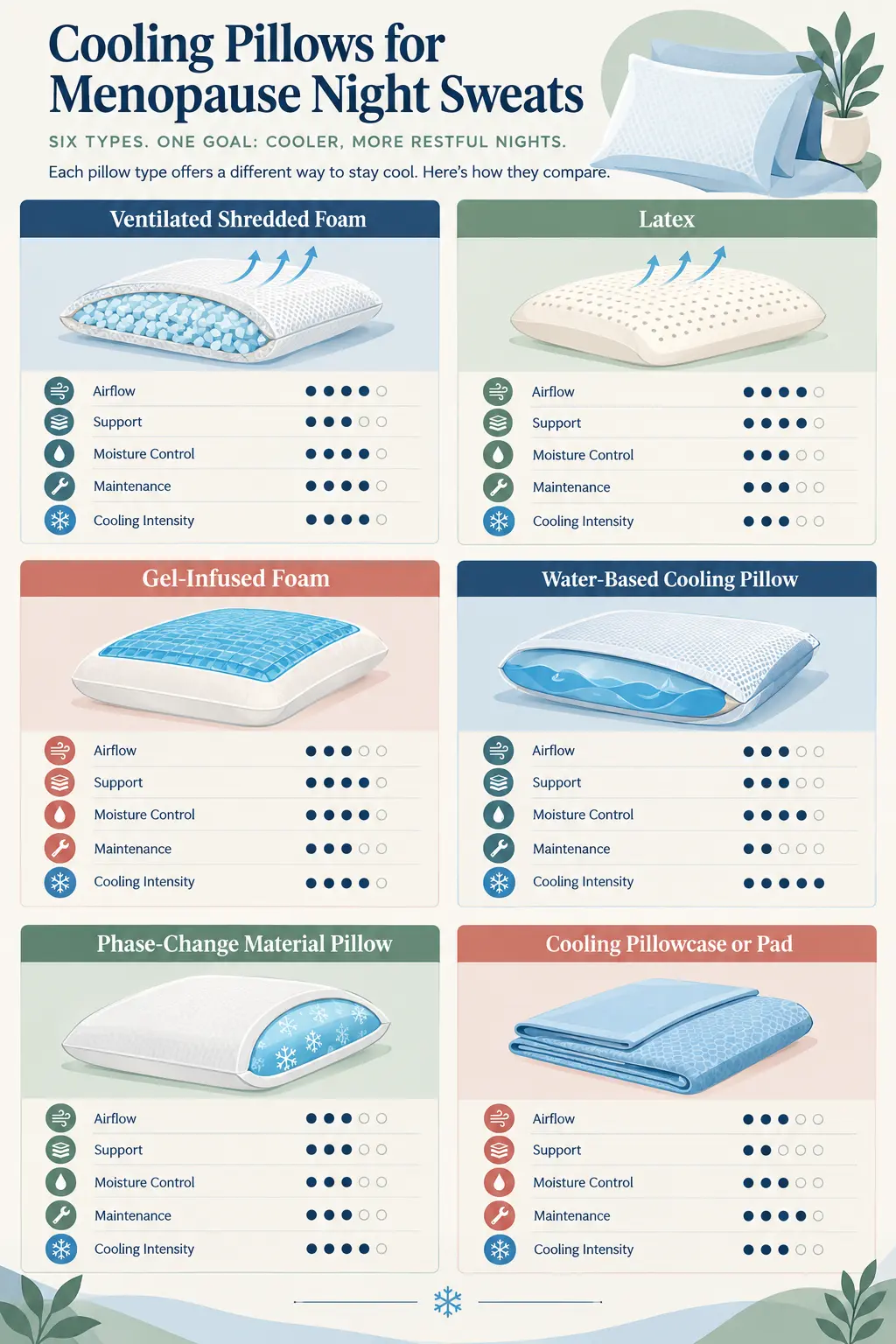
| Pillow type | Best for | Cooling approach | Moisture handling | Main limitation |
|---|---|---|---|---|
| Ventilated shredded foam | Adjustable loft and airflow | Air channels and breathable fill | Depends on cover | May still retain some heat |
| Latex | Responsive support and airflow | Naturally open-cell structure | Quick-drying cover needed | Can feel springy |
| Gel-infused foam | Familiar foam support | Gel or phase-change surface | Cover quality matters | Some foam can retain heat |
| Water-based cooling pillow | Strong temperature regulation | Water or hydration-based cooling | Usually dry externally | Heavier, more maintenance |
| PCM cooling pillow | Surface temperature moderation | Phase-change materials | Often dry | Cooling duration varies |
| Cooling pillowcase or pad | Low-cost upgrade | Surface fabric or insert | Depends on fabric | Does not change pillow core |
How a Cooling Pillow May Help With Night Sweats
Let's be clear about what "help" means here. A cooling pillow works on the sleep environment, not on your hormones. Used that way, it can make a real difference to how the night feels.
Cooling the Head and Neck
When a hot flash rolls in, most of us feel it in the face, scalp, and neck first. A cooler surface under those areas can take the edge off, so you can settle back down faster. It's a comfort effect: a cool head and neck at night, not a lower internal temperature. For many women, that's exactly the relief they were after.
Moving Heat Away From the Surface
Some pillows cool by getting the heat out of the way. Others cool by absorbing it. Ventilation channels, open-cell latex, perforations, and loose breathable fill let warm air escape, which is passive cooling. Water-based and some PCM designs work more actively by drawing heat away from your skin. A breathable pillow for hot sleepers usually beats a dense, solid one, because heat dispersion keeps the surface from turning into a warm pocket around your head.
Managing Moisture After Sweating
Cool is only half the story. If you wake up soaked, a damp pillow will chill you and keep you awake. Moisture-wicking covers and quick-drying fabrics help sweat move off your skin and dry out. Washable covers keep things fresh, and a spare pillowcase means a clean, dry one is always close at hand. If you sweat heavily, this matters as much as the pillow itself.
Comfort vs Symptom Treatment
A pillow can help you sleep more comfortably. It can't treat the hormonal or medical causes of hot flashes. If symptoms are running your life, that conversation belongs with a clinician, and I'll come back to it near the end.
Choose a Cooling Pillow by Sleep Position
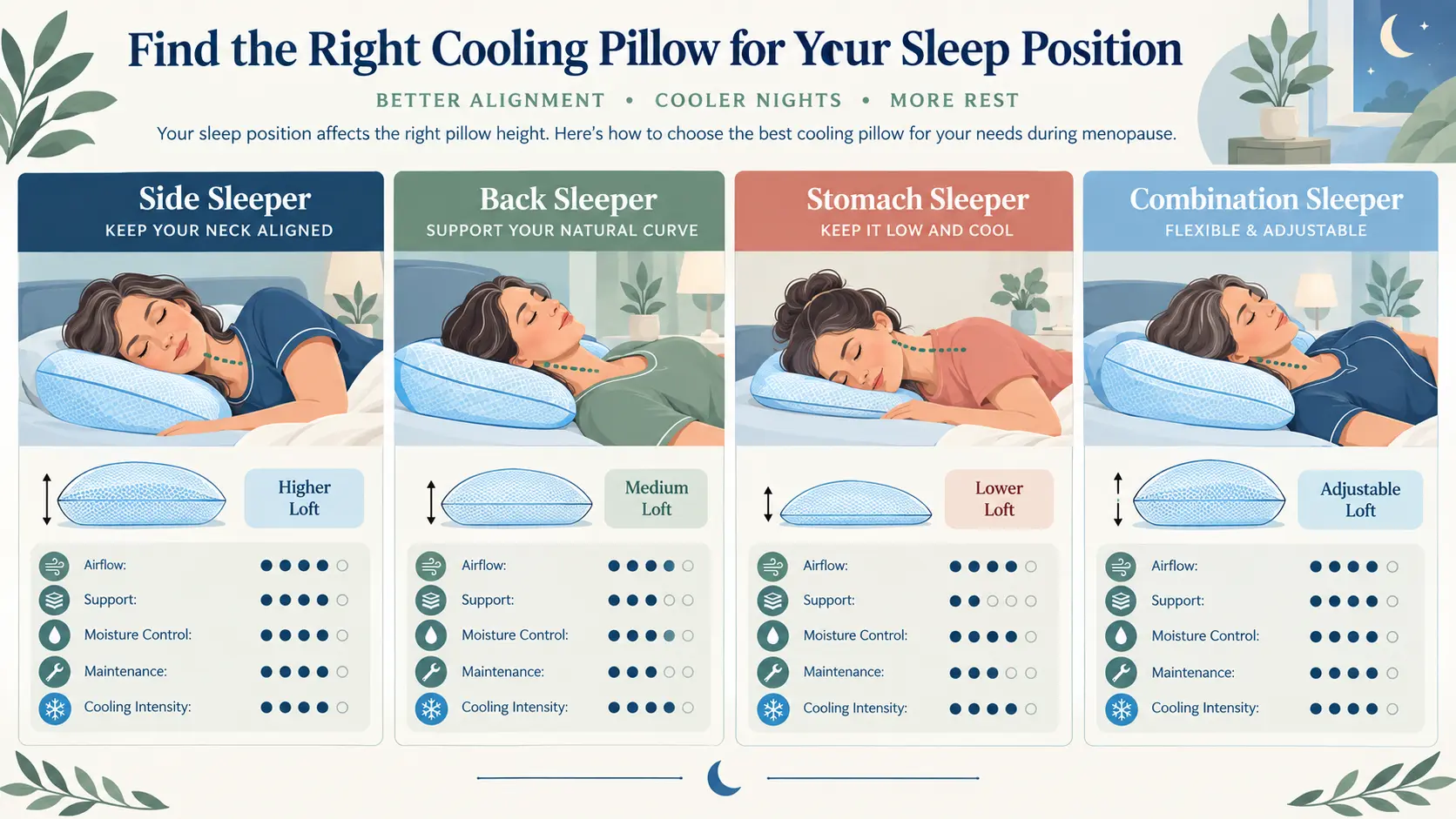
Sleep position is the most overlooked buyer decision. A pillow that's the wrong height leaves your neck strained, and a sore neck is no help at 3 a.m. Independent pillow testers suggest starting with how you sleep, then matching firmness and support to your neck and spine.
Best Cooling Pillow for Side Sleepers
Side sleeping needs the most loft, because the pillow has to fill the gap between your ear and shoulder. Look for enough height to keep your neck level with your spine and room for your shoulder width. Adjustable fill helps you dial it in, and a moisture-wicking cover matters, since your cheek is pressed right against it. Too little loft can aggravate shoulder pain.
Best Cooling Pillow for Back Sleepers
Back sleepers do best with a medium loft that cradles the curve of the neck without pushing the head forward. Look for good cervical support and even pressure distribution. Avoid anything too tall. Excess elevation tilts your chin toward your chest and can leave you stiff. If you want a menopause pillow with neck support, medium and contoured is a sound place to start.
Best Cooling Pillow for Stomach Sleepers
Stomach sleeping turns your neck to one side for hours, so a thick pillow makes things worse. Choose a low profile cooling pillow with a softer feel, or go very thin. Keep the loft down to limit neck rotation and extension.
Combination Sleepers
If you roll all night, adjustable is your friend. Shredded fill lets you shift the loft, a zippered cover makes it easy to add or remove filling, and a reversible surface gives you a fresh cool side when you flip.
Compare Cooling Pillow Materials
Marketing makes every material sound magical. Here's what each one actually does.
Shredded Memory Foam
Its big advantage is adjustability. You can add or remove fill until the loft feels right, and the loose pieces leave gaps for air to move. Many come with washable covers. The catch: foam can still hold some heat, so look for ventilated designs and a breathable cover.
Latex
Latex is springy, responsive, and durable. Its open-cell structure encourages airflow, so it tends to feel less sticky than dense foam. It comes in firm and soft feels, and some women like the natural feel. The tradeoffs are a bit of bounce, a heavier weight, and allergy considerations, so check the material if you have a latex allergy.
Gel-Infused Foam
Gel layers can feel cool the moment you lie down. But "gel" doesn't automatically mean cool all night. Your body warms the surface, and dense foam underneath may trap heat anyway. Density and construction matter as much as the gel label.
Water-Based or Hydration Cooling
These offer some of the strongest temperature regulation, because water absorbs a lot of heat. The tradeoffs are weight, setup, and upkeep. You may need to fill and adjust it, and it can feel firm or heavier than a regular pillow. If you like a simple routine and want strong cooling, it may suit you. If you travel a lot or hate fuss, probably not.
Phase-Change Material (PCM)
PCM covers and inserts absorb heat and release it as they warm and cool, giving a dry, cool-to-the-touch surface. They can be a great fit for a hot head and neck. Cooling duration varies, and once the material reaches its limit, you may notice the effect fading.
Which Material Is Best for Sweaty Sleepers?
Cooling and moisture management are two different jobs. A material can feel wonderfully cool and still leave you damp if the cover doesn't wick sweat. For the sweatiest nights, choose a breathable core, such as ventilated shredded foam or latex, then add a washable, quick-drying cover.
Cooling Pillow Covers and Moisture Management
The cover touches your skin, so it can matter as much as what's inside. If you've bought a "cooling" pillow that still felt swampy, the cover was probably the problem.
Moisture-Wicking Fibers
- Tencel: smooth, breathable, and good at moving moisture.
- Bamboo-derived fabrics: soft and often marketed for night sweats. Look at the weave and how it dries.
- Performance knits: engineered to wick and dry quickly.
- Cotton percale: crisp and airy, though slower to dry when soaked.
- Synthetic moisture-wicking blends: move sweat well, but feel different from natural fabrics.
Washable and Removable Covers
After a night of sweating, you want to wash the cover without wrestling the whole pillow. Check for an easy zipper, clear washing instructions, and a reasonable drying time. A spare cover is worth having. Sweat can leave odors if a cover stays damp.
Pillow Protectors
A waterproof pillow protector can shield the core from heavy sweat, and that's useful if you soak through often. The tradeoffs: some protectors are noisy, some trap heat, and a poor one can undo the cooling. Choose a breathable, quiet one, and use it only if you need it.
Build a Two-Cover Rotation
Keep two covers. While one is in the wash, the other is clean and dry. A fresh, dry pillowcase within reach is a real comfort at 3 a.m.
Cooling Pillow Features That Matter Most
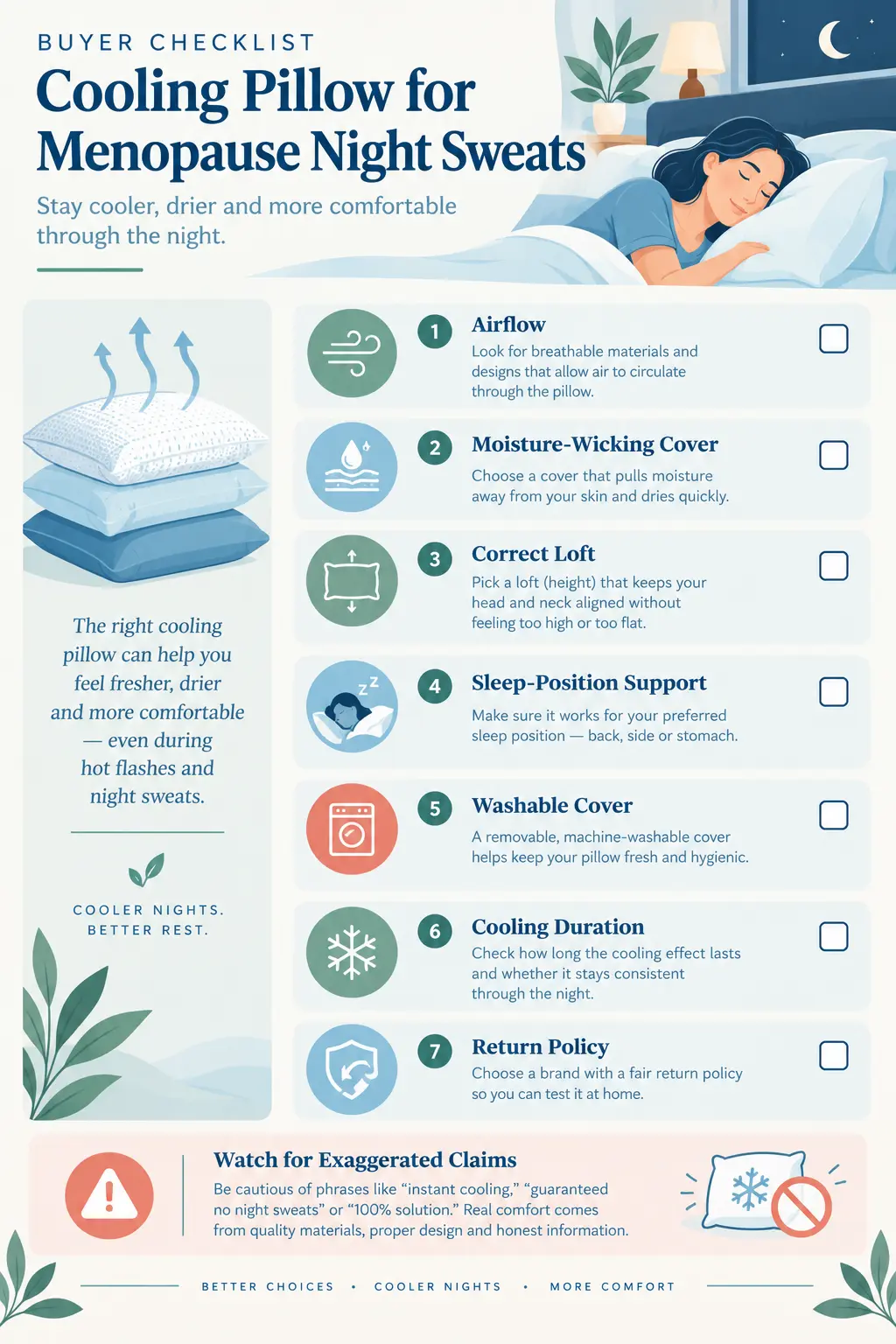
When product pages start shouting, use this list to get back to what counts.
Airflow and Ventilation
Look for perforations, open-cell structure, breathable fill, mesh panels, and ventilation channels. A ventilated cooling pillow lets heat escape instead of pooling under your head.
Cooling Duration
Does the cooling last minutes or hours? A long-lasting cooling pillow depends on the design, but your room temperature, body heat, and bedding all play a part. Some products need recharging, such as a rest period between uses.
Loft Adjustment
Removable fill, inserts, and adjustable layers let you match the loft to your position. It's especially useful for combination sleepers.
Washability and Hygiene
A removable cover with machine-wash instructions, reasonable drying time, and odor control is a must for night sweats.
Return Policy and Trial Period
Pillows take a few nights to feel right, so a sleep trial helps. Read the fine print: some brands restrict returns for hygiene reasons, and warranties vary. A cooling pillow sleep trial and a clear replacement policy protect your money.
Avoid Marketing-Only Claims
Be skeptical of promises like "ice-cold all night," "never overheats," or "stops night sweats." No pillow does that, and unsupported clinical claims are a red flag. Look for specifics about materials and care instead.
Cooling Pillow vs Other Menopause Sleep Products
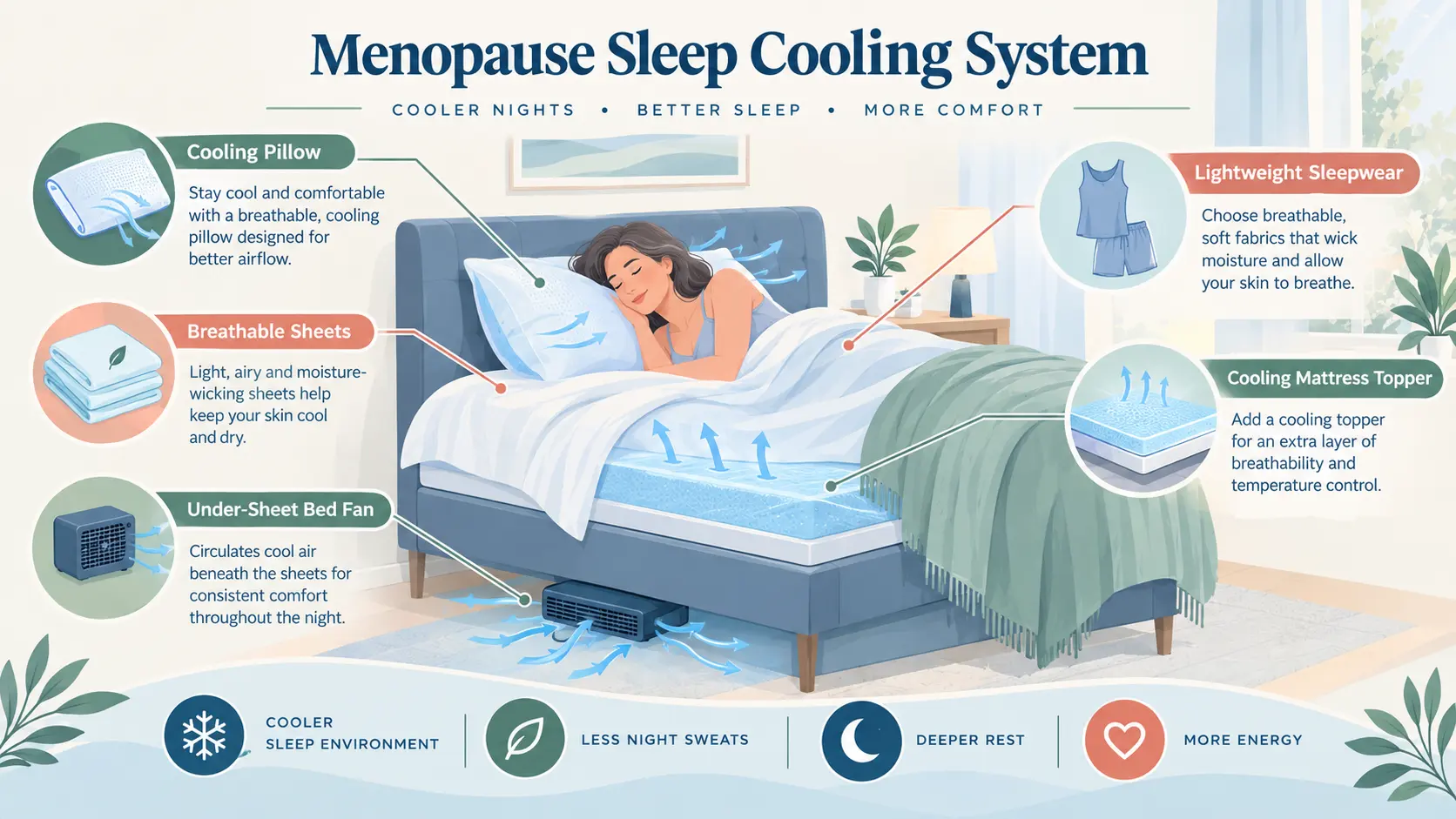
A pillow rarely works alone. Here's how it compares with other menopause cooling products, so you can spend where it will help most.
Cooling Pillow vs Cooling Mattress Topper
A pillow cools the head and neck. A topper works on your whole body and adds pressure relief. If the heat is mostly up top, start with the pillow. If your back and hips overheat, look at a menopause mattress topper.
Cooling Pillow vs Bed Fan Under the Sheets
A pillow targets one spot. A bed fan moves air through the whole bed. If you feel heat everywhere, read our guide to a bed fan for menopause.
Cooling Pillow vs Cooling Pillow Pad
A pad is a cheaper surface upgrade. It won't change the pillow underneath, so if your pillow is too high, too low, or too warm at the core, a pad won't fix that. If it's already comfortable, a pad may be enough.
Cooling Pillow vs Bedroom Fan
A bedroom fan circulates air through the room. A cooling pillow works right where your head rests.
Build a Cooling Sleep System
Pick the piece that matches your biggest problem, then add layers over time: a pillow, breathable sheets, adjustable bedding, a bed fan, a cooling mattress pad, and lightweight sleepwear.
Best Cooling Pillow Setup for Different Sleep Problems
Here's how to match the setup to what's actually bothering you.
For a Hot Head and Neck
Look for a PCM surface, a breathable cover, a cooling pillow pad, and good airflow.
For Damp Pillowcases
Choose a moisture-wicking cover, a washable protector, a spare cover, and quick-drying materials. That's the recipe for a dry pillow for night sweats.
For Side-Sleeper Shoulder Pain
Go for higher loft, adjustable fill, and enough shoulder clearance. Pairing your pillow with a cooling mattress topper can help ease pressure while you stay cool.
For Couples With Different Temperatures
A cooling pillow only changes your side, so your partner doesn't have to sleep in a chilly bed.
For Budget-Conscious Shoppers
Start small: a cooling pillowcase, a breathable cover, a pillow pad, or a low-cost room fan. See how far that gets you before buying an expensive active system.
How to Use and Maintain a Cooling Pillow
A little care goes a long way toward comfort and lifespan.
Allow the Pillow to Adjust
Foam and latex can take a few nights to break in. Adjust the fill, test the loft, and give it several nights before you decide.
Keep the Cover Clean and Dry
Wash the cover regularly, dry it completely, and rotate two covers. Good night sweat pillow hygiene is mostly consistency.
Pair With Breathable Bedding
A great pillow can be undone by heavy synthetic bedding. Choose lightweight sheets, a breathable duvet cover, and low-heat blankets, so the best bedding for menopause night sweats supports your pillow.
Do Not Overcool Sensitive Skin
Very cold surfaces can bother sensitive skin. Take breaks, and use a cover or barrier if you feel discomfort.
When Night Sweats Need Medical Attention
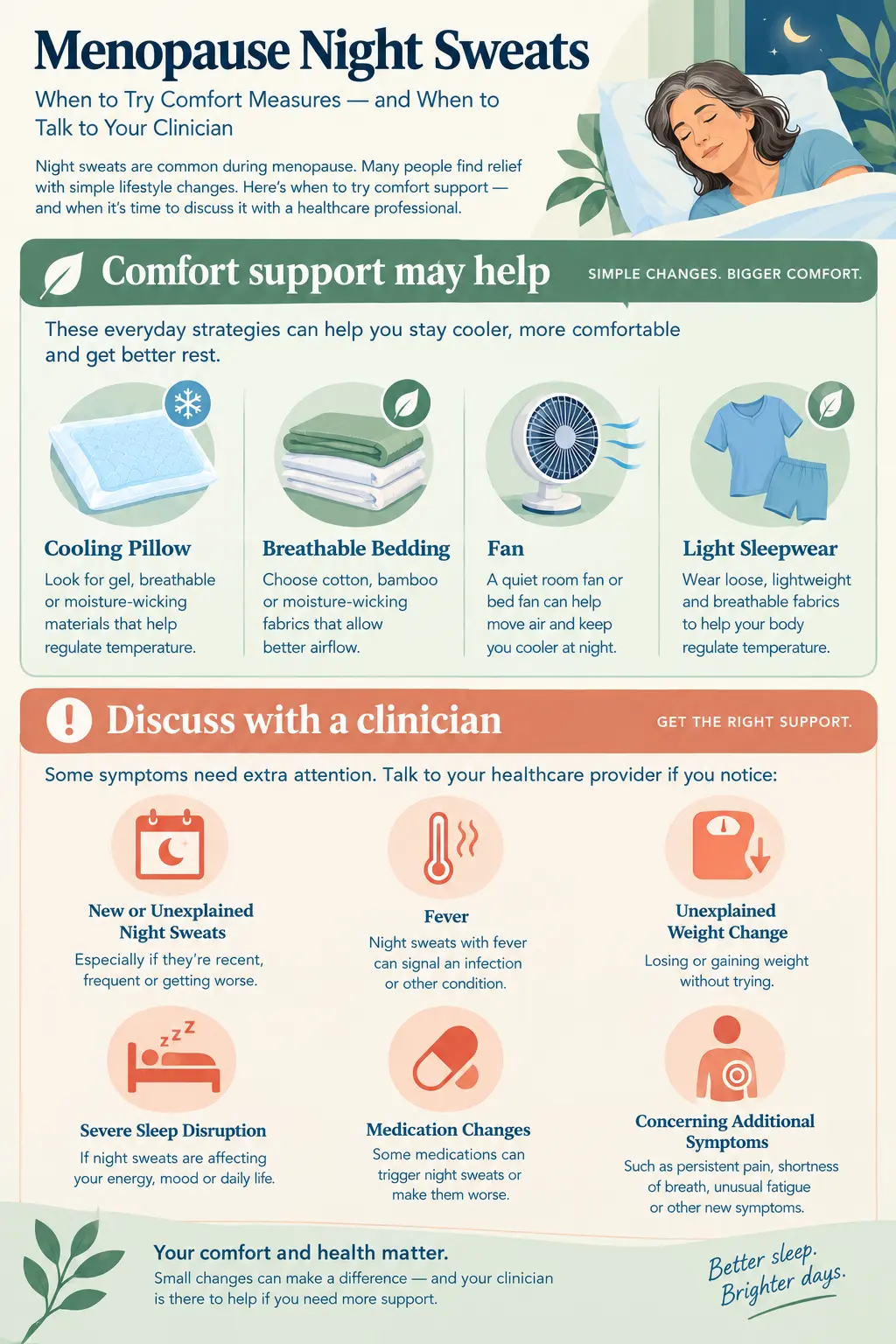
This part matters. A pillow is not the answer to everything, and you deserve real support if something feels off.
New or Unexplained Night Sweats
If they appear suddenly or don't fit your usual pattern, mention it to a clinician. Night sweats have many possible causes, and it's worth ruling things out.
Night Sweats With Other Symptoms
Speak with a healthcare professional if you also have fever, unexplained weight change, a persistent cough, severe pain, palpitations, or recent medication changes. These are night sweats warning signs, and they need a proper look.
Symptoms That Disrupt Sleep or Daily Life
If you have persistent insomnia, severe fatigue, anxiety, or low mood, you don't have to tough it out. Treatment options exist beyond bedding changes, and asking for help is a strength.
Cooling Products Manage Comfort
A pillow can make your sleep environment feel better. It can't diagnose or treat the cause of night sweats.
Frequently Asked Questions
Final Takeaway
The best cooling pillow for menopause night sweats brings four things together: a fit for your sleep position, breathable construction, good moisture management, and a cooling effect that matches your budget and expectations. No pillow will make the hot flash disappear. The right one can make it something you get through more comfortably, and get back to sleep from faster.
You're allowed to want a good night's sleep. Use the comparison table, choose by sleep position and moisture needs, and if night sweats keep disrupting your sleep, layer in breathable bedding or other cooling tools, and talk with a healthcare professional. You deserve rest.