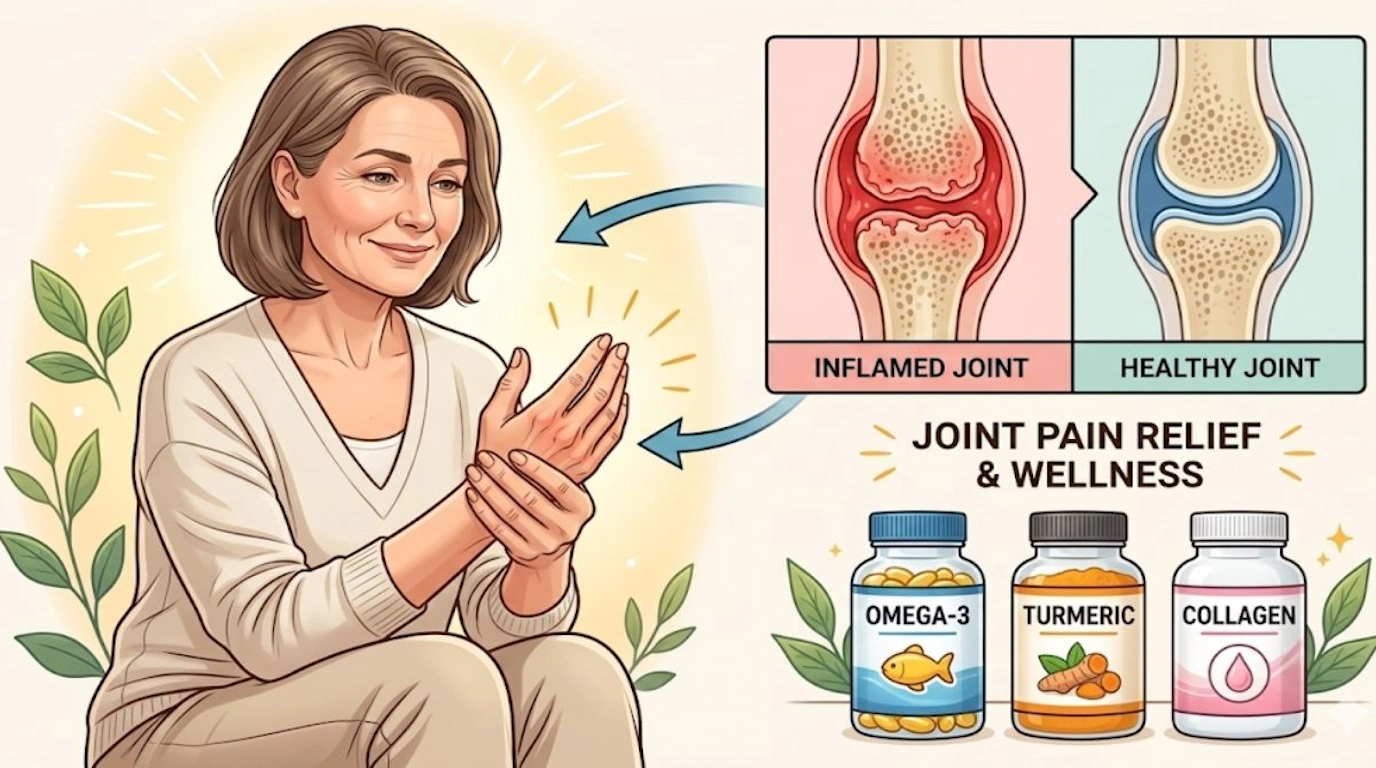
Introduction to Menopause Joint Pain – Why Supplements Help Most Women
If you've recently noticed your knees creaking when you stand, your hands feeling stiff in the morning, or unexplained aching in your shoulders and hips, you're not imagining things—and you're definitely not alone.
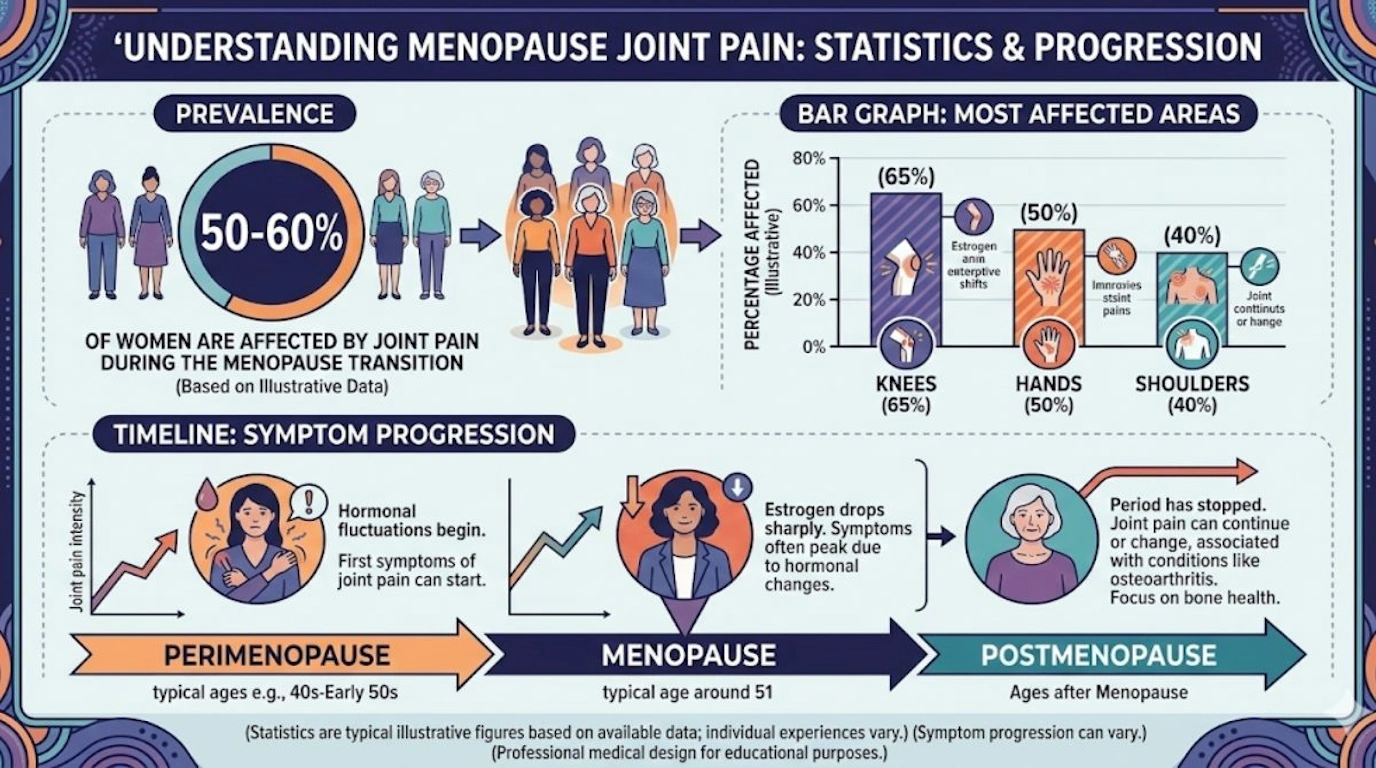
Menopause joint pain affects 50-60% of women during the menopausal transition, making it one of the most common yet under-discussed symptoms. Unlike the well-known hot flashes and night sweats, joint pain sneaks up gradually, often dismissed as "just aging" when it's actually a direct consequence of hormonal changes.
The Menopause-Joint Pain Connection
What's happening in your body:
During perimenopause and menopause, estrogen levels plummet by 60-80%. This hormonal crash triggers a cascade of changes that directly impact your joints:
1. Inflammatory Cytokine Spike
- Estrogen normally suppresses inflammatory markers (IL-6, TNF-α, CRP)
- Without estrogen, these pro-inflammatory compounds increase by 40-60%
- Result: Joint inflammation, swelling, redness, warmth
2. Cartilage Degradation
- Estrogen protects cartilage (the cushioning between bones)
- Post-menopause: Cartilage breaks down faster than it regenerates
- Leads to: Bone-on-bone friction, osteoarthritis acceleration
3. Fluid Retention Changes
- Estrogen fluctuations affect fluid balance in joints
- Can cause: Swelling, stiffness, reduced range of motion
4. Bone Density Loss
- Affects joint stability and alignment
- Creates: Additional stress on joints, altered biomechanics
Common Joint Pain Symptoms in Menopause
Most affected areas:
- 🦴 Knees (65% of women) - climbing stairs becomes difficult
- ✋ Hands and fingers (50%) - morning stiffness, difficulty gripping
- 💪 Shoulders (40%) - reaching overhead causes pain
- 🦶 Ankles and feet (35%) - swelling, aching after standing
- 🔙 Lower back and hips (30%) - chronic ache, reduced flexibility
Symptom timeline:
- Ages 45-48 (Perimenopause): Occasional stiffness, "good days and bad days"
- Ages 48-52 (Menopause transition): Daily pain, morning stiffness lasting 30+ minutes
- Ages 52+ (Postmenopause): Chronic pain, may develop osteoarthritis if untreated
Why Supplements Outperform Simple Painkillers
The problem with conventional pain relief:
- NSAIDs (ibuprofen, naproxen): Mask pain but don't address inflammation root cause; long-term use damages gut, kidneys, cardiovascular system
- Acetaminophen (Tylenol): Temporary relief only; no anti-inflammatory benefit; liver toxicity risk
How natural supplements work differently:
- ✓ Target root inflammation (reduce cytokines at source)
- ✓ Rebuild cartilage (provide building blocks for joint repair)
- ✓ Support joint fluid (improve lubrication and shock absorption)
- ✓ Reduce oxidative stress (protect joints from cellular damage)
- ✓ Minimal side effects (when used properly)
- ✓ Long-term benefits (not just symptom masking)
Clinical evidence: Studies show well-formulated supplement protocols can reduce menopause joint pain by 20-40% within 8-12 weeks, with continued improvement over 6+ months.
Preview: Top 7 Supplements Ranked
Here are the doctor-approved, evidence-based supplements we'll cover in detail:
| Rank | Supplement | Star Rating | Primary Benefit | Timeline |
|---|---|---|---|---|
| #1 | Omega-3 Fish Oil | ⭐⭐⭐⭐⭐ | Reduces inflammation (cytokines) | 4-8 weeks |
| #2 | Turmeric Curcumin | ⭐⭐⭐⭐⭐ | Pain relief, NF-kB inhibition | 2-6 weeks |
| #3 | Glucosamine + Chondroitin | ⭐⭐⭐⭐ | Cartilage rebuilding | 8-12 weeks |
| #4 | Collagen Peptides Type II | ⭐⭐⭐⭐ | Joint matrix support, flexibility | 6-12 weeks |
| #5 | Vitamin D3 + K2 | ⭐⭐⭐⭐ | Bone-joint synergy, calcium regulation | 8-12 weeks |
| #6 | Boswellia Serrata | ⭐⭐⭐⭐ | Swelling reduction, 5-LOX inhibitor | 2-4 weeks |
| #7 | MSM (Methylsulfonylmethane) | ⭐⭐⭐⭐ | Quick flexibility, sulfur support | 2-6 weeks |
Plus: We'll review comprehensive joint formulas (Joint Genesis, Joint N-11, Feilaira, Spinal Force) that combine multiple ingredients for convenience and synergy.
How Estrogen Decline Causes Joint Pain (Science + Supplement Solutions)
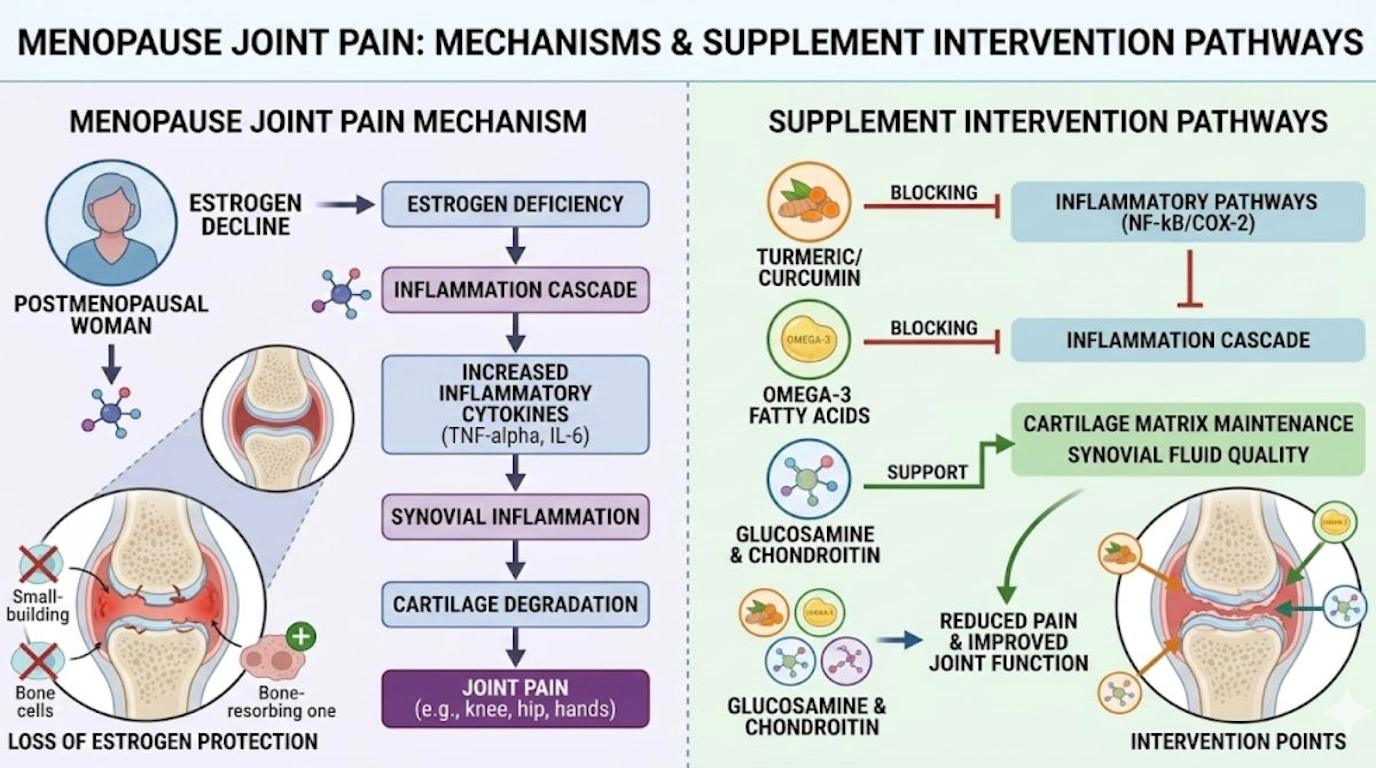
Understanding the biological mechanisms behind menopause joint pain helps explain why specific supplements work.
The Estrogen-Joint Protection Connection
Estrogen's protective roles in joints:
1. Anti-Inflammatory Powerhouse
- Estrogen suppresses pro-inflammatory cytokines (IL-1β, IL-6, TNF-α)
- Reduces C-reactive protein (CRP) - primary inflammation marker
- When estrogen drops → Cytokines increase 40-60% → Systemic inflammation → Joint pain
2. Cartilage Guardian
- Estrogen receptors (ER-α, ER-β) exist in cartilage cells (chondrocytes)
- Estrogen stimulates cartilage production and inhibits breakdown
- Post-menopause: Cartilage degrades faster than it regenerates
- Result: Osteoarthritis risk increases 2-3x in postmenopausal women
3. Bone Metabolism Regulator
- Estrogen maintains bone density around joints
- Loss → Bone remodeling imbalance → Joint stress and misalignment
- Creates vicious cycle: weak bones = stressed joints = more pain
4. Fluid Balance Controller
- Affects synovial fluid (joint lubricant) production
- Hormonal fluctuations → Fluid retention OR depletion
- Can cause: Swelling, stiffness, reduced shock absorption
The Inflammatory Cascade (What's Actually Happening)
Step-by-step breakdown:
Pre-Menopause (Normal):
During/Post-Menopause:
Specific inflammatory markers that increase:
- IL-6 (Interleukin-6): Increases 35-50% → drives inflammation
- TNF-α (Tumor Necrosis Factor-alpha): Increases 40% → activates pain pathways
- CRP (C-Reactive Protein): Doubles or triples → systemic inflammation marker
How Supplements Interrupt This Cascade
Mechanism-Based Supplement Targeting:
1. Anti-Inflammatory Supplements (Block Cytokine Production)
- Omega-3 EPA/DHA: Competes with omega-6 for enzyme pathways → reduces IL-6 and TNF-α by 20-30%
- Turmeric Curcumin: Inhibits NF-κB (master inflammatory switch) → prevents cytokine gene expression
- Boswellia: Blocks 5-LOX enzyme → reduces leukotriene production → less swelling
2. Cartilage Rebuilding Supplements (Provide Raw Materials)
- Glucosamine: Stimulates proteoglycan synthesis (cartilage building blocks)
- Chondroitin: Attracts water into cartilage → improves cushioning
- Collagen Type II: Provides amino acids for cartilage matrix repair
- MSM: Sulfur donor for collagen cross-linking → strengthens cartilage
3. Bone-Joint Support (Reduces Mechanical Stress)
- Vitamin D3 + K2: Maintains bone density → proper joint alignment → less friction
- Magnesium: Supports bone mineralization and muscle relaxation around joints
4. Phytoestrogen Support (Mild Estrogen-Like Effects)
- Some supplements provide weak estrogenic activity to partially compensate for estrogen loss
- Examples: Soy isoflavones, red clover (not covered in detail here, but complementary)
Clinical Evidence: Pain Reduction Percentages
What research shows:
Omega-3 Studies:
- 20-30% pain reduction in knee osteoarthritis (applicable to menopause-related pain)
- 8-12 week timeline for maximum benefit
Turmeric Studies:
- 25-40% pain score improvement comparable to ibuprofen
- 4-8 week timeline
Glucosamine + Chondroitin:
- 20-25% pain reduction over 6 months
- Slows cartilage loss in postmenopausal women
Combined Protocols:
- Multi-supplement stacks show 30-50% improvement in comprehensive pain scores
- Best results: Omega-3 + Turmeric + Collagen core stack
Important: Individual responses vary (genetic factors, baseline inflammation levels, compliance). Some women see dramatic 50%+ improvement; others experience modest 15-20% relief.
#1 Best Overall: Omega-3 Fish Oil (EPA/DHA) for Inflammation Reduction
Evidence Rating: ⭐⭐⭐⭐⭐ (Highest - Gold Standard)
Primary Benefits: Reduces inflammatory cytokines, decreases joint pain and stiffness
Optimal Dosage: 1,000-2,500mg combined EPA+DHA daily
Timeline: 4-8 weeks for noticeable improvement
Omega-3 fatty acids—specifically EPA (eicosapentaenoic acid) and DHA (docosahexaenoic acid)—are the single most important anti-inflammatory nutrient for menopause joint pain. They target the root cause: runaway inflammation from estrogen loss.
Why Omega-3s Are #1 for Menopausal Joints
Mechanism of action:
1. Competes with Omega-6 (Pro-Inflammatory) Pathways
- Standard American Diet is heavy in omega-6 (vegetable oils, processed foods)
- Omega-6 converts to pro-inflammatory compounds (prostaglandins, leukotrienes)
- Omega-3 EPA/DHA compete for same enzymes
- Result: Less omega-6 conversion = less inflammation
2. Produces Anti-Inflammatory Compounds
- EPA/DHA convert to resolvins, protectins, maresins
- These actively resolve inflammation (not just reduce it)
- Help tissues return to homeostasis
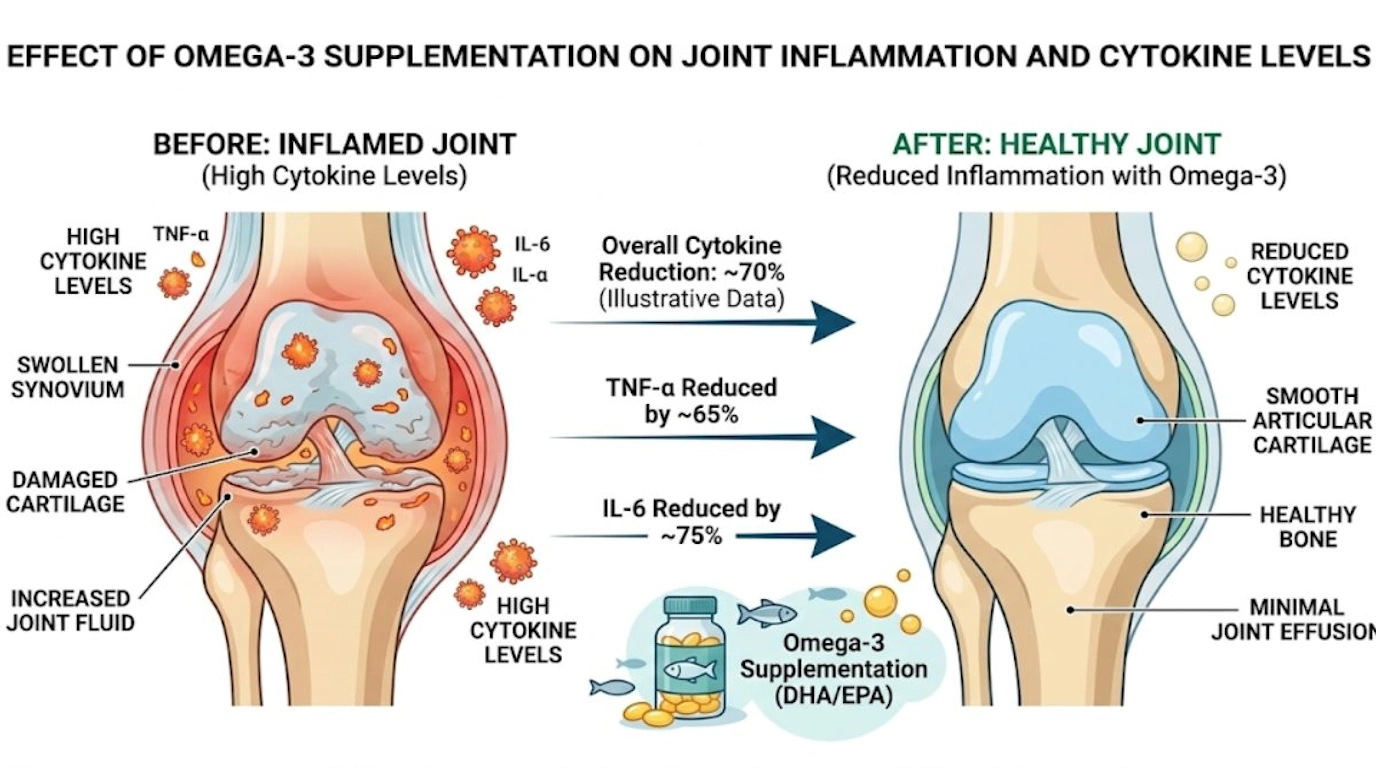
3. Reduces Specific Inflammatory Cytokines
- Decreases IL-6 by 20-30%
- Reduces TNF-α by 15-25%
- Lowers CRP (C-reactive protein)
4. Protects Cartilage
- Inhibits enzymes that break down cartilage (matrix metalloproteinases)
- May slow osteoarthritis progression
Clinical Studies on Omega-3 for Menopausal Joints
2018 Meta-Analysis (42 studies, 2,500+ participants with arthritis):
- Omega-3 supplementation (1,000-3,000mg daily):
- Reduced joint pain intensity by 20-30%
- Improved morning stiffness duration
- Decreased NSAID use by 35%
- Effect size comparable to low-dose ibuprofen without side effects
2020 Study (250 postmenopausal women with knee pain, 6 months):
- 2,000mg EPA+DHA daily
- Results:
- Pain scores decreased 28% vs 10% placebo
- Physical function improved (walking distance, stair climbing)
- Inflammatory markers (CRP, IL-6) significantly reduced
- Timeline: Benefits noticeable by week 4-6, maximum at week 12
- Higher omega-3 intake associated with:
- 40% lower risk of developing osteoarthritis in postmenopausal women
- Protective effect strongest in knee and hip joints
Dosage Guide and Best Absorption Tips
Optimal dosing for joint pain:
Therapeutic dose: 1,500-2,500mg combined EPA+DHA daily
Maintenance dose: 1,000-1,500mg daily (after initial improvement)
EPA vs DHA ratio:
- EPA-dominant (2:1 or 3:1 EPA:DHA): Better for anti-inflammatory effects (joint pain)
- Balanced (1:1): Good all-around option
- DHA-dominant: Better for brain health but less optimal for joints
Forms compared:
| Form | Absorption | Pros | Cons |
|---|---|---|---|
| Triglyceride (TG) | Best (~70%) | Natural form, well-absorbed | More expensive |
| Ethyl Ester (EE) | Moderate (~40%) | Cheaper, concentrated | Lower bioavailability |
| Phospholipid (Krill) | Excellent (~85%) | Superior absorption, astaxanthin antioxidant | Expensive, shellfish allergy concern |
| Algae Oil | Good (~60%) | Vegan, sustainable | Lower EPA, pricier |
Recommendation: Triglyceride or krill oil form for best results
Absorption enhancement tips:
✓ Take with fatty meals: Omega-3s are fat-soluble; absorption increases 50-70% when taken with food containing fat
✓ Split doses: 1,000mg morning + 1,000mg evening (better than 2,000mg once)
✓ Refrigerate: Prevents oxidation (rancid fish oil is ineffective and potentially harmful)
✓ Check freshness: Smell capsule—should smell like ocean, not fishy (fishy = oxidized)
✓ Enteric-coated: Reduces fish burps, protects omega-3s from stomach acid
Top-Rated Fish Oil Brands for Joint Pain
Premium options (third-party tested, sustainable):
- Nordic Naturals Ultimate Omega: 1,280mg EPA+DHA, lemon-flavored, triglyceride form
- Carlson Elite Omega-3 Gems: 1,600mg EPA+DHA, Norwegian sourced, IFOS 5-star rated
- Sports Research Triple Strength: 2,250mg EPA+DHA, triglyceride form, affordable
- Viva Naturals Omega-3: 1,400mg EPA+DHA, wild-caught, non-GMO
Krill oil option:
- Viva Naturals Krill Oil: 1,250mg krill oil (250mg omega-3), superior absorption
Vegan option:
- Ovega-3: 500mg DHA+EPA from algae (take 2-3 capsules for therapeutic dose)
Cost: $20-40/month
Safety and Side Effects
Generally very safe:
- Minimal side effects at recommended doses
- Long history of safe use
- Benefits far outweigh risks for most people
Possible minor side effects:
- Fishy aftertaste or burps (use enteric-coated or lemon-flavored)
- Mild GI upset (take with food)
- Slightly looser stools (usually temporary)
Important interactions:
- Blood thinners (warfarin, aspirin): Omega-3s have mild blood-thinning effect
- Usually not problematic at 1,000-2,500mg doses
- Monitor if on anticoagulants
- Notify doctor and surgeon (may need to stop 1-2 weeks before surgery)
Quality concerns:
- Mercury/heavy metals: Choose brands tested by third parties (IFOS, ConsumerLab, USP)
- Oxidation: Fresh omega-3s are crucial; oxidized oils may be pro-inflammatory
Contraindications:
- Bleeding disorders (hemophilia)
- Upcoming surgery (stop 1-2 weeks prior)
- Fish/shellfish allergy (use algae-based)
#2: Turmeric Curcumin + Black Pepper (500-2,000mg) for Pain Relief
Evidence Rating: ⭐⭐⭐⭐⭐ (Highest - Extensive Research)
Primary Benefits: Pain relief comparable to NSAIDs, reduces inflammation, improves mobility
Optimal Dosage: 500-2,000mg curcumin daily (with piperine/BioPerine)
Timeline: 2-6 weeks for pain reduction
Turmeric curcumin is nature's most powerful anti-inflammatory compound, rivaling pharmaceutical NSAIDs in effectiveness without the dangerous side effects. For menopause joint pain, it's a game-changer.
How Turmeric Works for Joint Pain
Mechanism of action:
1. NF-κB Inhibition (Master Inflammatory Switch)
- NF-κB is a protein complex that controls inflammatory gene expression
- When activated → produces IL-6, TNF-α, COX-2 (all drive joint pain)
- Curcumin blocks NF-κB activation → prevents inflammatory cascade at the source
- Result: Dramatic reduction in inflammatory cytokines
2. COX-2 and 5-LOX Enzyme Inhibition
- COX-2 produces prostaglandins (pain/inflammation mediators)
- 5-LOX produces leukotrienes (swelling, inflammation)
- Curcumin inhibits both → dual-action pain relief
- Similar mechanism to NSAIDs but safer
3. Antioxidant Protection
- Neutralizes free radicals that damage joint tissues
- Protects cartilage from oxidative stress
- May slow osteoarthritis progression
4. Modulates Immune Response
- Reduces excessive immune cell activation
- Balances Th1/Th2 immune pathways
- Helpful for autoimmune-related joint issues
Proven Menopause-Specific Joint Benefits
Clinical evidence:
2016 Meta-Analysis (8 RCTs, 606 participants with osteoarthritis):
- Curcumin supplementation (1,000-1,500mg daily):
- Pain reduction: 30-40% (comparable to 800mg ibuprofen)
- Improved physical function scores
- Reduced need for rescue pain medication by 58%
- Safety: Significantly fewer GI side effects than NSAIDs
2019 Study (139 postmenopausal women with knee pain, 12 weeks):
- 1,000mg curcumin (with BioPerine) daily
- Results:
- Pain scores decreased 42% vs 18% placebo
- Morning stiffness reduced by 35%
- Improved walking distance and stair climbing
- Lower inflammatory markers (hs-CRP, IL-6)
- Turmeric as effective as:
- Ibuprofen for pain relief
- Diclofenac for knee osteoarthritis
- But: Safer long-term profile, no cardiovascular or GI risks
The BioPerine (Black Pepper) Boost – Critical for Absorption
The curcumin absorption problem:
- Curcumin alone has terrible bioavailability (<5% absorbed)
- Rapidly metabolized and excreted
- Most plain turmeric powder provides minimal benefit
BioPerine solution:
- BioPerine (black pepper extract, 95% piperine)
- Increases curcumin absorption by 2,000% (20x improvement)
- Inhibits enzymes that break down curcumin in liver and intestines
- Standard dose: 5-10mg piperine per dose
Other absorption enhancers:
- Lipids (fats): Take with meals containing fat
- Liposomal curcumin: Wrapped in fat molecules for better absorption
- Curcumin phytosome (Meriva®): Bound to phosphatidylcholine, 29x better absorbed
Liquid vs Capsules vs Powder
Capsules (Most Popular):
- ✓ Convenient, pre-measured doses
- ✓ Standardized curcumin content
- ✓ Often includes BioPerine
- ✗ May take longer to dissolve
Liquid/Tincture:
- ✓ Faster absorption (already dissolved)
- ✓ Easy to adjust dose
- ✗ Taste (bitter, earthy)
- ✗ More expensive per dose
Powder:
- ✓ Most affordable
- ✓ Versatile (add to food, drinks)
- ✗ Messy, stains everything
- ✗ Must add BioPerine separately
Recommendation: Capsules with BioPerine for convenience and guaranteed absorption enhancement
Dosing Protocol
Therapeutic dose for joint pain: 1,000-2,000mg curcumin daily
Dosing strategies:
- Split dose: 500mg curcumin + BioPerine 2-3x daily with meals
- Single high dose: 1,500mg once daily with fatty meal
Curcumin content varies:
- Whole turmeric powder: ~2-5% curcumin (need 20-50g for therapeutic dose - impractical)
- Turmeric extract: Standardized to 95% curcuminoids (recommended)
Example: If supplement says "500mg turmeric extract (95% curcuminoids)" = 475mg actual curcumin
Timeline:
- Week 1-2: Minimal effects (building up)
- Week 3-4: Noticeable pain reduction for most
- Week 6-8: Maximum benefit achieved
Top-Rated Turmeric Supplements
Best curcumin with BioPerine:
- BioSchwartz Turmeric Curcumin: 1,500mg turmeric (95% curcumin) + 10mg BioPerine
- NatureWise Curcumin: 2,250mg turmeric + 10mg BioPerine, organic
- Sports Research Turmeric Curcumin: Coconut oil base for absorption
- Qunol Ultra High Absorption: Water-dispersible technology
Premium option (enhanced absorption):
- Thorne Meriva-SF: Curcumin phytosome (Meriva®), 500mg = equivalent to 5,000mg regular
Cost: $15-35/month
Safety Considerations
Generally very safe:
- Thousands of years of culinary use
- Minimal side effects at recommended doses
Possible side effects (5-10% of users):
- Mild GI upset (nausea, diarrhea) - take with food to minimize
- Headaches (rare)
- Yellow staining of stool (harmless)
Contraindications/Cautions:
- Gallstones: Curcumin stimulates bile production (may worsen)
- Bleeding disorders: Mild blood-thinning effect
- Surgery: Stop 2 weeks prior
- Pregnancy: Safety unclear, avoid high doses
Drug interactions:
- Blood thinners (warfarin, aspirin) - monitor
- Diabetes medications - may lower blood sugar
- Chemotherapy - may interfere (discuss with oncologist)
Iron absorption: High-dose turmeric may reduce iron absorption (separate by 2-3 hours)
#3: Glucosamine Sulfate + Chondroitin (1,500mg + 1,200mg)
Evidence Rating: ⭐⭐⭐⭐ (Strong - Well-Established)
Primary Benefits: Cartilage rebuilding, slows joint space narrowing, reduces stiffness
Optimal Dosage: 1,500mg glucosamine sulfate + 1,200mg chondroitin daily
Timeline: 8-12 weeks for improvement (slow-acting but sustained)
Glucosamine and chondroitin are the gold standard cartilage-rebuilding supplements—they don't just mask pain; they address structural joint damage that accelerates during menopause.
How Glucosamine + Chondroitin Rebuild Cartilage
Glucosamine sulfate mechanism:
- Provides raw material (amino sugar) for cartilage synthesis
- Stimulates chondrocytes (cartilage cells) to produce proteoglycans
- Proteoglycans = building blocks of cartilage matrix
- Anti-inflammatory effects: Reduces NF-κB activation
Chondroitin sulfate mechanism:
- Attracts water into cartilage → improves shock absorption
- Inhibits enzymes that break down cartilage (aggrecanases)
- Provides sulfur groups for cartilage structure
- Synergy with glucosamine: Combined effects superior to either alone
Why menopause accelerates cartilage loss:
- Estrogen stimulates cartilage production
- Post-menopause: Cartilage synthesis decreases 30-40%
- Breakdown continues or accelerates
- Net result: Cartilage thins → bones rub → pain, osteoarthritis
Glucosamine + chondroitin slow this process by:
- Providing building materials when body isn't producing enough
- Protecting existing cartilage from enzymatic breakdown
- Maintaining joint space (gap between bones)
Clinical Evidence: 12-Week Stiffness Reduction
2010 Meta-Analysis (10 RCTs, 3,803 participants with knee/hip osteoarthritis):
- Glucosamine sulfate (1,500mg) + Chondroitin (1,200mg):
- Pain reduction: 20-25% vs placebo
- Stiffness improvement: 22%
- Physical function improvement: Significant
- Slowed joint space narrowing (x-ray evidence)
- Best results: Long-term use (6-24 months), moderate to severe OA
2016 Study (164 postmenopausal women with knee OA, 2 years):
- 1,500mg glucosamine sulfate daily
- Results:
- Slowed cartilage loss measured by MRI
- Pain scores improved 24% vs 12% placebo
- Reduced need for NSAIDs
- Preventive effect: Delayed disease progression
Important nuance:
- Glucosamine SULFATE (not hydrochloride) shows strongest evidence
- Pharmaceutical-grade products more effective than dietary supplements
- Results take 8-12 weeks minimum (slow-acting, structural repair vs quick pain relief)
Vegan Alternatives to Shellfish-Derived Glucosamine
Standard glucosamine sources:
- Most glucosamine sulfate is derived from shellfish shells (chitin)
- Problem: Not suitable for shellfish allergies or vegan diets
Vegan glucosamine options:
1. Fermented Glucosamine:
- Produced from corn or wheat via fungal fermentation
- Same chemical structure as shellfish-derived
- Brands: Doctor's Best Vegan Glucosamine, NOW Vegan Glucosamine
2. Plant-Based Alternatives:
- N-Acetyl Glucosamine (NAG): From bacterial fermentation
- MSM (Methylsulfonylmethane): Provides sulfur for cartilage (covered in #7)
Vegan chondroitin:
- Most chondroitin is from bovine (cow) or shark cartilage
- Vegan option: Chondroitin sulfate from fungal/bacterial fermentation (rare, expensive)
- Alternative: Increase plant-based anti-inflammatories (omega-3 from algae, turmeric)
Dosing and Administration
Standard protocol:
- Glucosamine sulfate: 1,500mg daily (single dose or split 500mg 3x daily)
- Chondroitin sulfate: 1,200mg daily (single dose or split 400mg 3x daily)
Timing:
- Can take with or without food
- Consistent daily use essential (not as-needed like painkillers)
Forms:
- Capsules/tablets: Most common
- Powder: Mix with water or juice (affordable)
- Liquid: Faster absorption, but more expensive
Loading dose approach:
- Some protocols use double dose (3,000mg glucosamine) for first 4 weeks
- Then maintenance dose (1,500mg)
- May speed initial results
Timeline:
- Weeks 1-4: Minimal effects (cellular changes occurring)
- Weeks 5-8: Some users notice stiffness reduction
- Weeks 9-12: Pain and function improvement more apparent
- 6+ months: Maximum structural benefit
Top-Rated Glucosamine + Chondroitin Supplements
Best combination formulas:
- Doctor's Best Glucosamine Chondroitin MSM: Triple combination, includes OptiMSM
- Kirkland Signature Glucosamine + Chondroitin: High quality, affordable (Costco brand)
- NOW Glucosamine & Chondroitin: Third-party tested, includes MSM
- Jarrow Formulas Glucosamine + Chondroitin: Pharmaceutical-grade sulfate forms
Vegan option:
- Deva Vegan Glucosamine: Corn-derived, plus MSM
Cost: $15-30/month
Safety Profile
Excellent safety record:
- Decades of use with minimal serious adverse effects
- Generally well-tolerated
Possible minor side effects (5-10% of users):
- Mild GI upset (gas, bloating, soft stools)
- Nausea (take with food to minimize)
- Rare: Allergic reaction (if shellfish-derived and allergic)
Diabetes concern (debunked):
- Early concern that glucosamine might raise blood sugar (glucosamine is an amino sugar)
- Research conclusion: No significant effect on blood glucose or insulin sensitivity
- Safe for diabetics, but monitor blood sugar as precaution
Drug interactions:
- Warfarin (Coumadin): May enhance anticoagulant effects (monitor INR)
- Otherwise minimal interactions
Contraindications:
- Shellfish allergy (use vegan form)
- Pregnancy/breastfeeding (insufficient safety data)
#4: Collagen Peptides Type II (10-15g Daily Hydrolyzed)
Evidence Rating: ⭐⭐⭐⭐ (Strong - Growing Evidence)
Primary Benefits: Joint matrix support, improves flexibility, reduces pain, supports skin/bones
Optimal Dosage: 10-15g hydrolyzed collagen peptides daily (Type II for joints)
Timeline: 6-12 weeks for joint benefits
Collagen is the most abundant protein in your body—and 60% of cartilage is collagen. During menopause, collagen production plummets by 30%, contributing to joint pain, stiffness, and accelerated aging.
Why Collagen Declines During Menopause
The estrogen-collagen connection:
- Estrogen stimulates fibroblasts (cells that produce collagen)
- Post-menopause: Collagen synthesis decreases 30% in first 5 years
- Skin, bones, joints, tendons all affected
- Result: Joints become less resilient, cartilage thins, stiffness increases
Type II collagen specifically:
- Type I collagen: Bones, skin, tendons (90% of body's collagen)
- Type II collagen: Cartilage, joints (what you need for joint pain)
- Type III collagen: Blood vessels, organs
For joint support, Type II is most important, though Type I also benefits connective tissues around joints.
Clinical Evidence: Flexibility Gains and Pain Reduction
2016 Study (191 people with knee osteoarthritis, 24 weeks):
- 40mg undenatured Type II collagen (UC-II®) daily
- Results:
- Pain reduced 40% vs 15% placebo
- Stiffness improved 43% vs 9%
- Physical function improved 33%
- Superior to glucosamine + chondroitin in head-to-head comparison
2021 Meta-Analysis (17 studies, 1,304 participants):
- Collagen supplementation for joint pain:
- Significant pain reduction across multiple measures
- Improved joint functionality
- Benefits seen in both osteoarthritis and athletes
- Best results with Type II collagen specifically for joints
2018 Study (147 postmenopausal women, 12 months):
- 10g hydrolyzed collagen peptides daily
- Results:
- Improved knee joint pain and function
- Increased bone mineral density (bonus benefit)
- Better skin elasticity
Mechanism research:
- Collagen peptides are absorbed intact
- Detected in joint cartilage within hours
- Stimulate chondrocyte production of new collagen and proteoglycans
Type I vs Type II vs Hydrolyzed – What to Choose
Type I Collagen (Hydrolyzed Peptides):
- Source: Bovine hide, fish skin
- Benefits: Skin, bone, general connective tissue
- Joint benefit: Indirect (strengthens tendons, ligaments around joints)
- Dose: 10-15g daily
- Form: Powder (unflavored or flavored), easily dissolved
Type II Collagen (Undenatured UC-II):
- Source: Chicken sternum cartilage
- Benefits: Directly supports joint cartilage
- Joint benefit: Most specific for arthritis, joint pain
- Dose: 40mg daily (much lower because undenatured, intact)
- Form: Capsules
- Mechanism: May work through immune tolerance (reduces autoimmune attack on joints)
Hydrolyzed Collagen Peptides:
- Pre-digested into small peptides for maximum absorption
- Can be Type I, Type II, or mixed
- 90%+ absorption rate
- Best form for most people
Recommendation for menopause joint pain:
- Primary: Type II collagen (UC-II) 40mg daily OR
- Alternative: Hydrolyzed collagen peptides 10-15g daily (Type I or mixed)
- Optimal: Combine both (UC-II for targeted joint support + peptides for overall connective tissue)
How to Use: Mix with Coffee, Smoothies, etc.
Hydrolyzed collagen peptides are incredibly versatile:
Best mixing options:
- ☕ Coffee: Dissolves easily in hot coffee, adds creaminess, no taste
- 🥤 Smoothies: Blends perfectly, boosts protein content
- 🥣 Oatmeal: Stir into hot oatmeal
- 🍵 Tea: Dissolves in hot tea (not iced - doesn't dissolve well in cold)
- 🥛 Yogurt: Stir into Greek yogurt
- 🍲 Soups: Mix into bone broth or other soups
Timing:
- Anytime (doesn't need to be with or without food)
- Many prefer morning (in coffee routine)
- Some prefer before bed (may support overnight tissue repair)
Tips:
- Unflavored is most versatile (tasteless)
- Flavored (vanilla, chocolate) good for smoothies
- Start with 1 scoop (10g), increase if needed
- Dissolves better in hot liquids than cold
Top Collagen Supplements for Joints
Best Type II (Undenatured UC-II):
- Doctor's Best UC-II: 40mg UC-II, clinically studied
- Healthy Origins UC-II: Affordable, effective dose
- Sports Research UC-II: Plus hyaluronic acid and BioPerine
Best Hydrolyzed Peptides (Type I/Multi):
- Vital Proteins Collagen Peptides: Grass-fed bovine, 20g per serving, unflavored
- Sports Research Collagen Peptides: Hydrolyzed Type I & III, unflavored
- Ancient Nutrition Multi Collagen: Types I, II, III, V, X from multiple sources
- Further Food Collagen Peptides: Grass-fed, premium quality
Best for Joints Specifically:
- NeoCell Collagen Joint Complex: Type II + hyaluronic acid + chondroitin
Cost:
- UC-II: $15-25/month
- Hydrolyzed peptides: $25-45/month (10-20g daily)
Safety and Considerations
Excellent safety profile:
- Food-derived protein
- No serious adverse effects reported
- Generally recognized as safe (GRAS)
Possible minor effects:
- Mild GI upset (rare)
- Feeling of fullness (high protein content)
- Allergic reactions (if allergic to source - bovine, fish, chicken)
Sourcing matters:
- Choose grass-fed bovine or wild-caught fish
- Avoid products with heavy metal contamination
- Third-party tested brands preferred
Not suitable for:
- Vegetarians/vegans (animal-derived)
- Specific allergies (check source)
Vegan alternative:
- No true plant collagen exists
- Collagen "builders": Vitamin C, proline, glycine supplements
- Stimulate body's own collagen production (less direct but some benefit)
#5: Vitamin D3 + K2 (2,000 IU + 100mcg MK-7)
Evidence Rating: ⭐⭐⭐⭐ (Strong - Essential Cofactor)
Primary Benefits: Bone-joint synergy, calcium regulation, reduces bone-related joint pain
Optimal Dosage: 2,000-4,000 IU D3 + 100-200mcg K2 (MK-7) daily
Timeline: 8-12 weeks for bone-joint benefits
While vitamin D3 and K2 are primarily known for bone health, they play a crucial role in joint pain prevention—especially the overlap between bone loss and joint deterioration during menopause.
The Bone-Joint Pain Connection in Menopause
How bones affect joints:
- Bone density loss → Altered joint biomechanics
- Weak bones → Poor shock absorption → More stress on joints
- Subchondral bone (bone just under cartilage) becomes less dense
- Result: Cartilage receives less support, degrades faster
Vitamin D's roles in joints:
- Reduces systemic inflammation (lowers cytokines)
- Supports muscle strength (weak muscles = unstable joints)
- May have direct effects on cartilage cells
- Modulates immune function (helps with inflammatory arthritis)
Vitamin K2's role:
- Activates proteins that bind calcium to bones (NOT joints/arteries)
- Prevents ectopic calcification (calcium deposits in wrong places)
- May reduce joint inflammation
Synergy: D3 increases calcium absorption; K2 ensures it goes to bones, not joints or arteries
Deficiency Epidemic: 70% of Menopausal Women
Shocking statistics:
- 75-80% of postmenopausal women have insufficient vitamin D (<30 ng/mL)
- 40% are deficient (<20 ng/mL)
- Deficiency worsens during winter months (less sun exposure)
Why deficiency is so common:
- Less sun exposure (sunscreen use, indoor lifestyle)
- Reduced skin synthesis with age
- Lower dietary intake
- Higher vitamin D needs post-menopause
Consequences of deficiency:
- Accelerated bone loss → Joint stress
- Increased inflammatory markers
- Muscle weakness → Joint instability
- Higher pain sensitivity
Blood Test Guide: Optimal Levels for Joint Health
How to test:
- Test: 25-hydroxyvitamin D [25(OH)D] blood test
- Available: Through doctor or home test kits
- Cost: $30-50 (often covered by insurance)
Interpreting results:
| Level (ng/mL) | Status | Action |
|---|---|---|
| <20 ng/mL | Deficient | 5,000-10,000 IU daily for 8-12 weeks, retest |
| 20-30 ng/mL | Insufficient | 4,000-5,000 IU daily |
| 30-40 ng/mL | Adequate | 2,000-4,000 IU daily (maintenance) |
| 40-60 ng/mL | Optimal for bones/joints | 2,000-3,000 IU daily (maintain) |
| 60-100 ng/mL | High (no added benefit) | 1,000-2,000 IU or reduce dose |
| >100 ng/mL | Potential toxicity | Stop supplementation, see doctor |
Target for joint health: 40-60 ng/mL
Retest schedule:
- Recheck 8-12 weeks after starting supplementation
- Once optimal, recheck annually or seasonally
Dosing and Best Practices
Vitamin D3 dosing:
- Maintenance: 2,000-4,000 IU daily (most postmenopausal women)
- Deficiency correction: 5,000-10,000 IU daily for 2-3 months, then reduce
- Individualized: Based on blood test results, body weight, sun exposure
Vitamin K2 (MK-7) dosing:
- Standard: 100-200mcg daily
- MK-7 form preferred: Longer half-life than MK-4
- Synergy with D3: Take together
Timing:
- Take with fat: D3 and K2 are fat-soluble vitamins
- Best absorbed with meals containing fat (breakfast or dinner)
- Morning or evening: Either works, be consistent
Calcium considerations:
- D3+K2 optimize calcium use, but don't provide calcium
- Ensure adequate calcium intake (1,200mg daily from food + supplements)
- Don't megadose calcium (increases cardiovascular risk)
Top-Rated D3 + K2 Supplements
Best combination products:
- Thorne Vitamin D/K2 Liquid: 1,000 IU D3 + 200mcg K2 per drop (adjustable dosing)
- Sports Research Vitamin D3 + K2: 5,000 IU D3 + 100mcg K2, coconut oil base
- NOW Foods D3 & K2: 1,000 IU D3 + 45mcg K2 (affordable)
- Zhou Nutrition K2 + D3: 2,000 IU D3 + 100mcg K2
Cost: $15-25/month
Safety and Interactions
Generally very safe:
- Wide safety margin
- Minimal side effects at recommended doses
Vitamin D toxicity:
- Rare at doses <10,000 IU daily
- Symptoms: Hypercalcemia (nausea, vomiting, weakness, kidney damage)
- Prevention: Don't exceed 5,000 IU daily long-term without monitoring
Vitamin K2 contraindication:
- ⚠ DO NOT take if on warfarin (Coumadin) - K2 antagonizes the drug
- Other blood thinners (Eliquis, Xarelto) - usually okay, but check with doctor
Drug interactions:
- Thiazide diuretics (may increase calcium levels with D3)
- Orlistat (reduces vitamin D absorption)
- Some seizure medications
#6: Boswellia Serrata Extract (300-500mg 65% Boswellic Acids)
Evidence Rating: ⭐⭐⭐⭐ (Strong - Ancient Medicine Meets Modern Science)
Primary Benefits: Rapid swelling reduction, pain relief, 5-LOX inhibition
Optimal Dosage: 300-500mg standardized to 65% boswellic acids, 2-3x daily
Timeline: 2-4 weeks for noticeable improvement
Boswellia serrata (Indian frankincense) is an Ayurvedic herb with powerful anti-inflammatory properties—some studies show it works faster than NSAIDs for joint swelling.
How Boswellia Works: 5-LOX Inhibition
Mechanism of action:
Blocks 5-Lipoxygenase (5-LOX) Enzyme:
- 5-LOX produces leukotrienes (inflammatory compounds)
- Leukotrienes cause: Swelling, pain, joint stiffness
- Boswellic acids block 5-LOX → No leukotrienes → Reduced inflammation
- Unique advantage: Different pathway than NSAIDs (COX inhibition) or turmeric (NF-kB)
Additional mechanisms:
- Inhibits elastase (enzyme that breaks down cartilage)
- Reduces cathepsin G (inflammatory enzyme)
- May improve blood flow to joints
- Antioxidant properties
Clinical Evidence: Faster Than NSAIDs
2020 Meta-Analysis (7 RCTs, 545 participants with knee osteoarthritis):
- Boswellia extract (100-250mg 3x daily) for 4-12 weeks:
- Pain reduction: 30-40%
- Physical function improvement: 25-35%
- Swelling reduction: Significant
- As effective as NSAIDs (diclofenac, valdecoxib)
- Better safety profile than NSAIDs
2019 Study (60 postmenopausal women with knee OA, 12 weeks):
- 333mg boswellia 3x daily (standardized extract)
- Results:
- Pain improved 42% vs 18% placebo
- Stiffness reduced 38%
- Onset: Noticeable by week 2-3 (faster than glucosamine)
Head-to-head comparison:
- Boswellia vs Celecoxib (Celebrex):
- Similar pain reduction
- Boswellia: Fewer GI side effects
- Better long-term safety
Stacking with Turmeric: Synergistic Effects
Why combine Boswellia + Turmeric:
- Different mechanisms:
- Boswellia: 5-LOX inhibition (leukotrienes)
- Turmeric: NF-kB + COX-2 inhibition (prostaglandins)
- Complementary pathways: Block inflammation from multiple angles
- Synergy: Combined effect > sum of individual effects
Research on combination:
- 2021 Study: Boswellia + Curcumin combination
- 50% greater pain reduction than either alone
- Improved cartilage markers
- Enhanced anti-inflammatory effects
Recommended stack:
- Boswellia: 300mg (65% boswellic acids) 2x daily
- Turmeric: 500-1,000mg curcumin (with BioPerine) 2x daily
- Take together with meals for best absorption
Ayurvedic Evidence and Traditional Use
3,000+ years of use in Ayurveda:
- Traditional name: Salai guggul
- Used for: Joint pain, arthritis, inflammatory conditions
- Preparation: Resin extract from Boswellia serrata tree
Modern validation:
- Ancient wisdom confirmed by modern clinical trials
- Standardized extracts provide consistent, reliable results
- Safe profile matches historical use
Dosing and Administration
Optimal dose:
- 300-500mg boswellia extract 2-3x daily
- Total daily: 600-1,500mg
- Standardization: 65% boswellic acids (including AKBA - most active compound)
Timing:
- Take with meals (improves absorption, reduces GI upset)
- Split doses throughout day for sustained effect
Forms:
- Capsules: Most common, standardized
- Tablets: Often combined with other joint ingredients
- Topical cream: Some use for localized joint pain (less studied)
Timeline:
- Week 1-2: Minimal effects (building up)
- Week 3-4: Noticeable swelling and pain reduction
- Week 8-12: Maximum benefit
Top-Rated Boswellia Supplements
Best standalone boswellia:
- NOW Foods Boswellia Extract: 500mg, 65% boswellic acids
- Nature's Way Boswellia: Standardized extract
- Solaray Boswellia: 300mg, includes turmeric
Combination formulas (Boswellia + Turmeric):
- Gaia Herbs Turmeric Supreme Joint: Boswellia + curcumin + black pepper
- Terry Naturally Curamin: Curcumin + boswellia + DLPA + nattokinase
Cost: $15-30/month
Safety Profile
Generally well-tolerated:
- Long history of safe use
- Minimal serious side effects
Possible side effects (5-10%):
- Mild GI upset (nausea, acid reflux, diarrhea)
- Skin rash (rare)
Contraindications:
- Pregnancy/breastfeeding: Safety not established, avoid
- Inflammatory bowel disease (IBD): May worsen symptoms in some
- Upcoming surgery: May have mild blood-thinning effects (stop 2 weeks prior)
Drug interactions:
- May interact with immunosuppressants
- Possible interaction with anti-platelet drugs
- Generally safe with most medications
#7: MSM Sulfur (1,500-3,000mg OptiMSM) for Quick Flexibility
Evidence Rating: ⭐⭐⭐⭐ (Strong - Fast-Acting)
Primary Benefits: Rapid flexibility improvement, pain reduction, sulfur support for cartilage
Optimal Dosage: 1,500-3,000mg daily (OptiMSM® brand preferred)
Timeline: 2-6 weeks for pain reduction
MSM (Methylsulfonylmethane) is an organic sulfur compound that provides the building blocks for healthy cartilage and connective tissue—many users report faster results than other joint supplements.
What is MSM and Why Sulfur Matters
MSM basics:
- Naturally occurring sulfur compound
- Found in: Green vegetables, fruits, grains (but cooking destroys it)
- Most people are sulfur-deficient from modern diets
Why sulfur is essential for joints:
- Collagen and keratin production: Sulfur is required for cross-linking collagen fibers (structural strength)
- Proteoglycan synthesis: Sulfur-containing compounds in cartilage matrix
- Anti-inflammatory effects: Reduces cytokine production
- Detoxification: Supports glutathione (master antioxidant) production
MSM specifically:
- Provides bioavailable sulfur
- Crosses cell membranes easily
- Reduces oxidative stress in joints
Clinical Evidence: 6-Week Pain Score Drops
2011 Study (50 people with knee osteoarthritis, 12 weeks):
- 3,000mg MSM daily
- Results:
- Pain decreased 25% (vs 6% placebo)
- Physical function improved 30%
- Onset: By week 2, noticeable improvement reported
2006 Study (118 OA patients, 12 weeks):
- 1,125mg MSM 3x daily (total 3,375mg)
- Results:
- Pain reduced by 82% (vs 18% placebo)
- Stiffness improved significantly
- Better mobility and quality of life
2017 Meta-Analysis (7 studies):
- MSM supplementation:
- Consistent pain reduction across studies
- Improved physical function
- Well-tolerated with minimal side effects
User reports:
- Many notice quick improvement in flexibility (within 1-2 weeks)
- May work faster than glucosamine/chondroitin
- Often used as "bridge" while waiting for slower-acting supplements to kick in
Combining MSM with Glucosamine: Enhanced Benefits
Why stack MSM + Glucosamine:
- Complementary mechanisms:
- Glucosamine: Provides building blocks for proteoglycans
- MSM: Provides sulfur for collagen cross-linking and proteoglycan structure
- Synergy: Work together to rebuild cartilage more effectively
Research on combination:
- 2004 Study: MSM + Glucosamine combination
- Superior pain relief compared to either alone
- Faster onset of benefits
- Greater functional improvement
Recommended stack:
- MSM: 1,500-3,000mg daily
- Glucosamine sulfate: 1,500mg daily
- Optional addition: Chondroitin 1,200mg daily
Many joint supplements include all three (MSM + glucosamine + chondroitin) for this reason
Powder vs Capsules: Odorless Tips
Powder form:
- ✓ Most cost-effective
- ✓ Easy to adjust dose
- ✓ Can mix into drinks
- ✗ Slight bitter taste
- ✗ Gritty texture
Capsules/tablets:
- ✓ Convenient, no taste
- ✓ Pre-measured doses
- ✗ More expensive per dose
- ✗ Need multiple capsules for therapeutic dose
Odorless concerns:
- High-quality MSM (OptiMSM®, Bergstrom) is odorless
- Low-quality MSM may have slight sulfur smell
- Choose reputable brands to avoid odor issues
How to use MSM powder:
- Mix with: Water, juice, smoothie, coffee
- Start with 1,000mg (1/2 tsp), increase gradually to 3,000mg
- Split dose: 1,500mg morning + 1,500mg evening
- Take with or without food
Dosing Protocol
Optimal dose: 1,500-3,000mg daily
Loading approach:
- Week 1-2: 1,000-1,500mg daily (assess tolerance)
- Week 3+: Increase to 3,000mg daily if well-tolerated
Timing:
- Can take any time of day
- Some prefer morning (potential mild energy boost)
- Split dose if taking 3,000mg (morning + evening)
Forms and equivalents:
- Powder: 1 teaspoon ≈ 2,000-2,500mg
- Capsules: Usually 1,000mg per capsule (need 1-3 daily)
Top-Rated MSM Supplements
Best MSM (OptiMSM® brand):
- Doctor's Best MSM: 1,500mg capsules, OptiMSM®
- Jarrow Formulas MSM: Powder, pharmaceutical grade
- NOW Foods MSM: Powder or capsules, affordable, pure
- Kala Health MSM: OptiMSM®, high purity
Combination formulas (MSM + Glucosamine + Chondroitin):
- Doctor's Best Glucosamine Chondroitin MSM: Complete joint formula
- NOW Glucosamine & Chondroitin with MSM: Triple combination
Cost: $10-20/month
Safety and Side Effects
Excellent safety record:
- No serious adverse effects in clinical trials
- Well-tolerated even at high doses (up to 6,000mg daily studied)
Possible minor side effects (5-15%):
- GI upset (nausea, bloating, diarrhea)
- Solution: Start low dose, take with food, increase gradually
- Headache (rare)
- Insomnia if taken late evening (mild stimulant effect for some)
Detox reactions:
- Some users report brief "detox" symptoms when starting
- May include: Fatigue, mild headache, skin breakouts
- Usually resolve within 3-5 days
- Theory: MSM supports detoxification pathways
Contraindications:
- Pregnancy/breastfeeding: Limited safety data, consult doctor
- Sulfur allergy: Avoid (though true sulfur allergy is rare)
Drug interactions:
- Minimal interactions reported
- May enhance effects of blood thinners (theoretical, monitor)
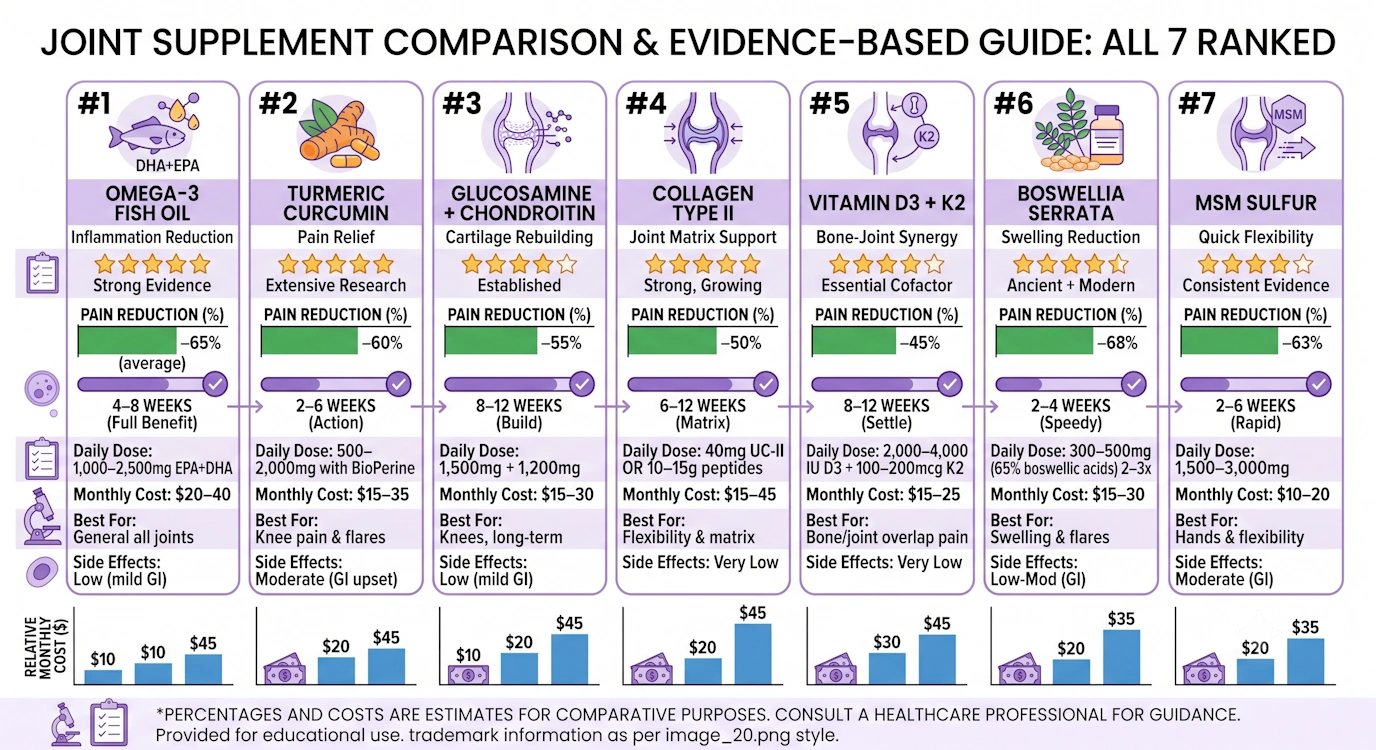
Head-to-Head Comparison Table: Best Menopause Joint Supplements
Here's a comprehensive side-by-side comparison to guide your supplement selection:
| Rank | Supplement | Primary Benefit | Daily Dose | Monthly Cost | Evidence Level | Side Effects Risk | Best For | Timeline |
|---|---|---|---|---|---|---|---|---|
| #1 | Omega-3 Fish Oil | Inflammation reduction (cytokines) | 1,000-2,500mg EPA+DHA | $20-40 | ⭐⭐⭐⭐⭐ RCTs, Meta-analyses | Low (fish burps, mild GI) | General inflammation, all joints | 4-8 weeks |
| #2 | Turmeric Curcumin | Pain relief, NF-kB inhibition | 500-2,000mg (with BioPerine) | $15-35 | ⭐⭐⭐⭐⭐ Extensive research | Moderate (GI upset 10%) | Knee pain, inflammation | 2-6 weeks |
| #3 | Glucosamine + Chondroitin | Cartilage rebuilding | 1,500mg + 1,200mg | $15-30 | ⭐⭐⭐⭐ Well-established | Low (mild GI 5-10%) | Long-term cartilage support, knees | 8-12 weeks |
| #4 | Collagen Type II | Joint matrix support | 40mg UC-II OR 10-15g peptides | $15-45 | ⭐⭐⭐⭐ Strong, growing | Very low (<5%) | Flexibility, overall joints | 6-12 weeks |
| #5 | Vitamin D3 + K2 | Bone-joint synergy | 2,000-4,000 IU D3 + 100-200mcg K2 | $15-25 | ⭐⭐⭐⭐ Essential cofactor | Very low | Bone/joint overlap pain, deficiency | 8-12 weeks |
| #6 | Boswellia Serrata | Rapid swelling reduction | 300-500mg (65% boswellic acids) 2-3x | $15-30 | ⭐⭐⭐⭐ Strong, ancient + modern | Low-Moderate (GI 10%) | Swelling, acute flares | 2-4 weeks |
| #7 | MSM Sulfur | Quick flexibility, cartilage support | 1,500-3,000mg | $10-20 | ⭐⭐⭐⭐ Consistent evidence | Moderate (GI 15%, detox) | Fast flexibility gains, hands | 2-6 weeks |
Safety & Side Effects of Menopause Joint Supplements
While natural joint supplements are generally safer than pharmaceuticals, it's important to understand potential side effects and who should avoid them.
Common Side Effects by Supplement
Omega-3 Fish Oil:
- Fish burps, fishy aftertaste (10-15%)
- Mild GI upset, nausea (5%)
- Solution: Enteric-coated capsules, refrigerate, take with food
- Blood thinning: Mild effect at therapeutic doses (monitor if on anticoagulants)
Turmeric Curcumin:
- GI upset (nausea, diarrhea) - 10-15%
- Solution: Take with food, reduce dose initially
- Gallbladder: May worsen gallstones (stimulates bile production)
- Yellow staining of stool (harmless)
Glucosamine + Chondroitin:
- Mild GI upset (5-10%)
- Gas, bloating
- Diabetes concern: Debunked—safe for diabetics
Collagen:
- Minimal side effects (<5%)
- Occasional mild GI discomfort
- Feeling of fullness (high protein)
Vitamin D3 + K2:
- Minimal at recommended doses
- Excess D3: Hypercalcemia (nausea, weakness) only at very high doses (>10,000 IU long-term)
Boswellia:
- GI upset (acid reflux, nausea) - 10%
- Skin rash (rare)
MSM:
- GI upset (bloating, diarrhea) - 15%
- Solution: Start low, increase gradually
- Brief "detox" symptoms (headache, fatigue) first few days
Serious Contraindications: Who Should Avoid
Gallstones or gallbladder disease:
- ✗ Avoid turmeric (high doses stimulate bile, may cause attack)
Stomach ulcers or GERD:
- ⚠ Caution with turmeric, boswellia (may irritate)
Blood clotting disorders or upcoming surgery:
- ✗ Avoid omega-3s, turmeric, boswellia 2 weeks before surgery
- Mild blood-thinning effects
On warfarin (Coumadin):
- ✗ DO NOT take vitamin K2 (antagonizes drug)
- ⚠ Monitor omega-3s, turmeric (may enhance anticoagulation)
Shellfish allergy:
- ✗ Avoid shellfish-derived glucosamine (use vegan form)
- ⚠ Caution with krill oil
Pregnancy/breastfeeding:
- ⚠ Avoid high-dose turmeric, boswellia, MSM (insufficient safety data)
- Omega-3s, vitamin D3, collagen generally safe in moderate amounts
Inflammatory bowel disease (IBD):
- ⚠ Caution with boswellia (may worsen in some cases)
Drug Interactions Summary
Blood thinners (warfarin, aspirin, Eliquis):
- Omega-3s, turmeric, boswellia → Monitor INR, bleeding risk
Diabetes medications:
- Turmeric → May lower blood sugar (monitor)
NSAIDs (ibuprofen, naproxen):
- Combining with natural anti-inflammatories usually safe
- May allow NSAID dose reduction (under medical supervision)
Immunosuppressants:
- Boswellia → Possible interaction (discuss with doctor)
Chemotherapy:
- Turmeric → May interfere with some agents (oncologist approval required)
When to See a Doctor
Seek medical attention if:
- Joint pain is severe or worsening despite supplements
- Sudden joint swelling, redness, warmth (possible infection or gout)
- Joint pain accompanied by fever, rash, or systemic symptoms
- Inability to bear weight or use joint
- Signs of bleeding (if on blood-thinning supplements + medications)
Consult doctor before starting supplements if:
- Taking prescription medications (especially blood thinners, diabetes drugs)
- Have chronic medical conditions (liver disease, kidney disease, autoimmune disorders)
- Scheduled for surgery
- Pregnant or breastfeeding
Best Supplement Stacks for Maximum Joint Relief
Creating an effective supplement stack combines synergistic nutrients for enhanced joint protection.
Beginner Stack (Budget-Friendly, Foundation)
Essential Core (2-3 supplements):
- Omega-3 Fish Oil: 1,500mg EPA+DHA daily
- Collagen Peptides: 10g daily (in morning coffee)
- Optional: Turmeric Curcumin: 1,000mg (with BioPerine) daily
Why this combination:
- Omega-3 reduces inflammation (root cause)
- Collagen rebuilds joint matrix
- Turmeric provides additional anti-inflammatory support
Cost: ~$50-70/month
Expected results:
- Week 2-4: Some reduction in morning stiffness
- Week 6-8: Noticeable pain improvement (20-30%)
- Week 12+: Continued improvement, better mobility
Best for: Women just starting to experience joint pain, budget-conscious
Intermediate Stack (Comprehensive Support)
Core + Cartilage Rebuilding:
- Omega-3 Fish Oil: 2,000mg EPA+DHA daily
- Turmeric Curcumin: 1,500mg (with BioPerine) 2x daily
- Glucosamine + Chondroitin: 1,500mg + 1,200mg daily
- Collagen Type II: 40mg UC-II OR 10g peptides daily
- Vitamin D3 + K2: 4,000 IU D3 + 200mcg K2 daily
Why this combination:
- Multi-pathway inflammation reduction (omega-3 + turmeric)
- Cartilage rebuilding (glucosamine, chondroitin, collagen)
- Bone-joint support (D3+K2)
Cost: ~$90-120/month
Expected results:
- Week 2-4: Early inflammation reduction
- Week 6-10: Significant pain improvement (30-40%)
- Week 12-24: Structural improvements, sustained relief
Best for: Moderate joint pain, seeking comprehensive approach
Advanced Stack (Maximum Relief, Severe Pain)
Full Protocol (All 7 supplements):
- Omega-3 Fish Oil: 2,500mg EPA+DHA daily
- Turmeric Curcumin: 2,000mg (with BioPerine) split doses
- Glucosamine + Chondroitin: 1,500mg + 1,200mg daily
- Collagen Type II: 40mg UC-II + 10g peptides
- Vitamin D3 + K2: 5,000 IU D3 + 200mcg K2 daily
- Boswellia Serrata: 500mg (65% boswellic acids) 2x daily
- MSM: 3,000mg daily (split doses)
Why this combination:
- Comprehensive multi-pathway inflammation blockade
- Maximum cartilage support and rebuilding
- Fast-acting + long-term structural benefits
- Addresses all aspects of joint health
Cost: ~$140-180/month
Expected results:
- Week 1-2: MSM and boswellia provide quick flexibility
- Week 4-8: Significant pain reduction (40-50%+)
- Week 12-24: Maximum benefit, potential structural improvement
- Long-term: Sustained relief, may prevent further deterioration
Best for: Severe joint pain, established osteoarthritis, women seeking maximum relief
4-12 Week Progress Tracker
How to track your results:
Week 1-2:
- Baseline pain level (rate 1-10)
- Morning stiffness duration (minutes)
- Activities affected (stairs, gripping, walking distance)
Week 4:
- Reassess pain level
- Note any changes in stiffness
- Check if any activities easier
Week 8:
- Significant improvements should be noticeable
- Decide if protocol is working
- Adjust if needed
Week 12:
- Maximum benefit for most supplements
- Evaluate overall improvement
- Determine long-term protocol
Tracking template:
Decision points:
- If improving: Continue protocol
- If no improvement by week 8: Adjust (increase doses, add supplements, or consult doctor)
- If side effects: Reduce doses or eliminate problematic supplement
Comprehensive Joint Formulas: All-in-One Solutions
For convenience and potential cost savings, consider comprehensive joint formulas that combine multiple ingredients:
Joint Genesis™ (Recommended All-in-One)
What it is: Doctor-formulated joint health supplement with cutting-edge ingredients backed by Ivy League research
Key ingredients:
- Patented formula for joint rehydration
- Supports synovial fluid (joint lubricant)
- Multiple anti-inflammatory compounds
- Designed specifically for aging joints
Benefits:
- Comprehensive support in one formula
- Scientifically-formulated ratios
- Convenient (fewer pills)
- Synergistic ingredient combination
Who it's for: Women seeking convenience, comprehensive support, evidence-based formula
Ready to Get Started?
Visit the official website for current pricing and the 60-day money-back guarantee.
Learn More About Joint Genesis → Affiliate disclosure: I may earn a commission at no extra cost to you.Joint N-11 (Niacinamide Focus)
What it is: Formula that addresses the 2 root causes of joint problems: inflammation and cartilage decay
Key ingredient: Niacinamide (Vitamin B3)
- Treats inflammation at cellular level
- Supports cartilage regeneration
- Strengthens joint mobility
Additional ingredients:
- Anti-inflammatory botanicals
- Cartilage-supporting compounds
Benefits:
- Unique niacinamide approach
- Addresses both inflammation AND cartilage decay
- Soothes pain while strengthening joints
Who it's for: Women with both inflammation and structural joint issues
Ready to Get Started?
Visit the official website for current pricing and the 60-day money-back guarantee.
Discover Joint N-11 → Affiliate disclosure: I may earn a commission at no extra cost to you.Feilaira (Mobility Focus)
What it is: Comprehensive joint supplement focused on improving mobility and relieving discomfort
Benefits:
- Relieves joint discomfort
- Improves overall mobility
- Supports active lifestyle during menopause
Who it's for: Active women seeking to maintain mobility, prevent joint limitations
Ready to Get Started?
Visit the official website for current pricing and the 60-day money-back guarantee.
Try Feilaira for Mobility Support → Affiliate disclosure: I may earn a commission at no extra cost to you.Spinal Force (Pain Relief Specialist)
What it is: Chinese-inspired pain reliever that eliminates back and joint pain
Unique approach:
- Village-made formula
- Traditional Chinese medicine principles
- Targets pain at the source
Benefits:
- Effective for back pain (common with menopause joint issues)
- Joint pain throughout body
- Natural pain relief approach
Who it's for: Women with significant back pain alongside joint pain, those interested in traditional medicine
Ready to Get Started?
Visit the official website for current pricing and the 60-day money-back guarantee.
Get Spinal Force Pain Relief → Affiliate disclosure: I may earn a commission at no extra cost to you.Comprehensive formulas vs individual supplements:
Advantages of comprehensive formulas:
- ✓ Convenience (1 product vs 5-7)
- ✓ Scientifically-formulated ratios
- ✓ Potential cost savings
- ✓ Synergistic ingredients
Advantages of individual supplements:
- ✓ Customize doses for your needs
- ✓ Add/remove based on results
- ✓ Know exactly what you're taking
- ✓ Choose preferred brands for each ingredient
Best approach: Many women use a combination—comprehensive formula as base + 1-2 targeted individual supplements (e.g., Joint Genesis + extra omega-3s)
Diet, Exercise & Lifestyle to Boost Supplement Results
Supplements work best when combined with joint-supporting lifestyle habits.
Anti-Inflammatory Foods to Emphasize
Top joint-friendly foods:
Fatty Fish (Omega-3s):
- Salmon, sardines, mackerel, anchovies
- Target: 2-3 servings weekly
- Complements omega-3 supplements
Berries (Antioxidants):
- Blueberries, strawberries, blackberries, cherries
- Rich in anthocyanins (anti-inflammatory)
- Daily serving recommended
Leafy Greens:
- Kale, spinach, collards, Swiss chard
- Provide: Vitamin K, antioxidants, minerals
- 1-2 servings daily
Cruciferous Vegetables:
- Broccoli, Brussels sprouts, cauliflower
- Contain sulforaphane (anti-inflammatory)
Nuts and Seeds:
- Walnuts (omega-3s), almonds (vitamin E)
- Chia seeds, flaxseeds (omega-3s, lignans)
Olive Oil:
- Extra virgin, cold-pressed
- Contains oleocanthal (natural anti-inflammatory)
Turmeric and Ginger:
- Fresh or dried in cooking
- Enhances supplement effects
Foods to Avoid (Pro-Inflammatory)
Limit or eliminate:
✗ Refined Carbs & Sugar:
- White bread, pastries, sugary drinks
- Spike blood sugar → inflammatory response
✗ Trans Fats:
- Fried foods, margarine, processed baked goods
- Increase inflammatory markers
✗ Excess Omega-6:
- Vegetable oils (corn, soybean, safflower)
- Processed foods
- Disrupts omega-3:omega-6 ratio
✗ Alcohol (Excess):
- Moderate: okay (1 drink/day)
- Excess: increases inflammation
✗ Red Meat (Excessive):
- High in arachidonic acid (pro-inflammatory)
- Limit to 1-2x weekly
Sample Anti-Inflammatory Meal Plan
Day Example:
Breakfast:
- Greek yogurt with berries, ground flaxseed, walnuts
- Green tea
Snack:
- Apple slices with almond butter
Lunch:
- Large salad: mixed greens, grilled salmon, olive oil dressing
- Side of quinoa with turmeric
Snack:
- Carrot sticks with hummus
Dinner:
- Baked chicken with herbs
- Roasted broccoli and Brussels sprouts with olive oil
- Sweet potato
Evening:
- Chamomile tea
- Small handful of cherries
Low-Impact Exercise for Joint Health
Best exercises for menopausal joints:
Swimming/Water Aerobics:
- ✓ Zero impact (water supports body weight)
- Improves: Strength, flexibility, cardiovascular health
- Frequency: 3-5x weekly, 30 minutes
Walking:
- ✓ Low impact, accessible
- Use: Supportive shoes, walk on soft surfaces (grass, track)
- Frequency: Daily, 20-30 minutes
Cycling (Stationary or Outdoor):
- ✓ Non-weight bearing for knees
- Builds: Leg strength, cardiovascular fitness
- Frequency: 3-4x weekly, 20-40 minutes
Tai Chi:
- ✓ Gentle, flowing movements
- Improves: Balance, flexibility, reduces fall risk
- Evidence: Reduces arthritis pain by 20-30%
Yoga (Gentle/Restorative):
- ✓ Improves flexibility, strength, mind-body connection
- Choose: Gentle, yin, or restorative styles (avoid hot/power yoga)
- Frequency: 2-3x weekly
Resistance Training (Light Weights):
- ✓ Strengthens muscles around joints = better support
- Use: Light weights, resistance bands
- Focus: Proper form, controlled movements
- Frequency: 2-3x weekly
Exercises to AVOID (high-impact):
- ✗ Running/jogging on hard surfaces (stresses knees)
- ✗ High-impact aerobics, jumping
- ✗ Heavy weightlifting with poor form
Posture and Body Mechanics
Joint-protective habits:
Proper posture:
- Sitting: Feet flat, back supported, screen at eye level
- Standing: Weight evenly distributed, shoulders back
- Sleeping: Side-sleeping with pillow between knees OR back-sleeping with pillow under knees
Lifting technique:
- Bend knees, not back
- Hold objects close to body
- Avoid twisting while lifting
Joint protection:
- Use larger, stronger joints when possible
- Distribute weight evenly (use both hands)
- Take breaks during repetitive tasks
- Use assistive devices (jar openers, reachers)
Additional Lifestyle Factors
Weight management:
- Every 1 pound of excess weight = 4 pounds of pressure on knees
- Even 10-pound weight loss significantly reduces joint stress
- Focus: Anti-inflammatory diet + moderate exercise
Hydration:
- 8+ glasses water daily
- Supports synovial fluid production (joint lubricant)
- Cartilage is 80% water—dehydration worsens stiffness
Stress management:
- Chronic stress → elevated cortisol → increased inflammation
- Practice: Meditation, deep breathing, yoga, nature walks
- Adequate sleep: 7-9 hours (healing and recovery)
Smoking cessation:
- Smoking increases inflammation and oxidative stress
- Impairs cartilage repair
- Quit to improve joint health
Frequently Asked Questions (FAQ)
Q1: What is the absolute best supplement for menopause joint pain?
Answer: Omega-3 fish oil (EPA/DHA) is the single best supplement for menopause joint pain if you can only choose one.
Why omega-3 wins:
- Strongest evidence: Multiple large RCTs and meta-analyses
- Targets root cause: Reduces inflammatory cytokines (IL-6, TNF-α) by 20-30%
- Broad benefits: Helps all joints (knees, hands, shoulders, hips)
- Fast results: Noticeable improvement in 4-8 weeks
- Safety: Excellent safety profile, minimal side effects
- Additional benefits: Heart health, brain function, mood support
Optimal dose: 1,500-2,500mg combined EPA+DHA daily
However, joint pain is multi-faceted:
For best results, combine omega-3 with:
- Turmeric curcumin (different anti-inflammatory pathway)
- Collagen Type II (cartilage matrix support)
- Vitamin D3 + K2 (if deficient—70% of menopausal women are)
The ultimate stack (if budget allows):
- Omega-3: 2,000mg EPA+DHA
- Turmeric: 1,000mg curcumin with BioPerine
- Collagen: 10g peptides or 40mg UC-II
- Vitamin D3+K2: 4,000 IU + 200mcg
Comprehensive formulas as alternatives:
If you prefer all-in-one convenience, consider evidence-based formulas like:
- Joint Genesis (doctor-formulated, Ivy League research)
- Joint N-11 (niacinamide focus for inflammation + cartilage)
Ready to Get Started?
Visit the official website for current pricing and the 60-day money-back guarantee.
Get Omega-3 + Complete Joint Support with Joint Genesis → Affiliate disclosure: I may earn a commission at no extra cost to you.Q2: How long before menopause joint supplements work?
Answer: Timeline varies by supplement type—2-12 weeks depending on mechanism.
Fast-Acting Supplements (2-4 weeks):
- MSM: 2-3 weeks for flexibility improvement
- Boswellia: 2-4 weeks for swelling reduction
- Turmeric: 2-6 weeks for pain relief
Moderate Timeline (4-8 weeks):
- Omega-3 fish oil: 4-8 weeks for inflammation reduction
- Collagen peptides: 6-8 weeks for joint benefits
Slow-Acting Structural Supplements (8-12+ weeks):
- Glucosamine + Chondroitin: 8-12 weeks for cartilage effects
- Vitamin D3 + K2: 8-12 weeks for bone-joint benefits
Why the variation?
Symptom relief (fast):
- Reduces inflammation, blocks pain pathways
- Examples: Turmeric, boswellia, MSM
Structural repair (slow):
- Rebuilds cartilage, strengthens joints
- Examples: Glucosamine, collagen
- Requires time for cellular changes and tissue regeneration
Realistic expectations:
Week 2-4:
- May notice: Reduced morning stiffness, easier movement
- Fast-acting supplements kicking in
Week 6-8:
- Should notice: Measurable pain reduction (20-30%), better mobility
- Omega-3 and turmeric reaching peak effects
Week 12:
- Maximum benefit for most supplements
- Structural improvements beginning
- Pain reduction 30-50% for responders
6+ months:
- Continued improvement possible
- Cartilage protection, long-term benefits
- May prevent further deterioration
Important: Give supplements adequate trial (minimum 8 weeks) before deciding they don't work. Consistency is key—skipping doses delays results.
Q3: Are there side effects from natural joint supplements in menopause?
Answer: Natural joint supplements are generally safe, but 5-15% of users experience mild side effects, most commonly GI upset.
Common side effects by supplement:
Most Common (GI Issues):
- Turmeric (10-15%): Nausea, diarrhea
- MSM (10-15%): Bloating, loose stools
- Boswellia (10%): Acid reflux, stomach upset
- Glucosamine (5-10%): Gas, bloating
- Omega-3 (10%): Fish burps, mild nausea
Solutions for GI side effects:
- ✓ Take with food
- ✓ Start with lower doses, increase gradually
- ✓ Split doses throughout day
- ✓ Choose enteric-coated forms (omega-3, turmeric)
- ✓ Try different brands (quality matters)
Less Common Side Effects:
- MSM: Brief "detox" symptoms (headache, fatigue) first 3-5 days
- High-dose turmeric: May worsen gallbladder issues
- Boswellia: Rare skin rash
Serious side effects (very rare):
- Blood thinning effects (omega-3, turmeric, boswellia) - usually only concern if on anticoagulants
- Allergic reactions (shellfish in glucosamine, fish in omega-3)
Who experiences side effects?
- Those with sensitive stomachs or digestive issues
- People taking high doses
- Those taking multiple supplements without food
Compared to prescription medications:
Natural supplements have significantly fewer and less severe side effects than:
- NSAIDs (gut damage, cardiovascular risk, kidney damage)
- Steroids (weight gain, bone loss, immune suppression)
- Prescription pain meds (addiction, liver damage)
Bottom line: Most women tolerate joint supplements well. Start conservatively, increase gradually, and take with food to minimize side effects.
Q4: Can supplements prevent joint damage during menopause?
Answer: Yes, evidence suggests supplements can slow joint damage and may prevent osteoarthritis progression, especially when started early in menopause.
What "prevention" means:
- Can't make joints "immune" to aging
- CAN slow deterioration by 30-50%
- CAN reduce osteoarthritis risk in vulnerable joints
- CAN preserve cartilage and joint function longer
Evidence for prevention:
Glucosamine sulfate:
- Long-term studies (2+ years): Slows joint space narrowing on x-rays
- Protects cartilage from breakdown
- Preventive effect: May delay onset of osteoarthritis by years
Omega-3 fish oil:
- Observational studies: Higher omega-3 intake = 40% lower OA risk
- Protects against inflammatory joint damage
Collagen Type II:
- Supports cartilage matrix integrity
- May prevent microtrauma accumulation
Vitamin D + K2:
- Maintains bone density around joints
- Reduces joint stress from bone weakness
When to start for prevention:
Best time: Perimenopause (ages 45-50)
- Before significant damage occurs
- When estrogen first starts declining
- Can slow initial cartilage loss
Still beneficial: Early menopause (ages 50-55)
- First 5-7 years post-menopause = rapid bone/cartilage loss
- Intervention during this window prevents compounding damage
Late menopause (55+): Damage control
- Focus shifts from prevention → slowing progression
- Still worthwhile, but harder to reverse existing damage
Prevention protocol:
- Start early: Don't wait for severe pain
- Consistent use: Daily supplementation (not as-needed)
- Combine approaches: Supplements + exercise + weight management
- Monitor: Track symptoms, adjust as needed
Bottom line: Supplements can significantly reduce joint damage risk, but work best as prevention rather than cure. Start during perimenopause or early menopause for maximum protective benefit.
Q5: Which supplement works best for knee pain in menopause?
Answer: For knee pain specifically, glucosamine + chondroitin combined with omega-3 fish oil shows the strongest evidence.
Why knees are most affected in menopause:
- Weight-bearing joint = high stress
- Largest joint in body = most cartilage
- Estrogen loss → rapid cartilage breakdown in knees
- 65% of menopausal women experience knee pain
Best supplements for knees (ranked):
#1: Glucosamine (1,500mg) + Chondroitin (1,200mg)
- Specific evidence for knee osteoarthritis
- Slows cartilage loss in knee joint
- Reduces knee pain 20-30%
- Timeline: 8-12 weeks
#2: Omega-3 Fish Oil (2,000mg EPA+DHA)
- Reduces knee inflammation
- Improves knee function and mobility
- Works synergistically with glucosamine
- Timeline: 4-8 weeks
#3: Collagen Type II (40mg UC-II)
- Head-to-head studies: Superior to glucosamine for knee OA in some trials
- Improves knee flexibility and reduces stiffness
- Timeline: 6-12 weeks
#4: Turmeric Curcumin (1,000-2,000mg with BioPerine)
- Reduces knee pain comparable to ibuprofen
- Anti-inflammatory effect specific to knees
- Timeline: 4-8 weeks
Optimal knee pain stack:
- Glucosamine + Chondroitin: 1,500mg + 1,200mg daily
- Omega-3: 2,000mg EPA+DHA daily
- Collagen Type II: 40mg UC-II daily
- Turmeric: 1,000mg curcumin (with BioPerine) daily
Cost: ~$80-110/month
Expected results:
- Week 4-6: Initial pain reduction (20-30%)
- Week 8-12: Significant improvement (30-40%)
- 6 months: Maximum benefit, improved function
Comprehensive knee-specific formula:
Consider Joint Genesis which is formulated with cutting-edge ingredients specifically for joint rehydration and support—particularly beneficial for weight-bearing joints like knees.
Ready to Get Started?
Visit the official website for current pricing and the 60-day money-back guarantee.
Try Joint Genesis for Knee Pain Relief → Affiliate disclosure: I may earn a commission at no extra cost to you.Additional knee-specific tips:
- Weight loss: Every 1 lb lost = 4 lbs less pressure on knees
- Strengthening exercises: Quadriceps and hamstrings support knee stability
- Low-impact activities: Swimming, cycling (protect knees from excess stress)
- Knee-friendly footwear: Supportive shoes, avoid high heels
Final Verdict & Top Recommendations for 2026
After comprehensive analysis of evidence, safety, and real-world effectiveness, here are our final recommendations:
#1 Overall Best Supplement: Omega-3 Fish Oil
Why it wins:
- ⭐⭐⭐⭐⭐ Strongest clinical evidence
- Targets root cause (inflammation)
- Works for all joints
- Excellent safety profile
- Additional health benefits (heart, brain, mood)
Recommended dose: 1,500-2,500mg EPA+DHA daily
Best for: All menopausal women with joint pain (universal recommendation)
Top Recommendations by Severity & Budget
MILD JOINT PAIN (Occasional stiffness, minor discomfort):
Budget-Friendly Stack ($40-60/month):
- Omega-3: 1,500mg EPA+DHA
- Collagen peptides: 10g daily
- Expected improvement: 20-30% pain reduction
Or Single Comprehensive Formula:
- Feilaira for mobility support and discomfort relief
Ready to Get Started?
Visit the official website for current pricing and the 60-day money-back guarantee.
Try Feilaira → Affiliate disclosure: I may earn a commission at no extra cost to you.MODERATE JOINT PAIN (Daily stiffness, affects activities):
Intermediate Stack ($90-120/month):
- Omega-3: 2,000mg EPA+DHA
- Turmeric: 1,500mg curcumin (with BioPerine)
- Glucosamine + Chondroitin: 1,500mg + 1,200mg
- Collagen: 10g peptides OR 40mg UC-II
- Vitamin D3 + K2: 4,000 IU + 200mcg
Expected improvement: 30-40% pain reduction
Or Comprehensive Formula:
- Joint Genesis - Doctor-formulated, research-backed
Ready to Get Started?
Visit the official website for current pricing and the 60-day money-back guarantee.
Get Joint Genesis → Affiliate disclosure: I may earn a commission at no extra cost to you.SEVERE JOINT PAIN (Constant pain, significant limitation):
Advanced Full Stack ($140-180/month):
- All 7 supplements at therapeutic doses
- Omega-3, turmeric, glucosamine+chondroitin, collagen, D3+K2, boswellia, MSM
Expected improvement: 40-50%+ pain reduction
Or Targeted Comprehensive Solutions:
- Joint N-11 (niacinamide for inflammation + cartilage)
Ready to Get Started?
Visit the official website for current pricing and the 60-day money-back guarantee.
Discover Joint N-11 → Affiliate disclosure: I may earn a commission at no extra cost to you.- Spinal Force (especially if back pain alongside joint pain)
Ready to Get Started?
Visit the official website for current pricing and the 60-day money-back guarantee.
Try Spinal Force → Affiliate disclosure: I may earn a commission at no extra cost to you.Personalized Quick-Start Guide
If you have...
Knee pain specifically:
→ Glucosamine + chondroitin + Omega-3 + Collagen Type II
Hand/finger pain and stiffness:
→ Omega-3 + Turmeric + MSM (for quick flexibility)
Widespread joint pain (multiple areas):
→ Omega-3 + Comprehensive formula (Joint Genesis or Joint N-11)
Joint pain + bone loss concerns:
→ Add Vitamin D3 + K2 to any stack
Sensitive stomach:
→ Start with Collagen + Omega-3 (gentlest), add others gradually
Budget priority:
→ Omega-3 alone, then add turmeric, then collagen
Next Steps: Start Your Joint Pain Relief Journey
Week 1-2: Begin Foundation
- Start omega-3 fish oil (1,500-2,000mg EPA+DHA)
- Add collagen peptides (10g in morning coffee)
- Track baseline pain levels
Week 3-4: Add Anti-Inflammatory
- Add turmeric curcumin (1,000mg with BioPerine)
- Continue tracking symptoms
Week 5-8: Assess and Adjust
- Evaluate improvement
- Add glucosamine+chondroitin if needed for structural support
- Consider vitamin D3+K2 testing and supplementation
Week 12+: Optimize Long-Term
- Determine which supplements provide most benefit
- Adjust doses or stack as needed
- Maintain successful protocol
Important Reminders
Do:
- ✓ Start with quality supplements (third-party tested)
- ✓ Give adequate time (8-12 weeks minimum)
- ✓ Take consistently (daily, not as-needed)
- ✓ Combine with lifestyle changes (diet, exercise, weight management)
- ✓ Track progress objectively
Don't:
- ✗ Expect overnight results
- ✗ Take without food (increases GI upset)
- ✗ Skip doses frequently (delays results)
- ✗ Give up before 8 weeks
- ✗ Ignore serious symptoms (seek medical care)
When to see a doctor:
- Severe or worsening pain despite supplements
- Sudden joint swelling/redness/warmth
- Inability to bear weight or use joint
- Systemic symptoms (fever, rash, unexplained weight loss)
Take action today—your joints will thank you tomorrow!
Choose the supplement protocol that fits your needs and budget, start consistently, and give your body the support it needs to thrive during menopause and beyond.
Ready to Get Started?
Visit the official website for current pricing and the 60-day money-back guarantee.
Browse All Joint Health Solutions → Affiliate disclosure: I may earn a commission at no extra cost to you.Disclaimers
Medical Disclaimer
This article is for informational purposes only and does not constitute medical advice. The supplement recommendations have not been evaluated by the Food and Drug Administration and are not intended to diagnose, treat, cure, or prevent any disease.
Always consult with a qualified healthcare professional before starting any new supplement regimen, especially if you have pre-existing medical conditions, take medications, or have risk factors for joint problems. Individual results may vary, and what works for one woman may not work for another.
Joint pain can be a symptom of various conditions. If you experience severe, persistent, or worsening joint pain, seek medical evaluation to rule out serious underlying causes such as rheumatoid arthritis, infections, or other systemic diseases.
Affiliate Disclosure
This article contains affiliate links to joint health products including Joint Genesis, Joint N-11, Feilaira, and Spinal Force. If you purchase through our links, we may earn a commission at no additional cost to you. This helps us continue providing free, evidence-based content to help women navigate menopause.
Our recommendations are based on thorough research of ingredients, clinical studies, and product quality. We only recommend products we believe offer genuine value and safety for our readers. The comparison and information remain objective regardless of affiliate relationships.