Article Contents
- Can a Supplement Help Tinnitus During Menopause?
- Quick Answer: Is There a Best Menopause Tinnitus Supplement?
- Why Tinnitus May Feel Worse During Menopause
- How to Evaluate a Menopause Tinnitus Supplement
- Magnesium for Menopause Tinnitus: What to Know
- Melatonin for Tinnitus-Related Sleep Problems
- Zinc, Vitamin B12, and Vitamin D: Test First
- Ginkgo Biloba and Proprietary Ear-Ringing Blends
- Supplement Safety During Menopause
- Better-Supported Ways to Reduce Tinnitus Burden
- When to See a Doctor or Audiologist Urgently
- How to Build a Menopause Tinnitus Support Plan
- Frequently Asked Questions
- Supplement Comparison Checklist
- Final Takeaway
Can a Supplement Help Tinnitus During Menopause?
Tinnitus—the perception of ringing, buzzing, hissing, or clicking sounds in the ears without an external source—affects millions of women. Some women notice new or worsening tinnitus around menopause. While hormonal changes, sleep loss, stress, and hearing changes during midlife may contribute to tinnitus burden, no supplement is proven to cure menopause-related tinnitus.
However, certain ingredients have evidence for supporting sleep, addressing potential nutrient deficiencies, or reducing the anxiety that can worsen tinnitus perception. This article compares the most discussed menopause tinnitus supplements by ingredient quality, evidence strength, safety, medication interactions, and practical cost.
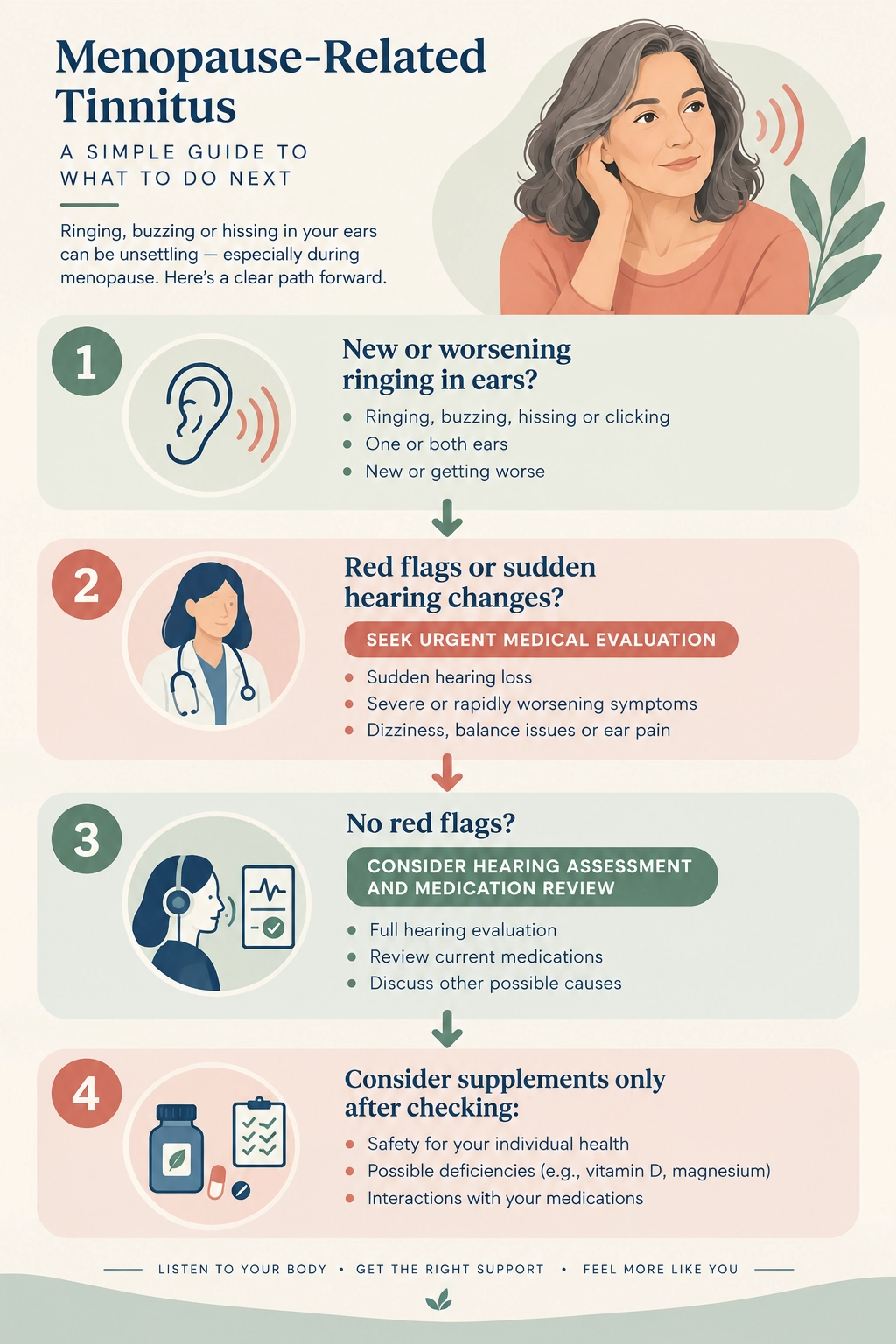
If your tinnitus is new, one-sided, pulsatile, or accompanied by hearing loss or dizziness, seek medical evaluation before trying supplements. For other cases, a balanced approach combining hearing assessment, sleep support, stress management, and evidence-aware supplementation may reduce tinnitus burden.

Quick Answer: Is There a Best Menopause Tinnitus Supplement?
The Short Version
There is no single "best" supplement proven to cure or reliably eliminate menopause tinnitus. Some ingredients may be relevant if deficiencies are confirmed or if sleep support is the primary goal. Evidence is limited and mixed.
Most relevant when: Nutrient testing confirms a deficiency, sleep disruption is a major factor, or you're managing anxiety alongside tinnitus.
Least relevant when: Tinnitus is new, one-sided, pulsatile, accompanied by hearing loss, or caused by medication or medical conditions.
Menopause Tinnitus Supplement Ingredient Evidence Overview
| Ingredient | Evidence for Tinnitus | Relevance for Menopause | Dose Range | Safety Concern |
|---|---|---|---|---|
| Magnesium | Limited; sleep & anxiety support better established | Moderate (deficiency + sleep loss common) | 200–400 mg daily | GI upset; kidney disease risk |
| Melatonin | No direct tinnitus evidence; sleep-focused | High (night-waking, hot flashes disrupt sleep) | 0.5–5 mg, 30–60 min before bed | Drowsiness; interacts with sleep meds |
| Zinc | Mixed; relevant only if deficient | Low (deficiency rare in non-vegetarians) | 8–11 mg daily; max 40 mg | Copper imbalance; nausea |
| Vitamin B12 | Limited; neurological support possible | Moderate (absorption declines with age) | 2.4 mcg daily (food); 1000 mcg (supplement) | Generally safe; injections for deficiency |
| Vitamin D | Weak; bone health more established | High (deficiency common in midlife) | 600–800 IU daily; 1000–2000 IU if low | Toxicity at very high doses (>4000 IU daily) |
| Ginkgo Biloba | Mixed; older studies, small effects | Low (cognitive support marketed, not menopause-specific) | 120–240 mg daily (standardized extract) | Bleeding risk; interacts with blood thinners |
| Proprietary Ear Blends | Poor; often lack transparency | Low (marketing-driven, not evidence-based) | Varies (usually undisclosed) | Unknown; hidden ingredients common |
Note: This table summarizes ingredient-level evidence, not cure claims. Presence on this list does not imply efficacy for tinnitus; it reflects what is discussed in tinnitus research or menopause forums.
Why Tinnitus May Feel Worse During Menopause
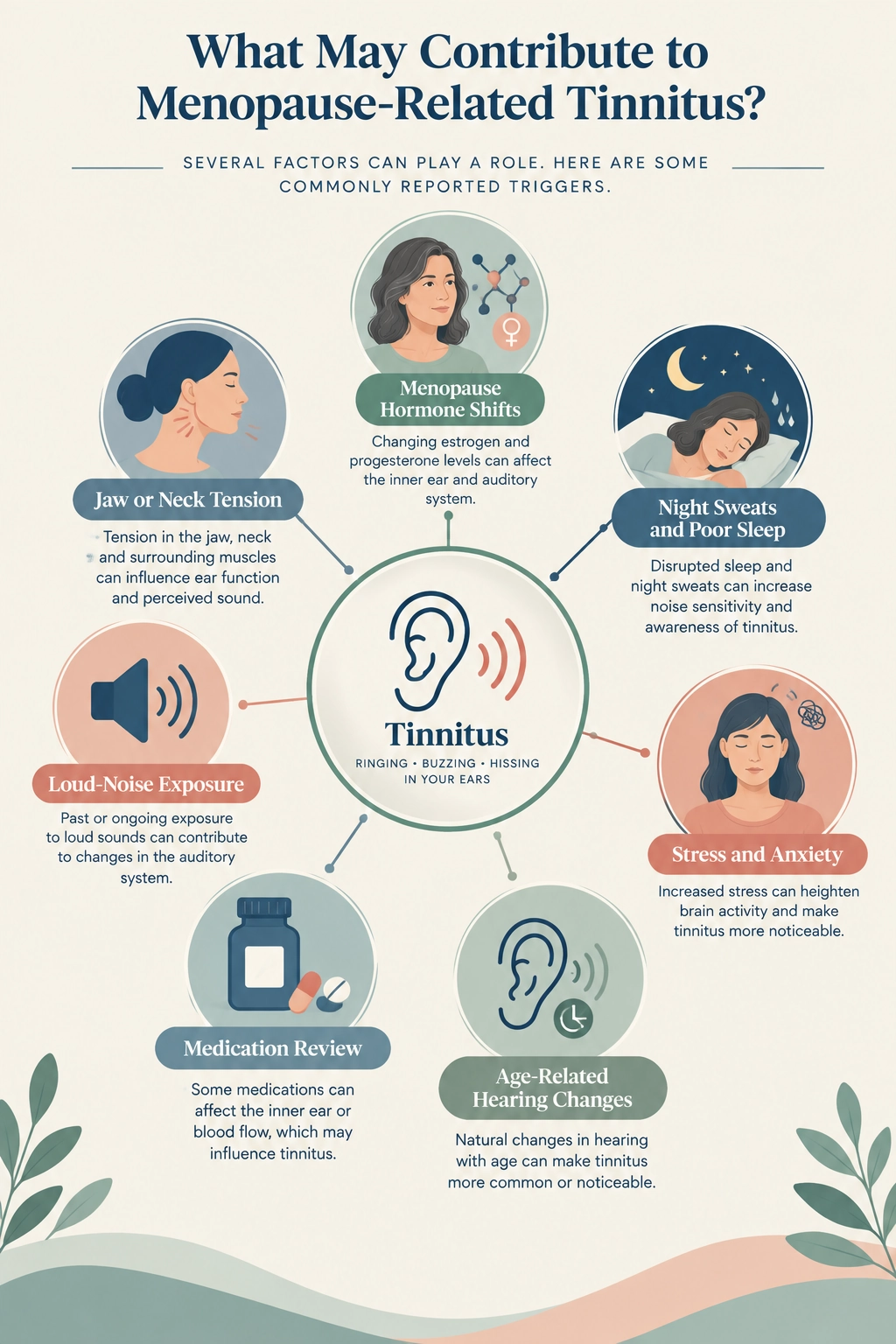
Menopause is not proven to be the sole or primary cause of new-onset tinnitus, but several menopause-related changes and coinciding factors may worsen tinnitus perception or burden:
Hormonal and Sleep Changes
Estrogen and progesterone influence auditory processing, sleep architecture, and stress response. Declining levels during menopause may alter how the brain perceives and filters sound. Additionally, hot flashes and night sweats disrupt sleep continuity, and sleep loss amplifies tinnitus perception. Poor sleep also worsens mood, making tinnitus feel more intrusive.
Age-Related Hearing Changes
Presbycusis (age-related hearing loss) becomes more common in women over 50. Reduced hearing sensitivity can shift how the auditory system processes background noise, sometimes resulting in tinnitus as a compensatory phantom signal. This is separate from estrogen but coincides with menopause.
Stress, Anxiety, and Attention
Menopause often brings life stressors, and anxiety disorders are common during this transition. Stress hormones (cortisol, adrenaline) heighten auditory sensitivity, and heightened attention to tinnitus makes it feel worse. Research shows anxiety and tinnitus perception are bidirectionally linked.
Medication and Substance Effects
HRT, certain antidepressants, anti-hypertensives, and diuretics can affect tinnitus. Additionally, caffeine and alcohol are known tinnitus triggers. If menopause-related mood or sleep issues lead to increased caffeine or alcohol use, tinnitus may worsen.
Jaw Tension, Migraines, and Muscle Tension
Menopause-related migraines, jaw clenching (bruxism), and neck tension are common. The temporomandibular joint (TMJ) is anatomically close to the ear, and muscular tension can exacerbate tinnitus.
How to Evaluate a Menopause Tinnitus Supplement
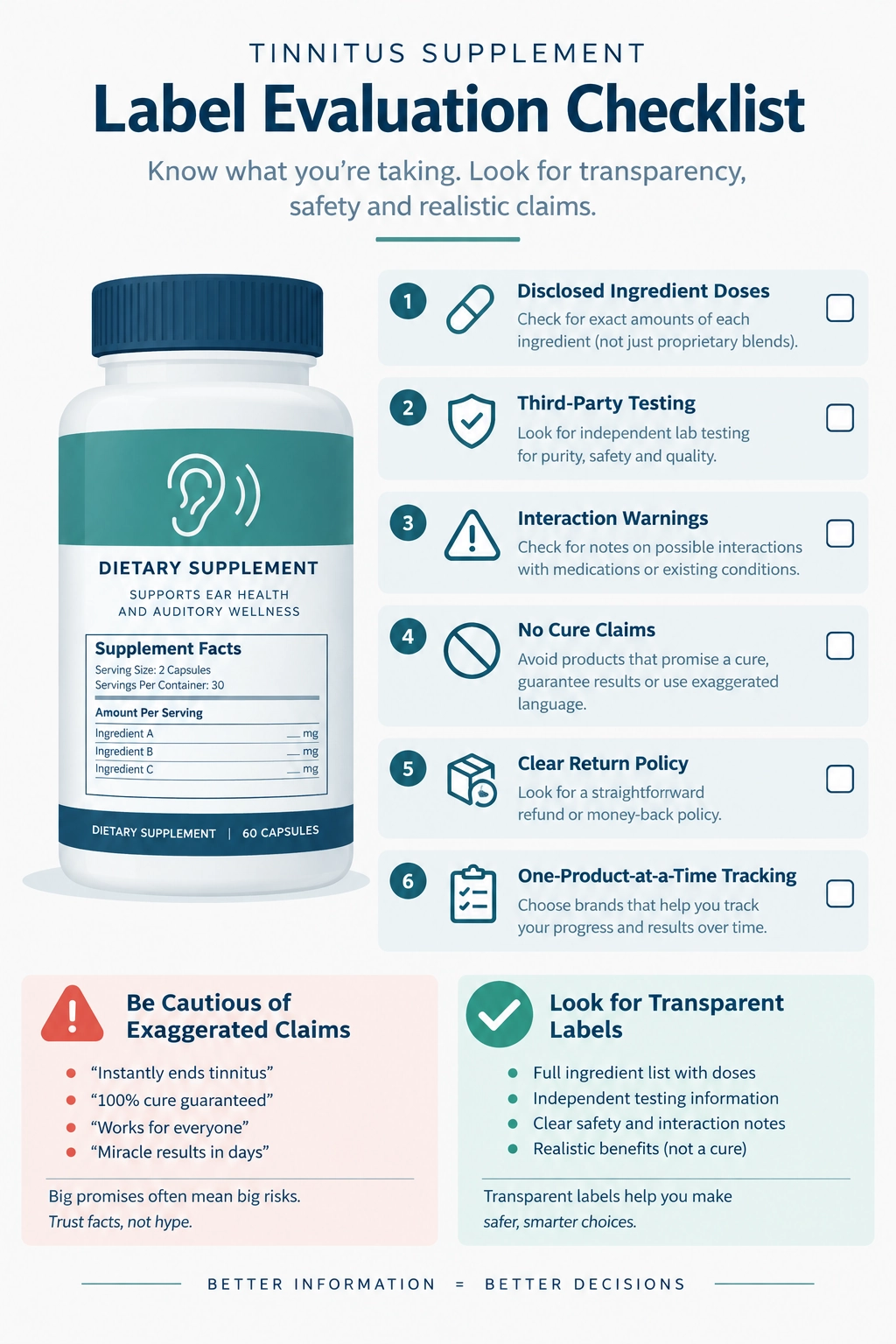
Before purchasing a supplement, use this framework to assess product quality, ingredient transparency, and safety:
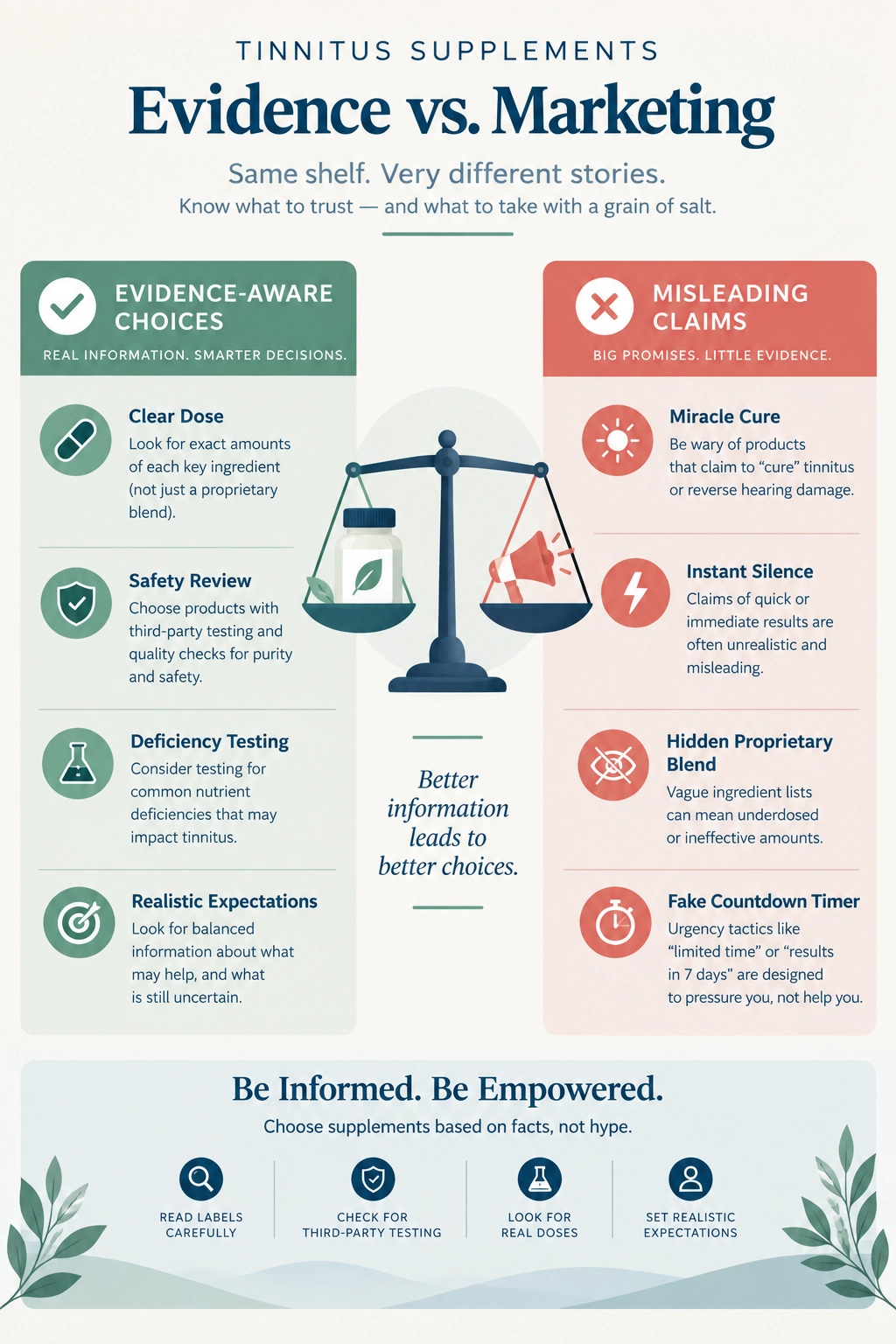
Check for Transparent Ingredient Doses
Red flag: A product lists ingredients but omits doses, or includes a "proprietary blend" without breakdown.
Green flag: Each ingredient dose is clearly listed. You can verify doses against published studies and compare to standard recommendations.
Verify Third-Party Testing
Look for seals from NSF Certified for Sport, ConsumerLab, or USP Verified. Independent testing confirms label accuracy and absence of contaminants.
Check for Drug Interactions
Use resources like Mayo Clinic's drug and supplement interaction checker or ask your pharmacist. If you take blood thinners, sleep medications, HRT, or antidepressants, verify compatibility before purchasing.
Watch for Unrealistic Cure Claims
Red flag phrases: "Cures tinnitus," "Eliminates ringing in 7 days," "Proven miracle relief," "Doctor-tested secret."
Better language: "May support sleep quality," "Relevant if deficient," "One of several support strategies," "May reduce tinnitus burden alongside other measures."
Assess Price and Value
Premium does not always mean better. Compare cost per serving, ingredient doses, and third-party testing across brands. Avoid products with artificial urgency (countdown timers, "limited stock").
Start One Product at a Time
If you decide to try a supplement, add only one new product at a time. Track any changes in tinnitus, sleep, mood, and side effects for 4–8 weeks before adding another. This isolates causality.
Magnesium for Menopause Tinnitus: What to Know
Magnesium is the most commonly discussed supplement in menopause and tinnitus forums. Here's what the evidence actually shows:
Why Magnesium Is Discussed for Tinnitus
Magnesium is involved in nerve function, muscle relaxation, and stress response. A small 2003 study in American Journal of Otolaryngology found that magnesium supplementation may benefit some people with noise-induced hearing loss and tinnitus, but the study was small and did not specifically examine menopause-related tinnitus.
More compelling evidence exists for magnesium supporting sleep quality and reducing anxiety—both relevant to menopause and tinnitus burden.
Menopause-Relevant Benefits
- Sleep support: Magnesium promotes muscle relaxation and may improve sleep onset and quality.
- Anxiety reduction: May lower stress hormones, reducing auditory hypervigilance.
- Migraine management: Can help reduce menopause-related migraines, which may worsen tinnitus.
- Muscle tension: Relaxes jaw and neck muscles, potentially easing TMJ-related tinnitus triggers.
Magnesium Forms and Dose
Not all magnesium forms are equal:
- Magnesium glycinate: Well-absorbed, gentle on GI tract, good for sleep. Typical dose: 200–400 mg daily.
- Magnesium threonate: Crosses the blood-brain barrier, marketed for cognitive support. Dose: 144 mg (elemental) daily.
- Magnesium citrate: Well-absorbed but can have mild laxative effect. Dose: 200–400 mg daily.
- Magnesium oxide: Cheap but poorly absorbed and often causes GI upset. Not recommended.
Daily recommendation: 310–320 mg for women over 30. Most need 200–400 mg from supplements if dietary intake is low.
Safety and Side Effects
Magnesium is generally safe at recommended doses. Common side effects include soft stools (especially citrate form) and drowsiness. Avoid high doses if you have kidney disease.
Interactions: Can reduce absorption of certain antibiotics and bisphosphonates (osteoporosis medications). Take 2+ hours apart from these drugs.
Bottom Line on Magnesium
Best if: You have sleep disruption, jaw tension, or anxiety; magnesium is inexpensive and has a reasonable safety profile for sleep support.
Not sufficient if: Tinnitus is the only symptom and sleep is not disrupted. Magnesium alone is unlikely to eliminate tinnitus.
Melatonin for Tinnitus-Related Sleep Problems
Melatonin is a hormone naturally produced by the pineal gland that regulates sleep-wake cycles. During menopause, melatonin production may decline, worsening sleep.
When Melatonin May Be Relevant
Melatonin is not a direct tinnitus treatment, but if your tinnitus keeps you awake or disrupts sleep, improving sleep quality may reduce tinnitus burden. Research shows poor sleep amplifies tinnitus perception, so a better night's sleep can lower subjective tinnitus severity.
Dose and Timing
- Standard dose: 0.5–5 mg taken 30–60 minutes before bedtime.
- Start low: Many people respond to 0.5–1 mg; higher doses are not necessarily more effective.
- Timing: Take on a consistent schedule; effectiveness builds over 3–5 days.
Melatonin for Night Sweats and Sleep Fragmentation
Melatonin may also help reduce hot flashes and night sweats in some women. A small 2012 study found melatonin reduced hot flashes and improved sleep in menopausal women.
Safety and Side Effects
Melatonin is well-tolerated at standard doses. Potential side effects include morning grogginess, dizziness, and vivid dreams. Interactions with blood thinners and diabetes medications are rare but possible.
Sound Enrichment and Sleep Routines
Beyond melatonin, simple strategies support sleep with tinnitus:
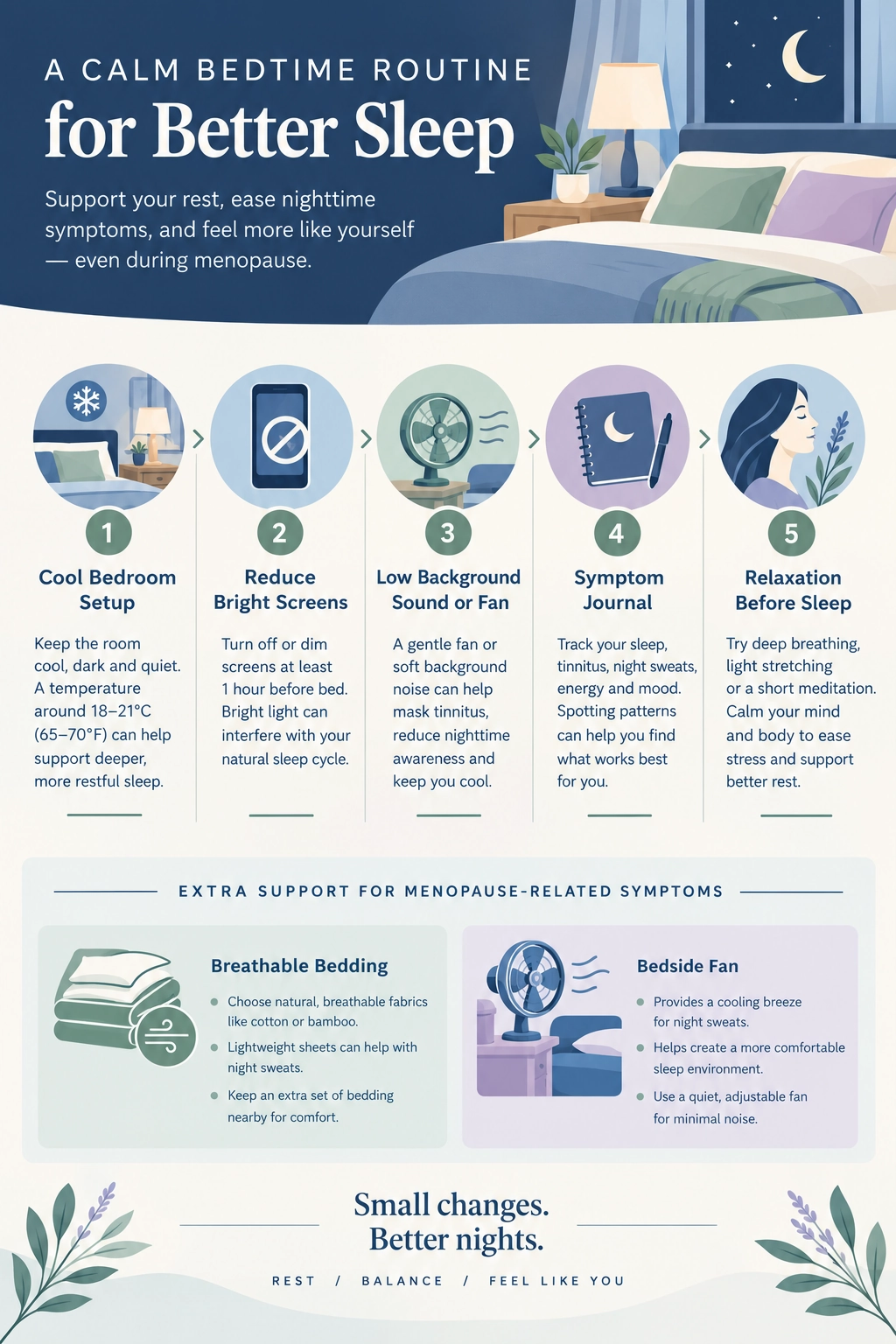
- Background sound: A white-noise machine, fan, or nature sounds mask tinnitus and promote sleep.
- Cool, dark bedroom: Important for menopause; heat exacerbates both hot flashes and tinnitus perception.
- Consistent bedtime: Stabilizes melatonin production.
- Reduce screen time: Blue light suppresses melatonin; avoid screens 1 hour before bed.
Bottom Line on Melatonin
Best if: You have sleep disruption alongside tinnitus; it's low-cost, safe, and has some evidence for menopausal sleep support.
Not sufficient if: You're expecting melatonin to reduce tinnitus loudness directly. It addresses sleep, not the underlying auditory mechanism.
Zinc, Vitamin B12, and Vitamin D: Test First When Possible
These nutrients are discussed for tinnitus relief, but evidence is strongest when deficiencies are confirmed by testing. Supplementing above normal levels in non-deficient individuals rarely helps and may carry risks.
Zinc for Tinnitus
Evidence: Mixed. Some older studies suggest zinc deficiency correlates with tinnitus, but robust clinical trials are lacking.
Recommendation: If your doctor confirms zinc deficiency (via serum zinc test), supplementing 8–11 mg daily may help. Most people get adequate zinc from meat, shellfish, legumes, and seeds; supplementation above 40 mg daily increases copper imbalance risk.
Vitamin B12 for Tinnitus
Evidence: Weak. B12 supports nerve function, but direct tinnitus benefits are not well established. However, B12 deficiency is common in women over 50 due to reduced stomach acid and intrinsic factor.
Recommendation: Request a serum B12 test (or methylmalonic acid test for sensitivity). If deficient, supplementing 1000 mcg daily or monthly injections can improve energy, cognition, and possibly neuropathy-related symptoms. Tinnitus improvement is secondary.
Vitamin D for Tinnitus
Evidence: Very limited for tinnitus directly. However, vitamin D deficiency is extremely common in midlife women and affects bone health, immune function, and mood.
Recommendation: Test your 25-OH vitamin D level (optimal: 30–50 ng/mL). If low, supplement 1000–2000 IU daily. Many women benefit from 2000–4000 IU daily during winter months. Do not exceed 4000 IU daily without medical supervision.
The Testing Principle
Best practice: Before adding zinc, B12, or vitamin D supplements, ask your doctor for basic nutrient screening. Blood tests are inexpensive and identify real deficiencies. If you're deficient, supplementation has solid rationale. If you're not deficient, supplementing extra offers limited benefit and potential risk.
Ginkgo Biloba and Proprietary Ear-Ringing Blends
Ginkgo biloba extract is marketed heavily for tinnitus, and multiple proprietary blends promise "ear ringing relief." Here's what the evidence shows:
Ginkgo Biloba Evidence
What the research says: A 2018 Cochrane systematic review of ginkgo for tinnitus concluded that evidence is insufficient and trial quality is poor. Older small studies showed mild benefit, but larger, rigorous trials show no clear effect.
Standard dose: Ginkgo extract is typically standardized to 24% ginkgo flavone glycosides and 6% terpene lactones. Doses are 120–240 mg daily (split into 2–3 doses).
Safety Concerns with Ginkgo
- Bleeding risk: Ginkgo can thin blood; avoid if taking warfarin, aspirin, or other anticoagulants.
- Interactions: Can interact with NSAIDs, increasing GI bleeding risk.
- Rare seizures: High doses have rarely been associated with seizure-like activity.
Proprietary Ear-Ringing Blends
Many commercial "tinnitus support" blends combine ginkgo, magnesium, B vitamins, zinc, and herbal ingredients. Red flags:
- Hidden ingredient doses: Ingredients listed under "proprietary blend" without individual amounts disclosed.
- Exaggerated claims: "Cure," "eliminate ringing," "doctor-tested secret" with no references.
- No third-party testing.
- High price relative to ingredient transparency.
What to Look For in Supplements
If you choose a multi-ingredient tinnitus blend, verify:
- Each ingredient dose is listed (not just "proprietary blend").
- Doses match published research (e.g., magnesium 200+ mg, ginkgo 120+ mg).
- Third-party testing is mentioned.
- Claims are realistic ("may support," not "cure").
- Price is reasonable ($15–30/month, not $50+).
Bottom Line on Ginkgo and Blends
Ginkgo: Limited evidence; carries bleeding risk; not a tinnitus cure.
Proprietary blends: Usually lack transparency; claims often exaggerated; prices inflated. Buy individual ingredients or proven combinations from reputable brands instead.
Supplement Safety During Menopause
If you're taking HRT, antidepressants, blood thinners, or other medications, supplement interactions are critical:
Interactions with HRT
Most menopause supplements are safe with HRT, but high-dose phytoestrogen blends (soy isoflavones, red clover, black cohosh) theoretically may interact with estrogen therapy. Discuss with your doctor if combining herbal adaptogens with HRT.
Interactions with Antidepressants and Anxiety Medications
Be cautious with: St. John's Wort (reduces SSRI efficacy), high-dose magnesium or 5-HTP (serotonin syndrome risk with SSRIs), and ginkgo (increased bleeding with certain antidepressants).
Safe choices: Melatonin, zinc, and B vitamins are generally safe with antidepressants.
Interactions with Blood Thinners
If you take warfarin, apixaban, or other anticoagulants, avoid ginkgo, high-dose vitamin E, and omega-3 supplements without doctor approval.
Kidney and Liver Disease Considerations
High-dose magnesium, zinc, and herbal extracts should be avoided or used cautiously if you have kidney or liver disease. Always disclose pre-existing conditions to your healthcare provider.
Avoid Over-Supplementation
Taking multiple tinnitus-targeted supplements simultaneously increases interaction risk and cost without evidence of synergy. Add one supplement at a time and track effects for 4–8 weeks before adding another.
Better-Supported Ways to Reduce Tinnitus Burden
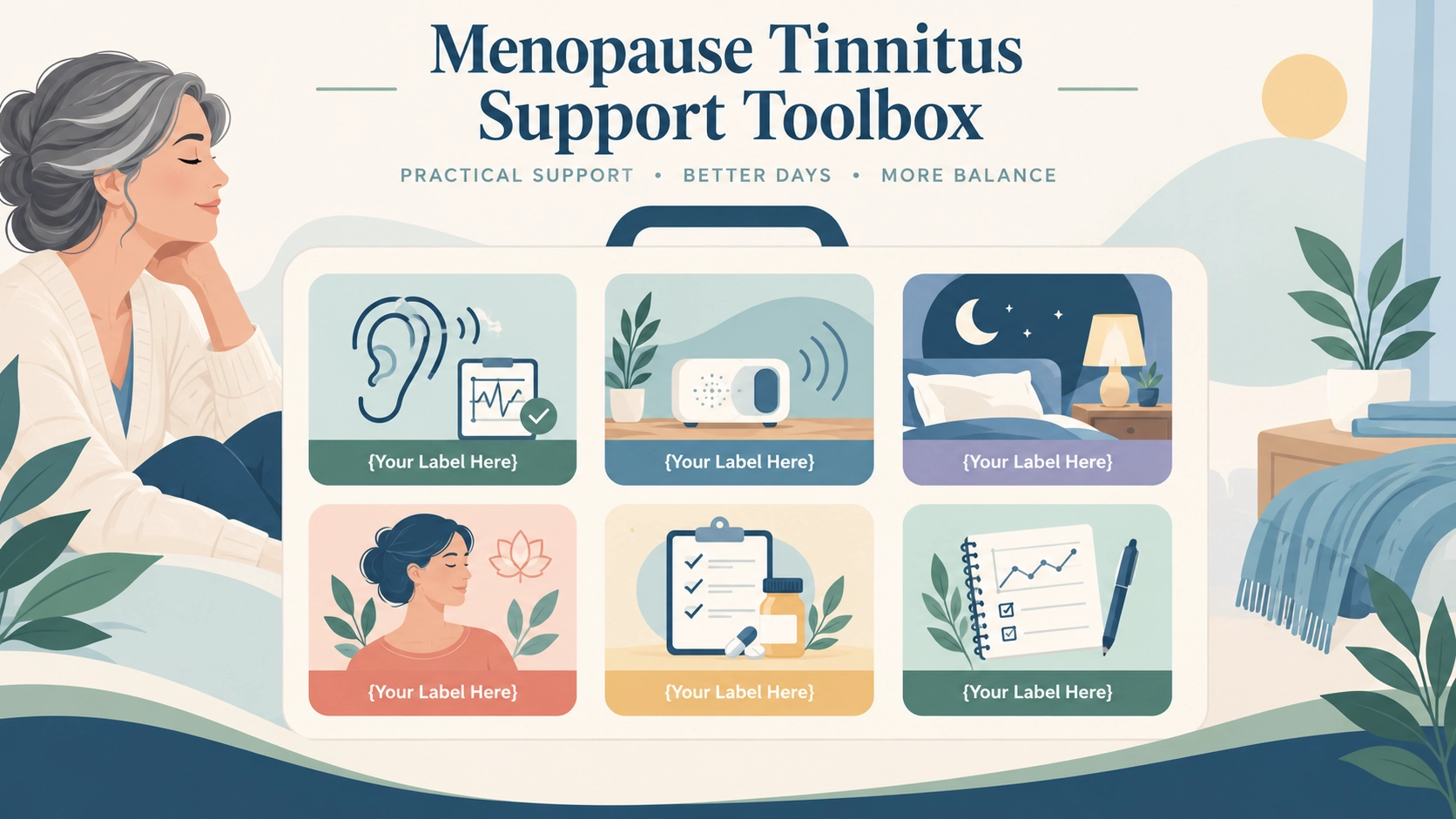
While supplements are one option, evidence is stronger for these approaches:
1. Hearing Assessment
A formal audiogram can detect age-related hearing loss and guide management. Many cases of tinnitus resolve or improve with hearing aid use, which amplifies ambient sound and masks tinnitus. See an audiologist for a comprehensive hearing evaluation.
2. Sound Enrichment and Sound Therapy
Background sound: Fans, white-noise machines, or apps reduce perceived loudness of tinnitus.
Sound therapy apps: Apps like Tinnitus Relief and Audicus provide customizable sound masking.
Hearing aids with tinnitus masking: Modern hearing aids can generate tinnitus masking sounds.
3. Cognitive Behavioral Therapy (CBT) for Tinnitus
CBT-based tinnitus therapy (TRT—Tinnitus Retraining Therapy) has robust evidence for reducing tinnitus burden by changing the emotional and attentional response to tinnitus. Online programs are increasingly available.
4. Sleep Optimization
Beyond melatonin:
- Maintain cool bedroom (60–67°F).
- Use breathable, moisture-wicking bedding for night sweats.
- Establish consistent sleep schedule.
- Avoid caffeine after 2 PM.
- Limit alcohol (can worsen tinnitus).
5. Stress and Anxiety Management
Proven approaches:
- Mindfulness meditation: Reduces tinnitus-related anxiety and improves coping.
- Progressive muscle relaxation: Reduces jaw and neck tension.
- Therapy or counseling: For anxiety-driven tinnitus amplification.
- Yoga or tai chi: Combines relaxation and gentle movement.
6. Menopause Symptom Management
Treating underlying menopause symptoms (hot flashes, mood changes, sleep disruption) may indirectly reduce tinnitus burden. HRT, if appropriate, can improve sleep and stress resilience.
7. Medication Review
Ask your doctor if any current medications (antidepressants, blood pressure drugs, diuretics, NSAIDs) may worsen tinnitus. Sometimes switching to an alternative can help.
When to See a Doctor or Audiologist Urgently
Some tinnitus symptoms warrant immediate medical evaluation:
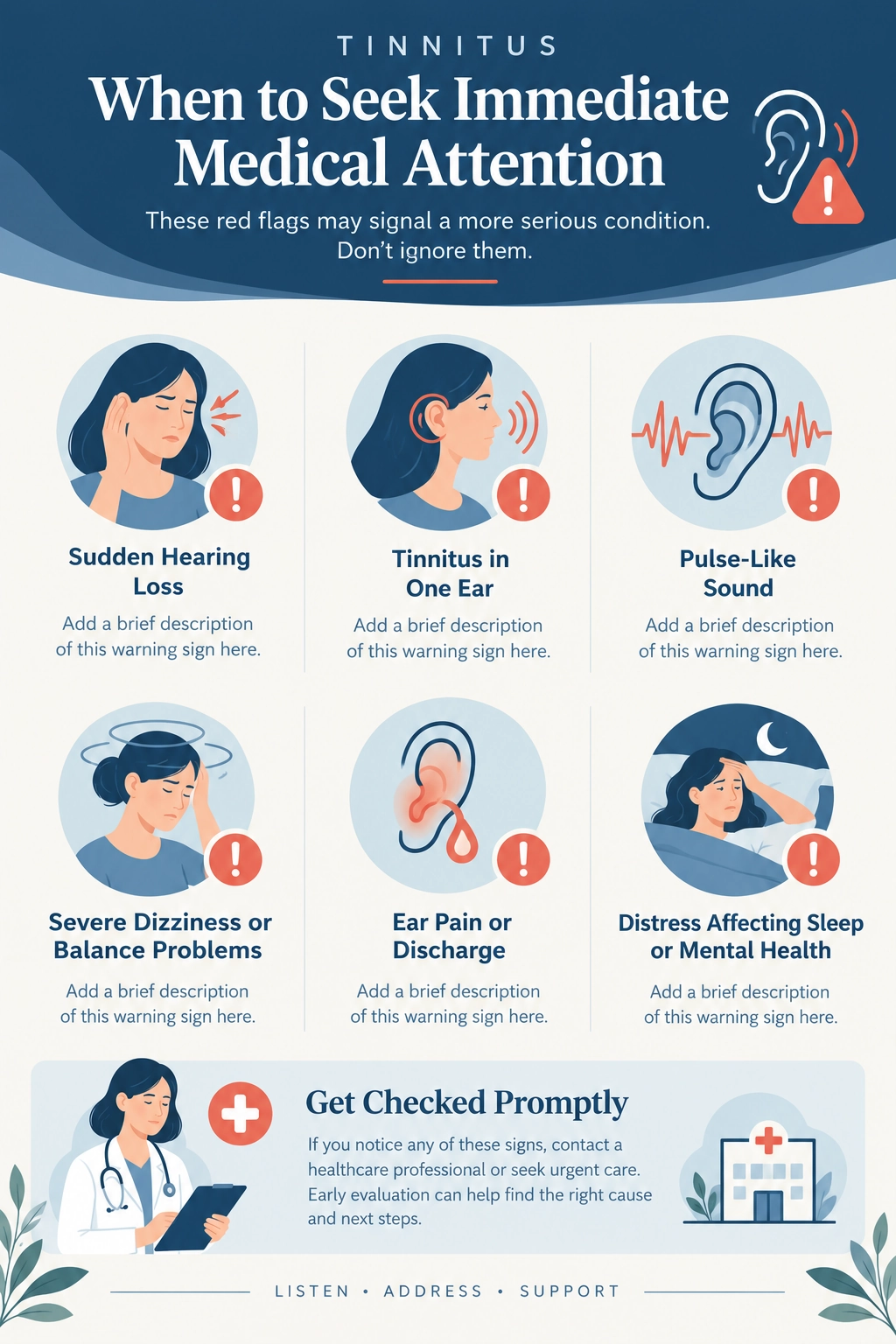
Seek Urgent Evaluation If:
- Sudden new tinnitus (within hours or days) with no obvious cause.
- Sudden hearing loss accompanying tinnitus.
- One-sided tinnitus (only in one ear), especially if new.
- Pulsatile tinnitus (tinnitus that beats like a pulse or heartbeat)—can indicate vascular issues.
- Tinnitus with severe dizziness or balance problems.
- Tinnitus with ear pain, discharge, or signs of infection.
- Tinnitus with neurological symptoms (facial weakness, vision changes, numbness).
- Tinnitus severely affecting mental health (depression, suicidal thoughts).
Recommended Specialists
- Audiologist: Hearing assessment, hearing aids, sound therapy.
- ENT (Otolaryngologist): Medical evaluation, rule out ear infection or other conditions.
- Primary care doctor: Medication review, HRT or menopause management.
- Therapist/Psychologist: CBT for tinnitus, anxiety management.
How to Build a Menopause Tinnitus Support Plan
Rather than jumping to supplements, follow this structured approach:
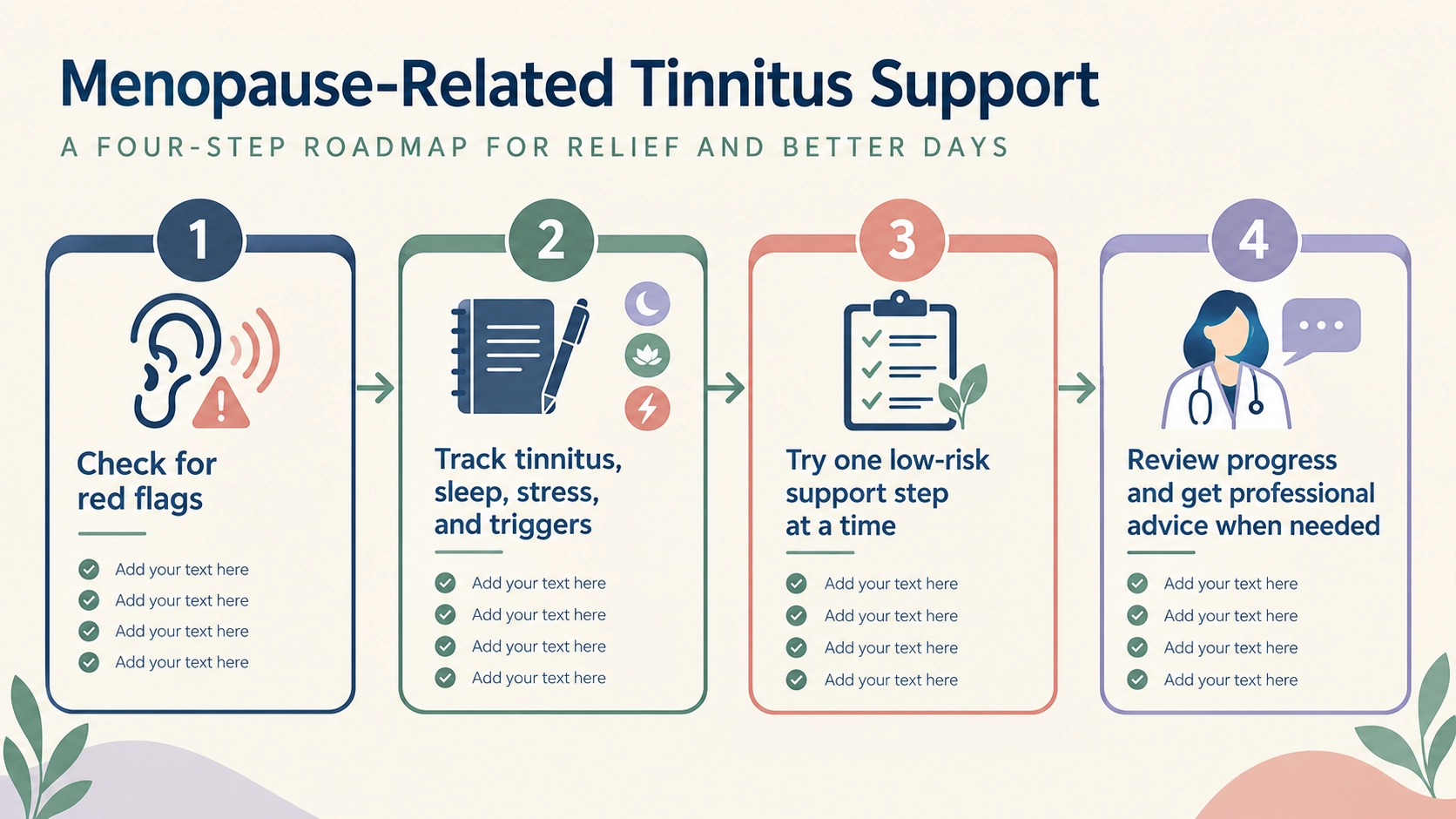
Step 1: Rule Out Urgent Causes
Check the red flags list above. If any apply, see your doctor or audiologist first. If your tinnitus is longstanding and stable without new concerning symptoms, proceed to Step 2.
Step 2: Track Tinnitus and Contributing Factors (2–4 weeks)
Keep a simple daily log:
- Tinnitus loudness: Rate 1–10 scale.
- Sleep quality: Hours slept, quality (1–10).
- Stress level: 1–10.
- Menopause symptoms: Hot flashes, mood, night sweats.
- Triggers noticed: Caffeine, alcohol, loud noise, jaw tension, specific times of day.
- Current supplements/meds: List everything.
Patterns often emerge within 2–4 weeks.
Step 3: Try One Low-Risk Change at a Time
Based on your tracking, prioritize one intervention:
- If sleep is disrupted: Start melatonin (0.5–2 mg) + sleep routine improvements.
- If stress/anxiety is high: Prioritize stress management (meditation, CBT resources) before supplements.
- If caffeine/alcohol use is high: Reduce or eliminate these tinnitus triggers.
- If hearing has not been assessed: Schedule an audiogram.
- If jaw tension is noticeable: Try magnesium glycinate (200–300 mg) + jaw relaxation exercises.
Implement one change and track results for 4–8 weeks before adding another.
Step 4: Review Results and Escalate if Needed
After 8 weeks, assess:
- Did tinnitus loudness decrease?
- Did sleep improve?
- Did stress/anxiety lessen?
- Any side effects?
If improvements are significant: Continue the intervention and add a second low-risk change if desired.
If no improvement: Discontinue that supplement or approach and try another, or see a specialist (audiologist, ENT, or therapist) for formal tinnitus management.
Frequently Asked Questions
A: There is no single "best" supplement proven to cure tinnitus. Melatonin and magnesium have the strongest supporting evidence for sleep and stress, which indirectly reduce tinnitus burden. Zinc, B12, and vitamin D are only relevant if deficiencies are confirmed by blood testing.
A: Menopause is not proven to directly cause tinnitus, but hormonal changes, sleep loss, stress, hearing changes, and medication effects during menopause can worsen tinnitus perception. If tinnitus is new, see a doctor to rule out other causes first.
A: Magnesium is better supported for sleep and anxiety than for tinnitus directly. If magnesium deficiency is confirmed and you have sleep disruption, supplementing 200–400 mg daily of magnesium glycinate may help indirectly by improving sleep, which can reduce tinnitus burden.
A: Melatonin is not a tinnitus cure, but it can improve sleep onset and quality. If tinnitus-disrupted sleep is your main issue, melatonin 0.5–2 mg taken 30–60 minutes before bed may help. Combine with sleep routine improvements and background sound masking.
A: Evidence for ginkgo is poor. A 2018 Cochrane review found insufficient evidence and low trial quality. Additionally, ginkgo carries bleeding risk, especially if you take blood thinners or NSAIDs. It is not recommended as a primary tinnitus strategy.
A: Only if a blood test confirms zinc deficiency. Supplementing zinc above normal levels without deficiency offers limited benefit and risks copper imbalance. Ask your doctor for a serum zinc test first.
A: HRT does not directly treat tinnitus. However, by improving sleep, reducing hot flashes, and stabilizing mood, HRT may indirectly reduce tinnitus burden. Discuss menopause symptom management with your doctor.
A: High-dose caffeine supplements, certain stimulants, and high-dose aspirin or NSAIDs can worsen tinnitus. Ginkgo may increase bleeding risk. Always check interactions with your pharmacist before adding a new supplement.
A: See a doctor urgently if your tinnitus is sudden, one-sided, pulsatile, accompanied by hearing loss or dizziness, or severely affecting your mental health. Otherwise, schedule a routine hearing assessment and see an ENT if your tinnitus is new or worsening.
A: Tinnitus and hearing loss often coexist, especially with age-related hearing loss (presbycusis). However, tinnitus can also occur without hearing loss. An audiogram will clarify your hearing status and help guide management.
Menopause Tinnitus Supplement Comparison Checklist
Use this checklist to evaluate any menopause tinnitus supplement before purchasing:
- Ingredient Doses Listed: Are all ingredient doses clearly labeled (not hidden in "proprietary blend")?
- Evidence-Based Ingredients: Does the product contain magnesium, melatonin, zinc, B vitamins, or recognized ingredients (not made-up ingredient names)?
- Third-Party Testing: Does the label mention NSF Certified, ConsumerLab, or USP Verified?
- Medication Interaction Check: Have you verified interactions with your current medications using a checker tool or pharmacist?
- No Cure Claims: Does the label avoid "cures," "eliminates," or "miracle" language?
- Realistic Price: Is the price $15–40 per month (not $50+)?
- Clear Return Policy: Can you return it if you don't see benefits within 30 days?
- One Product at a Time: Are you adding only one new supplement, tracking effects for 4–8 weeks before adding more?
- Start Date & Review Date: Have you logged when you started and when you'll reassess (4–8 weeks)?
- Side Effect Tracking: Are you noting any changes in sleep, mood, digestion, or other symptoms?
Print or save this checklist and use it every time you consider a new supplement. It keeps you accountable and prevents low-quality purchases.
Final Takeaway: Menopause Tinnitus Support That Works
- No supplement cures tinnitus. Evidence is limited and mixed across all ingredients.
- Prioritize medical evaluation if tinnitus is new, one-sided, pulsatile, or accompanied by hearing loss.
- Address sleep, stress, and menopause symptoms first. These have stronger evidence than supplements alone.
- If supplementing, start with magnesium or melatonin if sleep disruption is present. Both are low-cost and have reasonable safety profiles.
- Test for nutrient deficiencies before supplementing zinc, B12, or vitamin D. Unnecessary supplementation wastes money and carries risks.
- Evaluate supplement labels carefully: Transparent doses, third-party testing, and realistic claims distinguish quality products from marketing hype.
- Add one change at a time and track for 4–8 weeks. This isolates what actually helps and prevents ineffective supplement stacking.
- Consider hearing aids, sound therapy, CBT, and stress management. These have stronger evidence than supplements.
- Consult your doctor or audiologist before starting supplements, especially if you take medications or have medical conditions.
Menopause tinnitus is challenging, but a structured, evidence-aware approach combining medical evaluation, lifestyle adjustments, and cautious supplementation can reduce tinnitus burden and improve quality of life.
Key Research References
- Cochrane Review: Ginkgo Biloba for Tinnitus (2018) – Limited evidence; poor trial quality.
- American Journal of Otolaryngology: Magnesium for Noise-Induced Tinnitus (2003) – Small study; results mixed.
- Anxiety and Tinnitus Perception (2018) – Bidirectional link; anxiety worsens perception.
- Sleep Loss Amplifies Tinnitus Perception (2018) – Sleep quality directly affects tinnitus burden.
- Melatonin for Hot Flashes and Sleep in Menopause (2012) – Small study; supports sleep in menopausal women.
- Tinnitus Retraining Therapy (TRT) and CBT Evidence (2015) – Strong evidence for cognitive-behavioral approaches.
- Mayo Clinic: Tinnitus Overview – Clinical overview of causes, symptoms, and management.
- NSF Dietary Supplement Certification – Third-party testing standard.
- ConsumerLab Independent Testing – Supplement quality verification.
- Mayo Clinic Drug & Supplement Interactions Checker – Medication interaction verification tool.